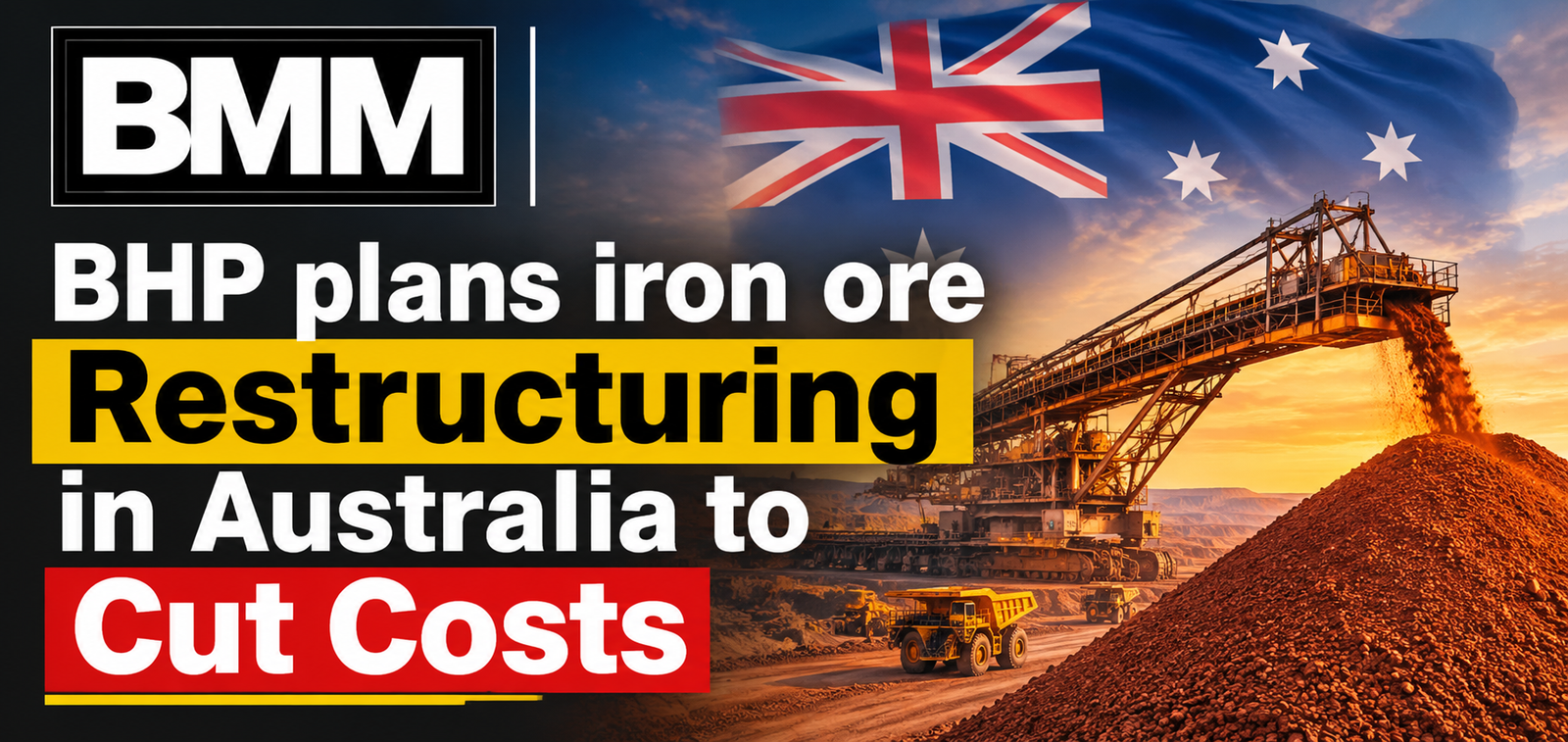
BHP plans iron ore Restructuring in Australia to Cut Costs
BHP Group is preparing a major shake-up of its Western Australian operations. The BHP iron ore restructuring is part of a wider push to protect margins as costs climb and prices soften. The world’s largest miner wants to cope with rising expenses and weaker prices for the steelmaking ingredient.
What is changing
The overhaul is expected to simplify management and move support functions directly under the mining assets they serve, rather than keeping them in separate divisions. Some technology work is also set to move closer to the mines. Details are still being worked out, according to people familiar with the plans. The BHP iron ore restructuring would affect a large workforce. The Western Australia Iron Ore unit employs more than 16,000 workers and contractors.
Job cuts have already begun
This latest round of layoffs is part of previous rounds of layoffs. There have been about 300 on-site layoffs previously, with many more to follow. The recent announcement made by BHP in October stated that it will cut about 300 jobs in South Flank, Mining Area C, Newman, and Jimblebar, which are all in the Pilbara region. This announcement was made by the company spokesman at the time, who said that the aim is to ensure that the business performs well.
Why costs are under pressure
There are two factors pressuring the bottom line. The price of iron ore has declined by 14% over the course of the year, but costs for mining and transportation have increased, partly due to rising fuel prices. According to the company’s report from August, the cost structure has changed significantly owing to the unrest in the Middle East.
The problem extends beyond BHP. Rio Tinto, its closest peer, said elevated diesel prices have added about $1 a ton to operating costs in the Pilbara. That makes the BHP iron ore restructuring a sign of pressure across the industry. Weaker demand adds to it. Demand is cooling, and Beijing has tightened its control over procurement.
A new CEO’s agenda
The transformation comes under a new leadership. This is because Brandon Craig took up the role of chief executive in July, while the changes come as a continuation of what was started by the previous CEO, Mike Henry. BHP has also named Adrian Wood as the chief financial officer in place of the departed Vandita Pant.
More than iron ore
It is unlikely that iron ore is the only target of the restructuring process. This is because the BHP iron ore restructuring process will end up going beyond iron ore as BHP continues analyzing the costs incurred in other operations within its portfolio. On the company’s side, BHP has stated that it continues to be the lowest-cost large-scale iron ore producer in the Pilbara region.
Why it matters
Iron ore is vital for the profitability of BHP, and the company estimates that it can produce as much as 298 million tons of this material in the coming financial year. In light of falling prices and the rise of fuel and transport costs, even the most efficient producer must reduce its costs in order to preserve margins. The investors would be interested in how much can be saved by this BHP iron ore restructuring and how many employees will go along with it.