
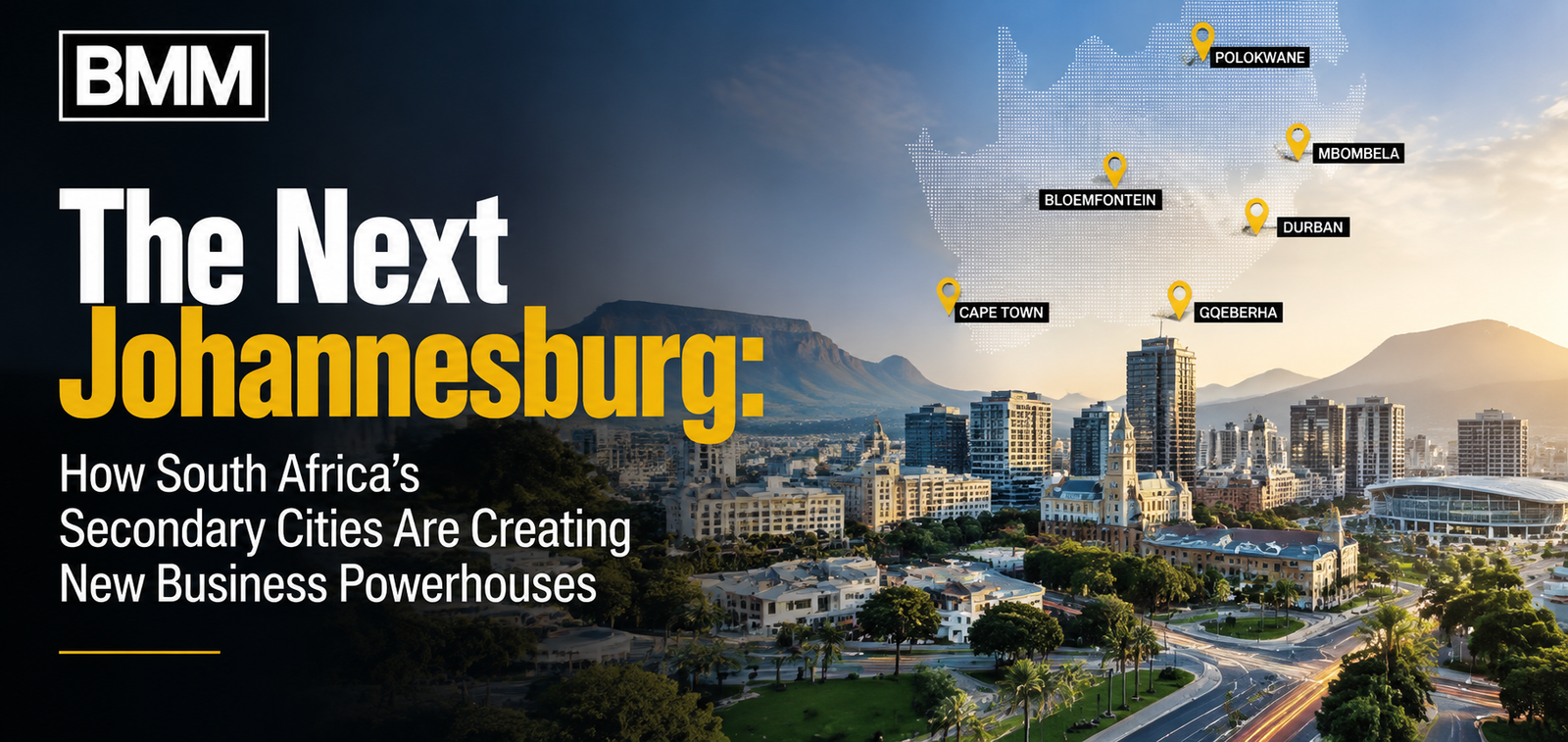
For decades, Johannesburg has dominated South Africa’s economic landscape. As the country’s financial capital and a major gateway for foreign investment, it has long attracted businesses, entrepreneurs, and skilled professionals seeking growth opportunities. However, a new economic story is unfolding across the nation. While Johannesburg, Cape Town, and Durban continue to play critical roles, a growing number of secondary cities are emerging as powerful engines of investment, innovation, and industrial development.
As investors look beyond traditional markets, South Africa Secondary Cities 2026 are increasingly becoming focal points for long-term economic growth and business expansion.
Investors, policymakers, and business leaders are increasingly examining how secondary cities are transforming South Africa’s economy as new investment hubs emerge beyond the country’s traditional metropolitan centers.
The Shift Beyond Traditional Economic Hubs
In the past, the major metropolises of South Africa accounted for the bulk of investment, skills, and economic activities. Johannesburg, in particular, accounts for a substantial part of South Africa’s GDP, and is home to the largest financial sector in the country. Yet, the increasing pressure on infrastructure, congestion, high operating costs, and service provision difficulties have driven companies to adopt geographical diversification. Reports on the issue show that concerns about infrastructure quality and operational costs in Johannesburg have caused many firms to look elsewhere.
On the other hand, regional development programs initiated by the government have brought focus to cities with industrial capacity, good transport links, and availability of lands for development. These developments have hastened investment into secondary cities that until recently were not regarded as part of the mainstream economy of South Africa.
This means that there has been a shift towards a more dispersed economic landscape.
Why Secondary Cities Are Gaining Momentum
Several factors are contributing to the rapid rise of secondary cities across South Africa.
Lower Costs of Business Operations
Unlike Johannesburg, Cape Town, and Durban, other secondary cities may offer much lower cost of property and operations as well as a more inexpensive labor market where businesses can operate their plants, logistics centers, and service operations with higher efficiency.
The resulting benefits may give them an edge over the competitors in their field and allocate funds for innovation and expansion.
Better Infrastructure Development
Infrastructure development initiatives launched by the government, including special economic zones, industrial corridors, and transport projects, make secondary cities more attractive for investors. Increasingly, provincial administrations realize the significance of diversifying economic activities outside of the largest metropolitan areas.
Projects in logistics, energy, manufacturing, and digital infrastructure open up new opportunities and improve connectivity between urban and rural economies.
Urbanization and Population Growth
While metropolitan cities continue to see the strongest population growth, secondary cities are also growing due to population movement, job availability, and improved living standards. Urbanization creates a demand for residential, commercial, health care, educational and business services facilities.
Emerging Regional Business Powerhouses
Gqeberha (Port Elizabeth)
Gqeberha has become one of the most crucial industrial hubs in South Africa. Its automobile sector continues to play a significant role in the local economy, with support from global players and suppliers.
Logistics and port infrastructure facilitate export activities and make the city appealing to national and foreign investors. Advanced manufacturing, components, renewables, and logistics are expanding their presence in the area.
Sustainable industrialization gains popularity in Gqeberha as well, as businesses become interested in greener production methods.
Mbombela
Due to its location in close proximity to key transportation routes which connect South Africa with neighboring countries, Mbombela has gained its reputation as an important regional commercial center.
Its economy has been largely fueled by agriculture but the city attracts increasing investments in tourism, logistics, retail, and business services due to its advanced infrastructure and convenient geographical position.
Proximity to popular tourist destinations gives it additional advantages in this sphere.
Polokwane
Polokwane is emerging as an important commercial hub in Limpopo Province. The city has access to vital transport corridors and acts as a gateway for mining, agriculture, logistics, and trading.
Investments in warehousing, distribution, and industries have facilitated economic diversification. Southern African businesses see Polokwane as a good destination for expanding their operations.
Demand and urbanization also offer possibilities for the development of retail, real estate, and professional services.
Rustenburg
Known for its mining industry, Rustenburg is diversifying its economy. Mining industry continues to be an important contributor, but manufacturing, engineering, logistics, and renewable energy projects are growing sectors in Rustenburg.
Companies are utilizing the industrial experience in the region while pursuing new business opportunities beyond mining industry. Economic diversification helps the region to become more resilient and attractive to various types of investments.
Bloemfontein
As a center for transport and administration, Bloemfontein provides some strategic benefits for enterprises that aim for national presence.
There have been some developments within the healthcare, educational, financial services, logistics, and technology-related sectors. The positioning of the city provides an opportunity for firms to easily access several provinces, and at the same time operate with lower costs compared to big cities.
Bloemfontein is increasingly being viewed as one of the most promising emerging business districts in South Africa, particularly for service-oriented industries and regional headquarters.
The Rise of New Economic Corridors
One of the major advancements of recent times has been the creation of economic corridors linking secondary cities with major urban economies.
With better infrastructure and logistics development, industrial parks, and special economic zones, there are integrated economies being formed in the regions. The secondary cities are now establishing themselves not as rivals to Johannesburg or Cape Town but as complementary centers of economic growth for the nation.
The economic corridors have allowed companies to lower their supply chain costs as well as give them an easy way to access consumer markets.
Economic infrastructure development becomes all the more important due to the growing phenomenon of online commerce and trade in Southern Africa.
Technology and Digital Transformation Fueling Growth
Digital infrastructure has become an important component of the growth of secondary cities.
Cloud computing, work-from-home facilities, connectivity, and digital services have lessened the need for firms to be centralized within large urban centers. Tech firms, business process outsourcers, and professional firms have been able to run their operations in smaller cities while retaining international or domestic footprints.
Governments and the private sector have invested in digital infrastructure, creating ideal circumstances for innovation-driven growth. With rising adoption of technology, more secondary cities have become more attractive locations for innovative enterprises.
Investment Opportunities in Different Sectors
The expansion of secondary cities is presenting various investment opportunities to investors.
Manufacturing
Industries are an essential part of development for any region. Automotive industry, agro-processing, chemicals, renewable energy equipment, and advanced industries continue to be invested in several provinces.
Logistics and Distribution
The geographical location of many secondary cities can serve as an advantage when developing such business ideas as warehouse, freight management, and distribution centers.
Renewable Energy
The energy revolution taking place in South Africa creates vast opportunities in the area of solar and wind power generation, batteries, and other infrastructure developments. The secondary cities can provide all necessary land for investment in such facilities.
Real Estate Development
The population expansion and company growth create the need for housing and business buildings.
Technology and Business Services
The emergence of digital business model creation helps technology firms, startups, and business services to set up their companies outside big urban areas.
This development proves the existence of business opportunities in South Africa’s secondary cities for investment from domestic and foreign companies.
Economic Impact on South Africa
There is an important relationship between the rise of secondary cities and national development.
A more geographically balanced economy will relieve pressure on larger metropolitan cities, while generating jobs in areas that have not experienced as much investment in the past. Such diversification may increase economic stability and regional competitiveness.
Economic studies conducted recently have indicated that there are significant structural changes taking place within the urban economy.
South Africa may be able to leverage this development through more balanced economic growth and improved regional economic ecosystems.
This process is contributing to greater economic growth in South African cities by encouraging entrepreneurship, attracting capital, and expanding industrial capacity beyond traditional urban centers.
Challenges That Must Be Addressed
Even though there have been impressive strides towards growth and development, secondary cities are still presented with some key challenges.
Some of the challenges include the need to maintain infrastructure, ensure a steady electricity supply, skill building, building local government capacity and ensuring regulatory efficiency.
Investors need assurance that local governments are capable of sustaining economic activity by providing proper planning and services. Moreover, competition for investments is growing which implies the need for constant improvements.
Looking Ahead
The future economy of South Africa cannot just depend on the city of Johannesburg. Throughout South Africa, it can be seen that secondary cities are becoming hubs of creativity, production, and investment. This is because of the changing nature of how firms assess possibilities, invest, and grow.
From manufacturing hubs and logistics corridors to technology centers and renewable energy projects, these cities are creating new pathways for development while strengthening regional economies. The growing number of business opportunities in South Africa’s secondary cities demonstrates that investors are increasingly recognizing the value of looking beyond traditional metropolitan markets.
As policymakers, businesses, and investors continue supporting regional development, the country’s emerging business districts in South Africa will play an increasingly important role in national prosperity. Ultimately, the story of how secondary cities are transforming South Africa’s economy is becoming one of the most important economic narratives of the decade, one that could redefine where growth, investment, and opportunity are found in the years ahead.
The continued expansion of these urban centers signals a new chapter for economic growth in South African cities, creating a more balanced, resilient, and inclusive economy for the future.
FAQ
Which is the fastest growing city in South Africa?
Cape Town is widely recognized as the fastest-growing major metropolitan area in South Africa, driven by high rates of internal migration as people move from other provinces in search of better governance, economic opportunity, and lifestyle factors.
What is the richest city in Africa in 2026?
South Africa hosts major cultural, art, and music events throughout 2026, including the METRO FM Music Awards in Durban, the contemporary FNB Art Joburg fair in Sandton, and regional creative gatherings.
What is the nicest city in South Africa?
Cape Town is widely considered the nicest and most beautiful city in South Africa. Known as the “Mother City,” it combines dramatic natural wonders like Table Mountain with pristine beaches, a rich culinary scene, and a vibrant coastal lifestyle.
What is in high demand right now in South Africa?
In South Africa, the highest demand is concentrated in skilled information technology roles, renewable energy and solar infrastructure, healthcare professionals, and specialized engineering trades
Technology and Digital Skills
Software development and web engineering
Cybersecurity specialists
Data analysis and data science
Energy and Engineering Trades
Solar and renewable energy technicians
Electrical and mechanical engineers
Qualified artisans (electricians, welders, plumbers)
Healthcare Services
Registered nurses
General medical practitioners and specialists
Pharmacists
Finance and Business
Chartered accountants
Actuaries and financial risk analysts
Supply chain and logistics managers
How many foreigners live in South Africa?
South Africa is home to an estimated 2.4 million to 3.1 million foreign-born residents, representing roughly 4% to 5% of the total population. Official data from Statistics South Africa indicates that over 60% of these migrants originate from neighboring SADC countries, primarily Zimbabwe, Mozambique, Lesotho, and Malawi
Official Data vs. Estimates
Census 2022: Recorded approximately 2.4 million foreign-born individuals.
Income and Expenditure Survey: Estimated around 3.1 million foreign-born residents.
Demographics: Roughly 56% of the migrant population are men, and the highest concentration of foreign nationals resides in the Gauteng and Western Cape provinces.
What is the future for South Africa?
South Africa’s future is defined by a critical choice between structural reform and stagnation. While facing severe hurdles like an unemployment rate above 30%, high poverty, and logistics bottlenecks, the country possesses strong democratic institutions, improving energy stability, and potential as an industrial hub for the continent.
Which city is safer in South Africa?
While no major urban area in South Africa is entirely free of crime, Tshwane (Pretoria) and smaller coastal hubs along the Garden Route (like George and Mossel Bay) consistently rank as the safest major cities and towns based on official police crime statistics and lower per-capita murder rates
What percentage of South Africa is white now?
White people make up about 7.1% to 7.3% of South Africa’s population. This equals roughly 4.5 million people, according to official data from Statistics South Africa.
Historical context: The white population share was around 21% during the early 20th century and roughly 12% to 14% near the end of apartheid, but it has steadily decreased due to migration and lower birth rates.
Where they live most: The Western Cape province has the highest concentration of white residents at about 16.4%, while rural and northern provinces report lower shares
Which city is the best to live in South Africa?
Cape Town is widely considered the best city to live in South Africa. It offers a high quality of life, stunning natural beauty between Table Mountain and the ocean, strong municipal infrastructure, and a vibrant cultural scene.
Top Metros and Cities
Cape Town: Best overall lifestyle, outdoor recreation, and economic opportunity, though it has a higher cost of housing.
Pretoria: High quality of life index scores, beautiful jacaranda-lined streets, and a more relaxed administrative capital vibe than Johannesburg. Time Out Worldwide +1
Johannesburg: Best for high-powered corporate careers, big city energy, and large job markets, though safety requires careful neighborhood selection.
Durban: Best for warm tropical weather, beach life, and a more relaxed coastal pace with a lower cost of living