
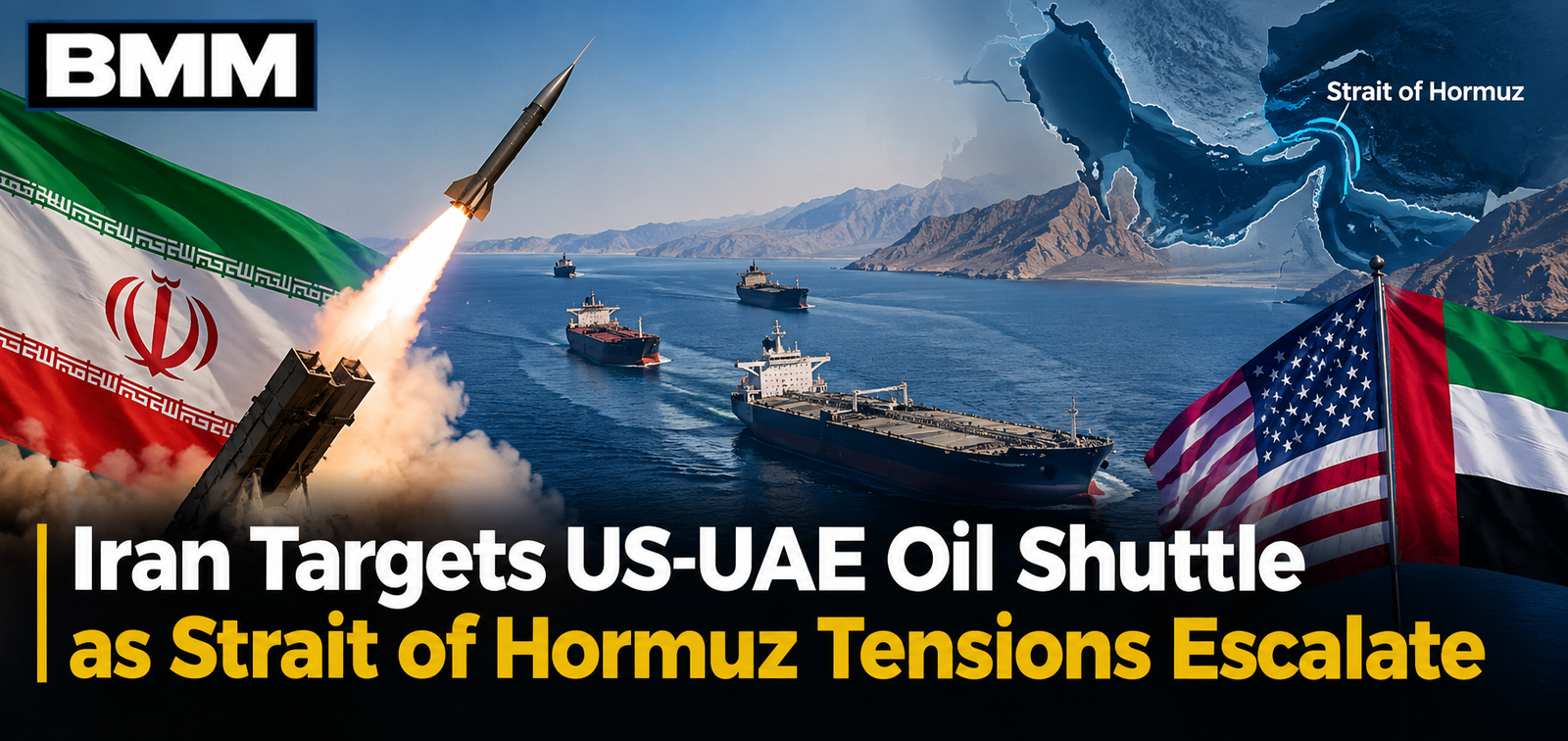
Iran Targets US-UAE Oil Shuttle as Strait of Hormuz Tensions Escalate
Iran has warned that an oil transportation system reportedly supported by the United States and operated with the involvement of Gulf Arab states is now a target for its military operations, raising fresh concerns over global energy supplies. The development comes amid the ongoing US-Israel war on Iran, a naval blockade of Iranian ports and continued disruption to shipping through the strategically important Strait of Hormuz.
According to a report by Al Jazeera, Iranian security chief Mohsen Rezaei accused the United States and the United Arab Emirates (UAE) of facilitating oil transfers through a shuttle system designed to help Gulf countries continue exporting crude despite restrictions in the waterway.
The threat places Strait of Hormuz oil shipments at the centre of an escalating confrontation with potentially significant consequences for international energy markets, maritime transportation and regional security.
Iran Warns Against US-Assisted Oil Transportation
According to Rezaei, oil shuttle operations had become a direct target of the Iranian government. He further accused the US Central Command of collaborating with the UAE military in transferring crude oil using small ships into big tankers outside the most restricted shipping zone.
He further accused Iranian forces of targeting about five to six ships involved in the shuttle operations on a daily basis for several weeks. These statements were made by Rezaei and reported by Al Jazeera, though their authenticity cannot be independently confirmed.
The Iranian warning seems to be a reaction to attempts at ensuring energy exports using different sea routes. The Iranian government has reiterated that the shipping operations would still come under threat until the US naval blockade of southern Iranian ports ends.
The dispute highlights how Strait of Hormuz oil shipments have become an important element of the wider military and diplomatic confrontation between Washington and Tehran.
How the Oil Shuttle System Operates
The described shipping system utilizes smaller ships and very large crude carriers (VLCCs) to deliver crude oil from Gulf ports via the southern sea routes close to Oman.
Al Jazeera says that some of these ships travel at night and turn off their tracking devices to avoid being attacked. However, this strategy makes it difficult to track ships in the Gulf region.
The ships were allegedly attacked during Sunday evening till Monday morning, when two tankers traveling out and one ship at anchor near the port city of Sohar in Oman were hit. Thus, the risk does not seem to be limited only to the Strait of Hormuz.
This shipping system allows the Gulf energy exporters to stay linked to international markets to some degree; however, the attacks on ships participating in it pose a threat to its functioning.
Shipping Costs and Global Energy Markets Under Pressure
As the security threats continue to increase, they place a greater financial burden on oil transport. According to a maritime intelligence company called Windward, shipping costs made up approximately 25-30% of the Gulf crude cost against only 1-3% before the outbreak of war.
It is said that some national oil companies in the Gulf have been offering discounts of up to $35 per barrel below their official sales prices as a result of increased shipping costs and fewer available vessels.
Shipment costs have also impacted the capacity of tankers with an estimate that 15-20% of the very large crude carriers are being used in the shuttle system, thus making the vessels less available for other shipments and increasing the costs of shipping internationally.
This can impact the Strait of Hormuz oil shipments, making the process slow and costly even when there is crude available for export.
Strait Traffic Falls Sharply
The Strait of Hormuz is among the most significant energy transport routes around the globe. Before the outbreak of war, about one fifth of the world’s oil and natural gas shipments went through the strait.
According to Windward figures reported in Al Jazeera, the number of ships transiting through the Strait of Hormuz declined to 31 in the last week of September from 138 before the start of the war. This shows how much the disruption of international maritime trade is.
Iran also warned of attacks on facilities related to America’s business interests in the UAE, including data centers, information technologies, and AI facilities. This increases the possible impact of the war to more than oil transportation.
The war creates uncertainties for Gulf economies relying on energy exports and international firms that depend on stable maritime transport routes.
Diplomatic Standoff Continues
Besides military concerns, diplomatic efforts to reopen the strait have been halted. In fact, Iran has reportedly said that it is reviewing the US response to its proposal to reopen the strait, while differences regarding the terms of a broader solution still exist.
The future of Strait of Hormuz oil shipments will be determined by how well diplomatic efforts restore safe passage for the oil tankers and lower the chances of future attacks.
As far as the global energy market is concerned, there are more issues than just the amount of crude that will affect the price besides just the price of crude. Insurance rates, freight availability, timing of delivery and security in the region will all factor into the price.