
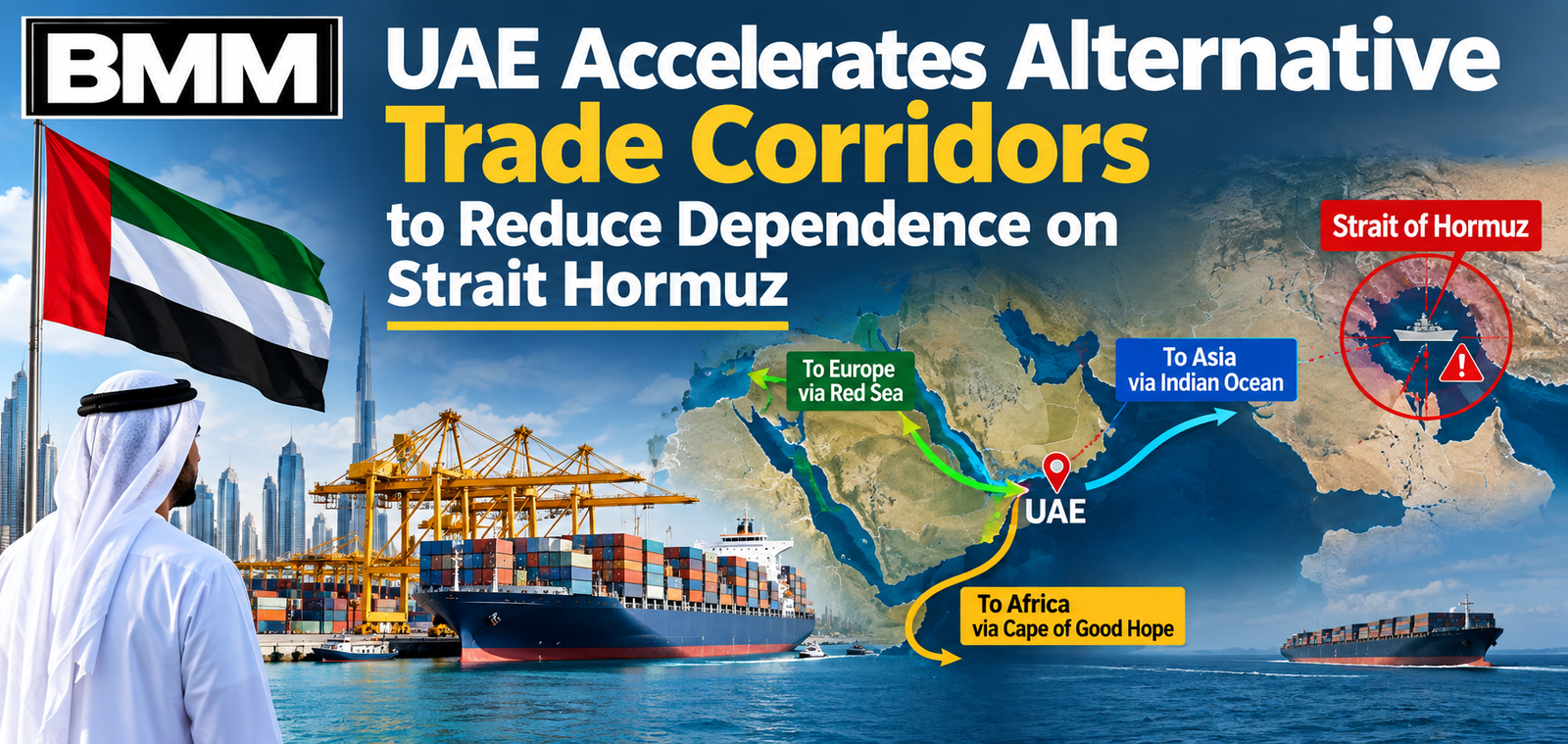
The United Arab Emirates is intensifying efforts to develop new energy and logistics corridors as regional tensions continue to disrupt one of the world’s most critical maritime chokepoints. The move comes amid ongoing security concerns in the Strait of Hormuz, with Emirati officials emphasizing that the nation’s economic future cannot remain dependent on a single trade passage. The latest developments highlight the growing strategic importance of UAE alternative trade routes in safeguarding energy exports and ensuring long-term economic resilience.
UAE Seeks Greater Economic Security
Addressing a policy forum in Abu Dhabi, Anwar Gargash, the senior presidential adviser of the UAE, said that the country was developing its infrastructure to ensure the safety of trade and energy supplies despite the instability in the region. For this purpose, the UAE has been making investments in ports on its eastern coast, pipelines, railway, and logistics routes that avoid the Strait of Hormuz.
As per the government officials, the construction of the UAE alternative trade routes has become an essential project for the country and is not just a part of its infrastructure development plan.
Strait of Hormuz Remains a Critical Chokepoint
The Strait of Hormuz is one of the energy channels that play a vital role in transporting the oil and gas supplies of the world. But the present-day military clashes, attacks on ships, and other maritime hindrances have exposed the potential weaknesses involved in utilizing such a narrow passage.
The present-day dispute between Iran and the US has added more complexity to the issue of marine security in the region. Fewer shipments and frequent attacks on ships have generated worries for energy suppliers and import-dependent economies.
Building New Corridors Beyond Hormuz
A key feature of the UAE strategy includes developing infrastructural facilities on its eastern coast, especially those that give direct connectivity to the Arabian Sea, without having to go through the Strait of Hormuz. The development of pipelines and port infrastructure is meant to improve supply chain stability in uncertain geopolitical environments.
The importance of UAE alternative trade routes is one of the emerging trends in the region. Energy-producing nations in the Gulf are also exploring various options for diversifying their routes of exports to minimize risks from any maritime interruptions.
Regional Implications and Diplomatic Challenges
Apart from infrastructure, the UAE has also demanded that more needs to be done in terms of establishing security structures at a regional level and securing credible international assurance so as to avoid future disturbances.
While on the other hand, relations with Iran is another area which can play a major role in shaping policies. Though UAE officials have expressed that diplomacy may help in bettering relations, distrust and security issues continue to be a hindrance.
Impact on Global Energy Markets
The development of UAE alternative trade routes has consequences not only for the Gulf but for the whole world. World markets of energy have already faced instability due to disruptions in supply and transportation in the region. The price of oil has increased as a result of potential risks of more attacks on infrastructure or ships.
For those states that depend on energy supplies from the Gulf, such as India, China, Japan, and South Korea, the stability of their transportation routes is important.
Looking Ahead
With geopolitical uncertainty set to alter the economy of the Middle East, UAE alternative trade routes will be integral to the strategic planning of the nation. Through developing ports, pipelines, railways, and logistics systems, the UAE will attempt to increase its influence as a global trading nation and decrease vulnerability to the region’s instability.
These developments may not only shape the future of the UAE’s trade framework but also impact how other Gulf countries deal with energy security and economic resilience.