
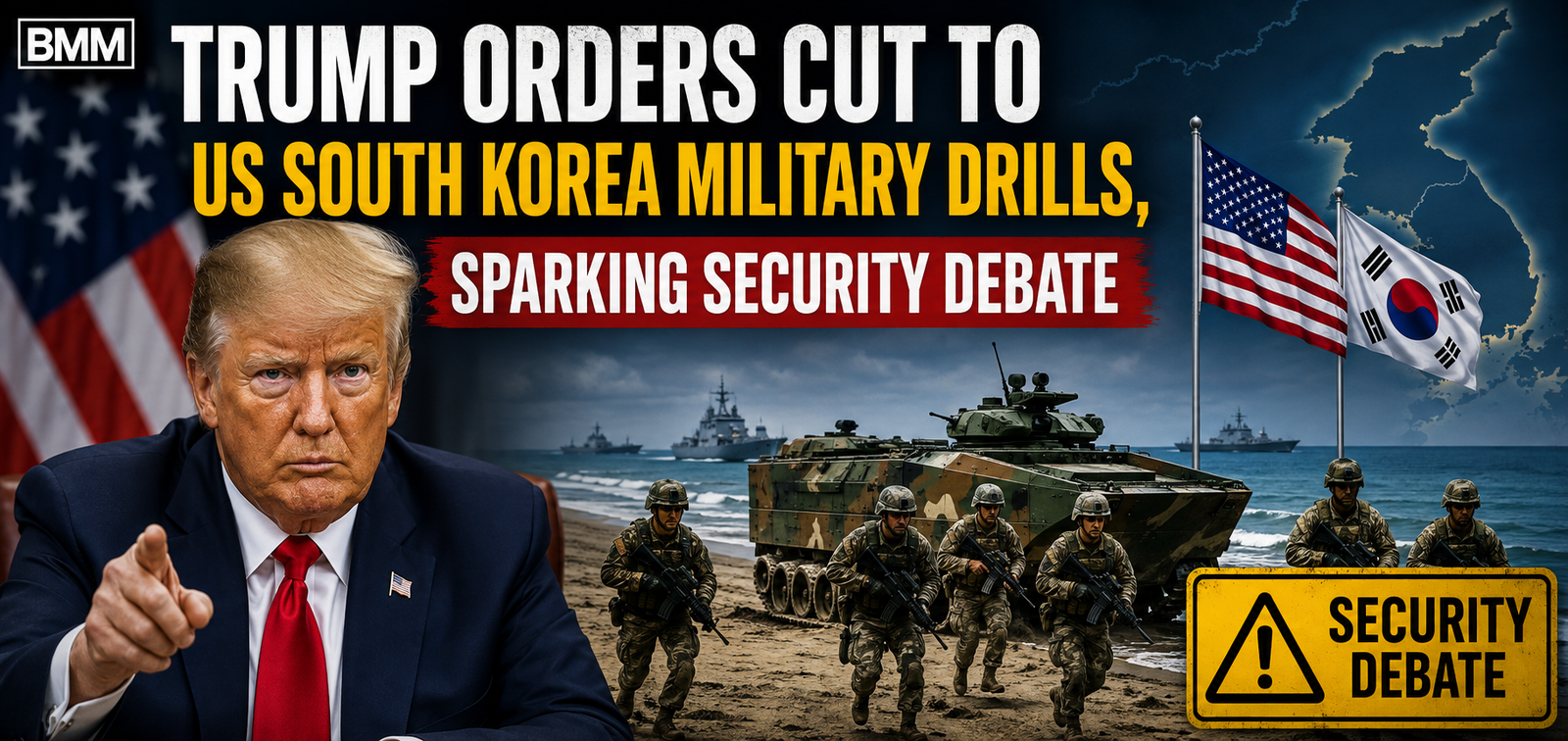
A major shift in Washington’s approach to East Asian security has emerged after President Donald Trump directed the Pentagon to significantly reduce joint military exercises with South Korea. The decision, announced just before the annual Ulchi Freedom Shield exercises were set to begin, has triggered debate among defense experts, policymakers, and regional allies about the future of deterrence on the Korean Peninsula.
Trump’s Rationale Behind the Decision
According to statements made by President Trump, US South Korea military drillsare expensive and project what he refers to as a needlessly aggressive message to North Korea. The president further referred to his long-term friendship with the North Korean leader Kim Jong Un, claiming that the drills would work against the efforts of diplomacy.
It is said that the president told the defense secretary, Pete Hegseth, to reduce the drills instead of canceling them, considering how much the drills have been planned for.
Timing Raises Strategic Questions
This news came just days before the commencement of the annual Ulchi Freedom Shield drill, which is among the most important drills in the readiness plan of the alliance. The drill was anticipated to have involvement of around 18,000 South Korean soldiers.
For decades, US South Korea military drills have been a central pillar of allied readiness against potential threats from North Korea. The exercises combine command simulations, field training, and joint operational planning designed to strengthen interoperability between the two militaries.
Concerns Over North Korea’s Growing Capabilities
The move is causing alarm for security experts considering that North Korea has been steadily increasing its capabilities in both missiles and nuclear weapons, as well as getting battlefield practice from its alleged role in Russia’s war in Ukraine. Analysts point out that cutting down on large-scale training drills may decrease deterrence capabilities in a region that continues to pose a threat.
Recent missile launches by North Korea have already heightened tensions in the region. Analysts note that maintaining robust US South Korea military drills has traditionally been viewed as a key mechanism for demonstrating allied unity and military readiness.
Seoul Responds Cautiously
The South Korean authorities have been prudent in their response to the announcement, stressing the need to coordinate defenses with the United States. Despite the significance of diplomatic relations with North Korea, the government of South Korea believes that joint military preparedness is vital for stability in the region.
It appears that South Korea will conduct the drills regardless of the directive by the United States. However, the extent of the cuts and their consequences cannot be specified yet.
Echoes of Trump’s Earlier Approach
This is in line with President Trump’s previous views on military exercises in South Korea. In his earlier administration, he kept expressing how costly these exercises were and how a cutback would help negotiations with North Korea. A similar cutback was made after the 2018 Singapore summit between Trump and Kim Jong Un.
In summary, this latest decision seems like an effort by the president to focus on diplomacy with North Korea and evaluate the costs of the current military posturing.
What Happens Next?
The issue of future US South Korea military drills has become a significant subject in the dialogue between Washington and Seoul. Although proponents of this move maintain that such a step may help defuse the tensions and provide grounds for talks with North Korea, opponents have expressed concerns over the weakening of the deterrence and American commitment to regional stability.
With the changing security situation in East Asia, the relationship between military readiness and diplomatic activity will be the most monitored aspect of American foreign policy for many years to come. The next several weeks will show if this policy change will contribute to a new round of talks or increase uncertainties in the region.