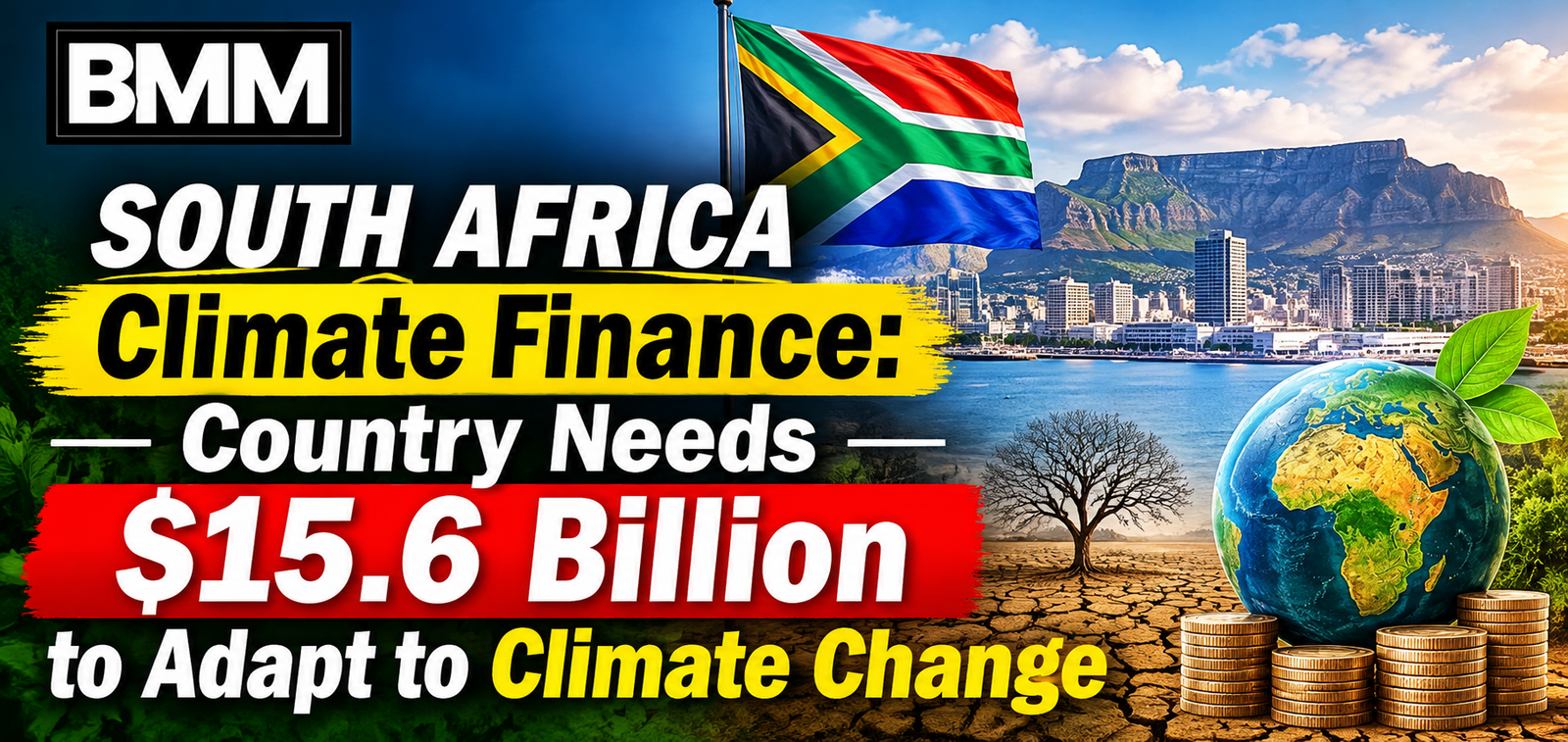
The number is $15.6 billion, or about R250 billion. That is what South Africa reportedly needs over the next ten years just to cover its basic climate adaptation. The South Africa climate finance debate has been running for years, but a single figure gives it an edge it often lacks.
Where the figure originates from
This is based on research carried out at the University of Cape Town, suggesting that the country needs R250 billion or $15.6 billion within ten years for basic adaptation. This research was carried out following an invitation from the South African government in preparation of its second Nationally Determined Contribution in accordance with the Paris Agreement.
Divided over the period of ten years, this equates to R25 billion a year, which seems achievable until the tight budget constraints of the government are considered.
What can the money buy?
The researchers gave some figures in connection with both seven adaptation goals and 36 actions needed to be taken. Some of these actions include:
Creating a 98% reliable water supply requires 50 new municipal water and safety plans along with 200 water dashboards. And 100 climate-resistant emergency shelters need to be built, as community halls do not withstand extreme weather. A lot of money should be spent on water. Almost 75% of the total sum will be allocated to adapting water and sanitation infrastructure to drought and floods.
Why the risks are so close to home
This issue is not an abstract threat at all. Currently, most of the industries, provinces, and municipalities have suffered tremendous losses as a result of 1.3°C of global warming. The primary concerns of the team until 2050 will be water shortages, health issues, and food shortages. Because of this, South African climate finance has become a household issue, not a policy issue.
How will this be financed?
The paper leans toward a combination of both. Blended finance is recommended in this case, whereby financing combines public money with private capital and international funding. Development finance and donor funding will be required for government spending, although private financing should also increase in response to the worsening of the disaster situation.
Justice considerations are also important here. By Article 9.1 of the Paris Agreement, the richer nations should finance the adaptation and mitigation due to their huge contribution to the problem. Experts observe that many pledges remain pledges. In one study, it is warned that without predictable and concessional commitments from the developed nations, these goals will continue being aspirational.
The debt challenge
Financing goes beyond willingness to finance. The financing needs of Africa still remain unmet, with debt levels making it difficult for states to invest in resilience and renewable energy. Financing more debt to deal with the impact of climate change is not easy when the interest payments squeeze other expenditures. This is where South Africa climate finance challenge lies.
What to watch
There are two crucial elements. Firstly, it should be noted if any of the international commitments become binding and funded. Secondly, if Pretoria is able to attract private finance to non-profitable but necessary infrastructure projects like water supply.
The aspect pointed out by the research that is not immediately noticeable is the absence of the records of the cost of climate change impacts and losses that would justify the need for funding adaptation measures. Without such numbers, it is very difficult to ask for billions.
The bottom line
It is huge, but not out of reach. The acid test for South Africa climate finance lies ahead in the next few years. It will determine whether this funding is more than just a headline.