
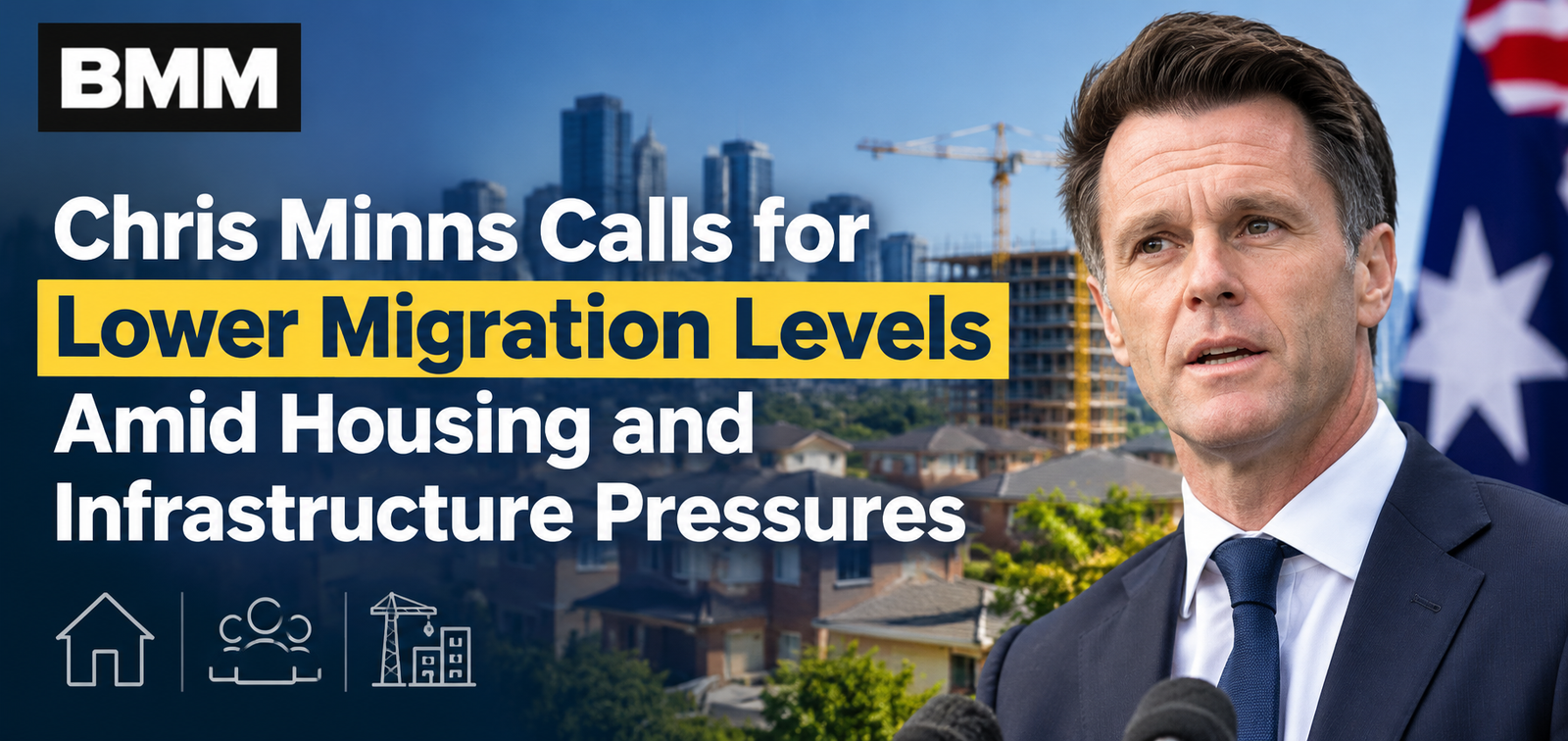
New South Wales Premier Chris Minns has called on Prime Minister Anthony Albanese’s government to take stronger measures to control Australia migration levels, arguing that the post-pandemic surge in arrivals has placed significant pressure on housing, healthcare, and public services across the country. Minns’ comments have added a new dimension to the ongoing national debate over immigration policy and population growth.
Speaking about the challenges facing New South Wales, Minns said that migration levels need to be aligned with the nation’s ability to provide adequate housing and infrastructure. While acknowledging the economic benefits of migration, he emphasized that rapid population growth must be matched by investment in essential services.
Concerns Over Post-Pandemic Population Growth
This debate follows a period when Australia witnessed a spike in net migration from overseas, following the reopening of Australia’s international borders in light of the coronavirus pandemic. As per Minns, over half a million migrants arrived in the nation in a span of one year, thus increasing the demands for accommodation, hospitals, emergency rooms, and transport infrastructure.
The NSW Premier contended that managing Australia migration levels should be a collective effort by both the federal and state governments. He emphasized that governments should have migration targets and also make sure that the targets are met.
Housing Crisis at the Center of the Debate
Affordable housing continues to be one of the key issues related to the number of people who immigrate to Australia. Policy makers and economists have noted that there was an increase in demand for residential property in big cities because of rapid population growth.
Minns has stated that high levels of migration could result in the exacerbation of the shortage of housing if residential construction fails to keep up with demand. It can be regarded as a reflection of increasing worries on behalf of the state’s leaders about balancing population growth and housing/infrastructure supply.
Nevertheless, some politicians do not support this opinion. In particular, the Premier of South Australia, Peter Malinauskas, has recently stressed that Australia faces a problem of insufficient housing supply, not migration.
Federal Government Pursuing Migration Reforms
The Albanese government has already revealed a number of reforms that are intended to curb net overseas migration during the coming years. The authorities at the federal level have made it clear that their plans involve lowering the number of annual net migration to around 225,000 by 2027-28 through strict visa policies and addressing abuse in the migration process.
Recent reforms in terms of migration include stricter policies concerning visa transfer of international students, visa switching prohibitions, and monitoring of migration agents and legal advisers engaged in visa applications. The government justifies these reforms as necessary for sustainable migration policy and meeting economic demands.
Balancing Economic Growth and Infrastructure Capacity
Migration is still a key provider of labor in various industries like healthcare, construction, farming, and education. Business organizations have continually stressed the role of migrant workers in solving the shortage of workers in various parts of the country. On the other hand, there has been an increasing concern over the level Australia migration level as the cost of housing and infrastructure increases.
The dilemma of policymakers here is to balance the two goals of boosting economic growth and having affordable housing and reliable public services.
What Happens Next?
With the migration reforms being undertaken by the federal government, it appears that the Australia migration levels debate will continue to be an important policy topic for some time to come. With the issue of migration management in regard to housing and economic development still up for debate between state governments and various sectors of the community.
With the issue of migration targets coming under increased criticism and the issue of housing affordability becoming increasingly important, the decisions made in the coming years may have a major impact on Australia’s future.