
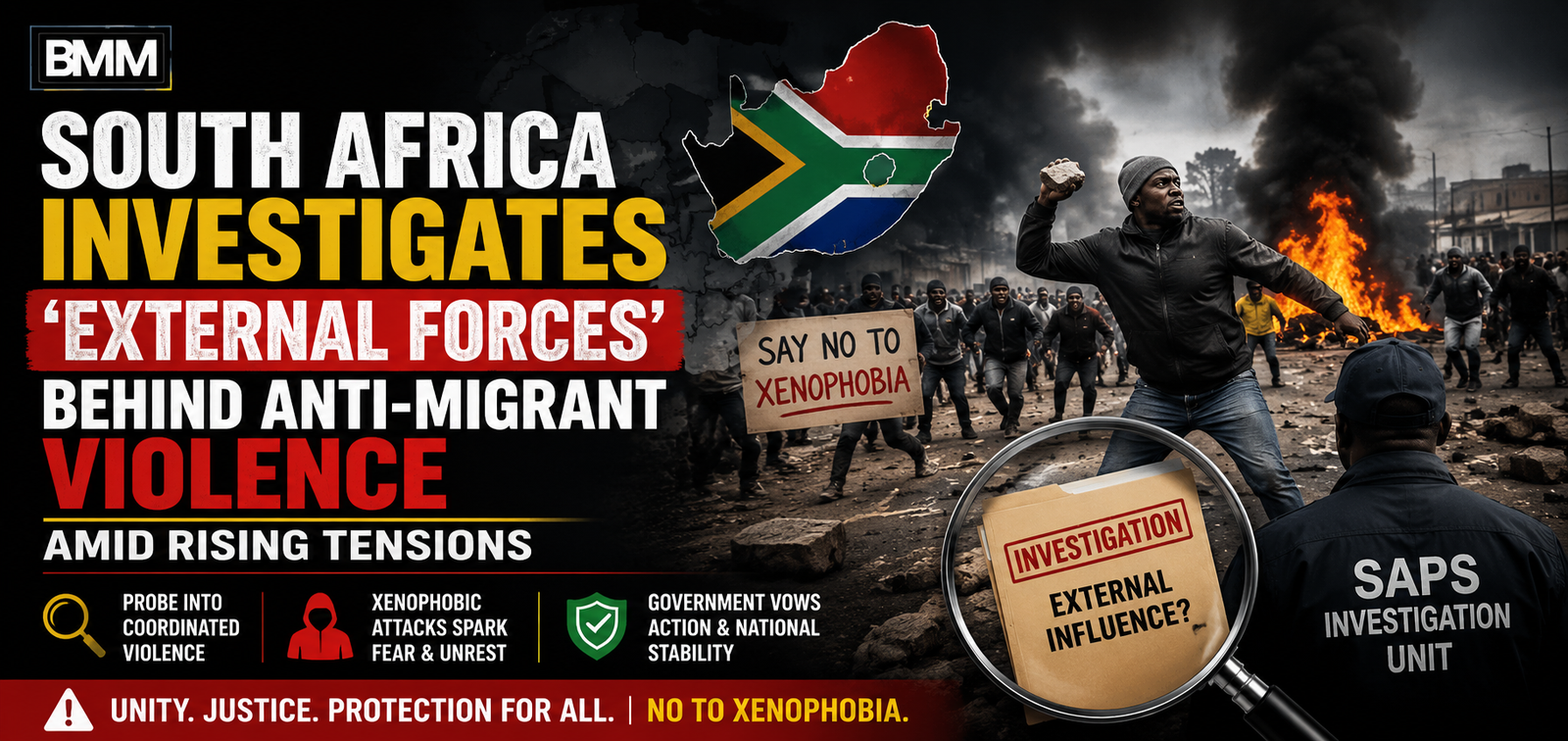
South African President Cyril Ramaphosa has suggested that anti-migrant violence in South Africa may be influenced by external actors, adding a new dimension to a crisis that has already strained the country’s relations with several African nations. Speaking before Parliament, Ramaphosa said authorities were investigating evidence that outside forces could be fueling anti-immigrant sentiment and violence targeting foreign nationals across the country.
The remarks come after months of growing tensions over immigration, rising xenophobic rhetoric, and a wave of violence that has prompted thousands of migrants to leave South Africa. The developments have triggered concern across the continent and raised questions about the political and economic factors driving the unrest.
Ramaphosa Points to Possible External Influence
Speaking at the parliamentary question time, Ramaphosa said that security agencies were investigating reports of efforts being made from abroad to interfere with events within South Africa. As per the president, investigations are taking place on account of activities being witnessed that could show that there are foreign elements that are making things difficult for South Africa.
He didn’t mention any names but made it clear that there are many leads that the government is investigating. At the same time, the idea that South Africa has lost its reputation of being a supporter of Pan-Africanism due to recent events has been ruled out.
The matter has become very sensitive as all African governments are keenly observing the way in which Pretoria is dealing with migrant violence.
Anti-Migrant Violence in South Africa Escalates
In recent times, the issue of immigration has become more controversial than ever before due to frustrations among the populace over joblessness and economic disparity. Various anti-immigration organizations have staged protests calling for the government to crack down on illegal immigrants.
In certain regions, the protests have been violent, resulting in migrants being intimidated and physically assaulted. The government of South Africa has always discouraged vigilante behavior and has asked its citizens not to enforce immigration laws by themselves.
This recent unrest has brought back memories of the previous xenophobic episodes in South Africa, notably in 2008 when the deaths of many people were reported.
Mass Departures Raise Regional Concerns
The upsurge in anti-migrant violence in South Africa has not just been a national phenomenon; rather, it has resulted in repercussions well beyond the borders of the nation itself. According to reports from neighboring states and various international bodies, more than 178,000 migrants have either gone back to their native lands by choice or have been deported.
Several governments in Africa have started the process of repatriating their citizens due to safety considerations as well as fears amongst the migrant population. Ghana and Nigeria are some of the nations which officially expressed worries about the attacks on their citizens.
Human rights groups have said that such an outflow of people may lead to problems of a humanitarian nature.
Government Promises Stronger Action
President Ramaphosa has condemned all instances of xenophobia and threatened to deal decisively with any groups involved in spreading hatred or carrying out illegal acts. The South African government has reiterated the importance of enforcing immigration policies through state agencies, and not individuals or vigilante groups.
Further, there has been an announcement that there will be tightening of borders, improvements in the immigration enforcement process, and collaboration between the South African government and neighboring countries to curb xenophobia.
The president has insisted that migrants cannot be held responsible for the problems faced by South Africa and that poverty and unemployment are still the root causes.
Broader Implications for South Africa
The debate about anti-migrant violence in South Africa has emerged as one of the most important political and diplomatic issues that the country is facing in the year 2026. Besides the issues of security, the issue can also pose threats to the reputation of South Africa as an advocate of African unity.
The proposal by Ramaphosa that there might be interference from foreign entities in the violence in South Africa brings yet another complexity into the issue. This aspect would change the entire dynamics of discussion about the issue of immigration and security.
Outlook
In spite of further investigations, the South African government is in a tough spot, as it will need to find a way to reconcile immigration control with the protection of human rights and the preservation of social stability.
However, what is clear right now is that the growing incidence of anti-migrant violence in South Africa represents a serious challenge for policymakers and migrant communities as well. Whether the protests are motivated by domestic discontent or foreign manipulation, or both, it is safe to assume that the months ahead could be decisive for the future of South Africa.