
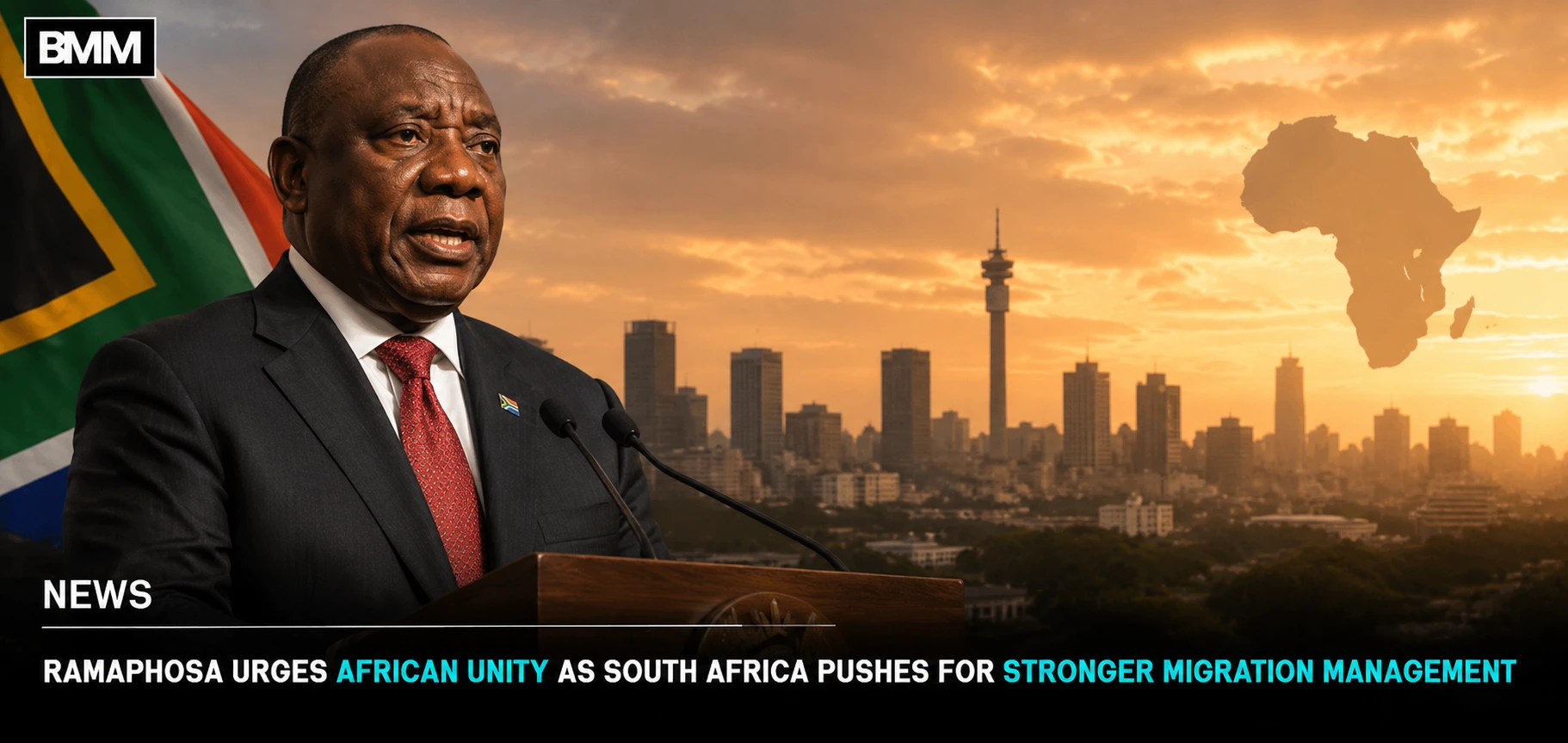
South African President Cyril Ramaphosa has called on neighboring African nations to work together in addressing the growing challenges of migration, warning that unmanaged cross-border movement could threaten the stability, sovereignty, and social cohesion of countries across the continent. His remarks come at a time when South Africa faces increasing domestic pressure over illegal immigration and a rise in anti-migrant sentiment.
Ramaphosa Calls for Regional Cooperation
Speaking at the Pan-African Parliament, Ramaphosa stressed that South Africa migration policy cannot succeed through national action alone. Instead, he urged African governments to adopt a coordinated regional approach that tackles both migration management and the underlying issues forcing people to leave their home countries.
According to the president, migration has become a continental challenge that requires collective responsibility rather than isolated policy responses. He emphasized that no single country can effectively manage large-scale migration without cooperation from its neighbors
Addressing the Root Causes of Migration
The issue of the underlying structures responsible for migration from one part of Africa to another formed the cornerstone of President Ramaphosa’s speech.
According to him, violence, conflicts, weak governance, poverty, unemployment, and social unrest were the main causes for people fleeing their countries looking for greener pastures. Apart from strict border policies, the South Africa migration policy should take into account economic development and peace building in the region.
In this way, African countries would be able to reduce factors responsible for migration and decrease the burden for the receiving states.
Rising Domestic Pressure in South Africa
Such comments are made against the backdrop of increasing political debates regarding immigration in South Africa.
In recent months, there have been more protests against migrants taking place in different parts of South Africa, with some of them alleging that foreign nationals who are without papers have increased crime and unemployment levels as well as strained public services such as health care.
The immigration issue has emerged as one of the most contentious political issues of the country, which has led to debates over border control and labor laws among others.
Condemning Xenophobic Violence
Despite his recognition of the public’s apprehensions towards immigrants, Ramaphosa categorically rejected any form of attacks on foreign citizens.
He called the recent attack “very sad and very abhorrent,” noting his sadness over the deaths, while restating the stand of South Africa to reject xenophobia and discrimination of foreign African nationals.
Ramaphosa again stated that such fears over immigration need to be addressed using legitimate means by the government and not vigilantes or violence. The president noted that it is crucial to keep social stability while South Africa enhances its immigration policy. Several African countries have shown their worries over the security of their citizens in South Africa
Balancing Security and Human Rights
Burnham also faces internal party strife as well. After the exit of Keir Starmer, there is an effort by the Labour Party to unify itself following the turbulent political period that it had been facing. The leadership style of Burnham, which is often referred to as being pragmatic and consensus-oriented, will be put to the test.
The party will need to maintain party cohesion and enact policy reforms in order to appear as a stable government option in the upcoming election.
Why Regional Cooperation Matters
Migration to South Africa has traditionally been considered one of the most important trends in African migratory flows. Its varied economy still lures people from other African countries, especially when the latter experience political or economic unrest.
As the influx of immigrants grows, Southern African states are encouraged to work closer on border controls, labor mobility, and economic development issues. According to Ramaphosa, cooperation between the countries would help to achieve orderly migration while decreasing illegal border crossings. The latter is considered to be one of the key elements of South Africa migration policy in the coming years.
Implications for the Region
The message from the president is not confined to the borders of South Africa. The plea indicates that there is a growing need for a common approach in dealing with migration challenges within the region.
If the neighboring countries cooperate on good governance, economic development, and conflict resolution, then the problem of migration will slowly be dealt with. Furthermore, border control and information exchange could enhance regional security and curb illegal migration groups.
Experts suggest that such deliberations might influence the future initiatives of the African Union on migration matters.
Outlook
The recent statements from Ramaphosa reveal that the South Africa migration policy is set to embark on another stage, which involves both tough border management as well as regional diplomacy and development strategy.
Although there are increasingly growing demands within the country for tightening immigration laws, President Ramaphosa has been vocal about his belief that any solution can be achieved only through cooperation and not confrontation. South Africa seeks to solve the issues behind the migration problem through a collective approach by neighboring countries.
Also Read :- Ukraine Presidential Elections and Referendum Amid War Pressures