
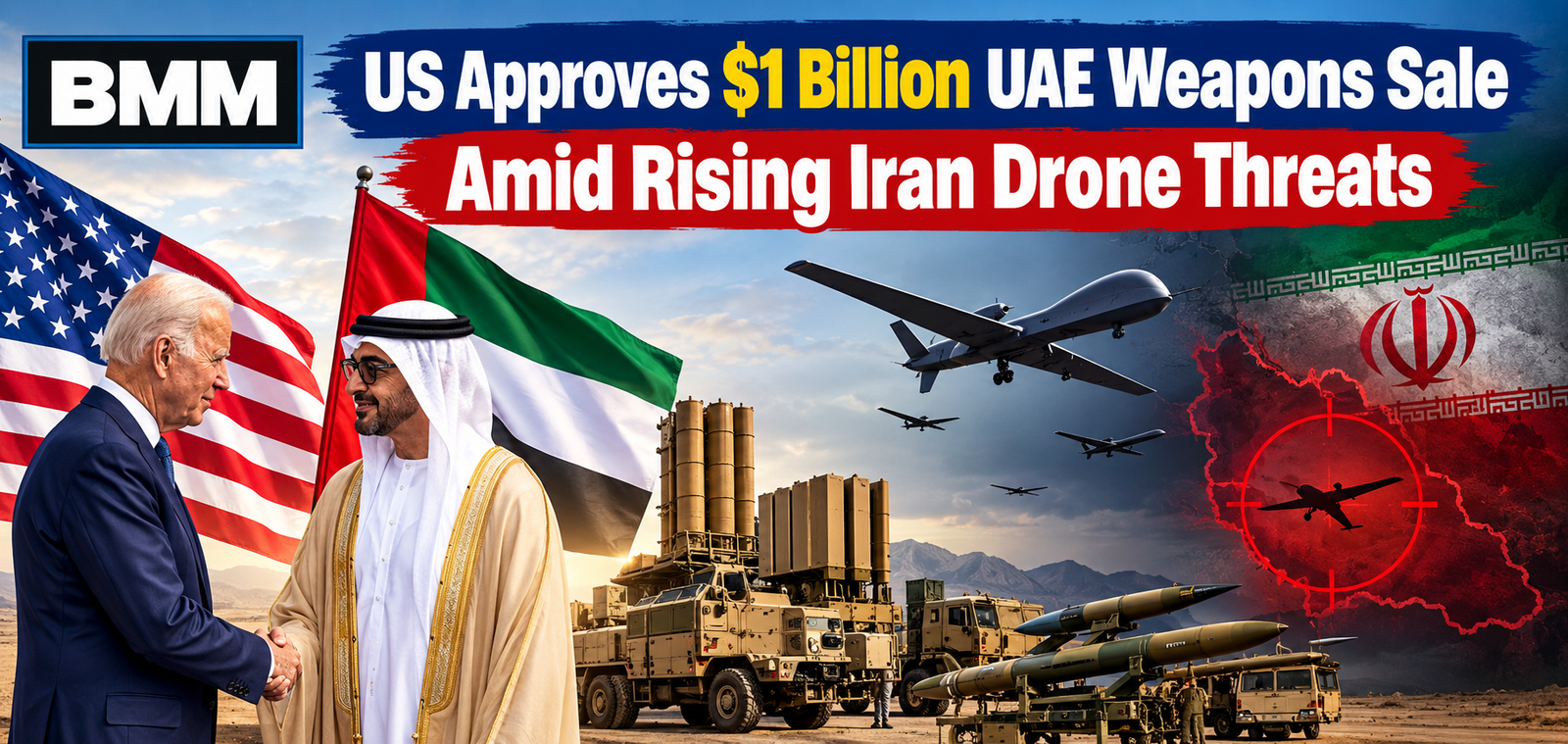
The United States has approved a $1 billion weapons sale to the UAE, reinforcing the Gulf nation’s defense capabilities as regional tensions remain elevated amid ongoing security concerns involving Iran. The announcement comes at a time when Gulf countries continue to face growing threats from missile and drone attacks, prompting renewed focus on air defense and military preparedness.
According to the U.S. State Department, the proposed deal includes up to 10,000 Advanced Precision Kill Weapon System (APKWS) guidance sections, designed to transform unguided rockets into precision-guided munitions. The approval reflects Washington’s commitment to supporting a key regional partner while enhancing collective security across the Gulf.
What the Weapons Package Includes
The star attraction of the $1 billion weapons sale to the UAE is the Advanced Precision Kill Weapon System, a cutting-edge technology that helps military units target air threats accurately and effectively. The system is especially useful when it comes to taking down drones, as it allows for killing cheap unmanned aerial vehicles without the use of costly anti-aircraft missiles.
According to defense experts, drones have become one of the most prominent threats facing the Middle East. With more and more advanced unmanned aerial systems being developed, the countries in the region have been working hard on developing tools to counter them.
Rising Security Concerns Across the Gulf
The approval of the $1 billion weapons sale to the UAE takes place against the background of increased tensions in connection with the activities of Iran in the region. Over the years, there have been threats to the Gulf States with the use of missiles and drones in relation to vital infrastructure, energy facilities, and transport networks.
The latest events in the region have made clear the necessity of developing modern air defense systems since experts in this field note that it is particularly difficult to combat drones due to their relative cheapness and the ability to disrupt any important installations.
For Gulf countries, it has become necessary to improve their defense capacities in order to guarantee both security and economic stability.
Strategic Importance of the UAE
It should be noted that the UAE continues to maintain its status as one of the closest allies of Washington in terms of security in the Middle Eastern region. U.S. representatives said the $1 billion weapons sale to the UAE is justified under U.S. foreign policy as improving the security of an important defence partner and enhancing interoperability between the UAE and U.S. forces.
The fact is that throughout many years the UAE has been investing a lot in the modernization of its military capabilities through cooperation with defense companies of Western countries.
Broader Regional Implications
Furthermore, the $1 billion arms deal with the UAE has several political implications as well. In light of the complicated security scenario facing the Gulf states, alliances have become a key part of the regional strategy, which is being re-evaluated by many states in view of the threats posed by drone technology, missile attacks, and asymmetrical warfare.
It will now go through a review by the U.S. Congress, as all major foreign military deals normally go through a process of evaluation before they can be approved. However, while most of these deals get approved for close allies, they are often debated on issues related to regional stability and power balance.
Looking Ahead
Approval of the $1 billion weapons sale to the UAE signifies the increasing importance of anti-drone technology in warfare and also underscores the general attempt to improve security in the Gulf region. With continuing tensions in the region shaping the defense needs of various states, military modernization is expected to continue being a priority for many countries in the Middle East.
On the side of the UAE, the purchase marks yet another effort to improve the country’s defense capacities. As far as the US is concerned, it is a move that signifies ongoing support for regional allies in the face of evolving security challenges.