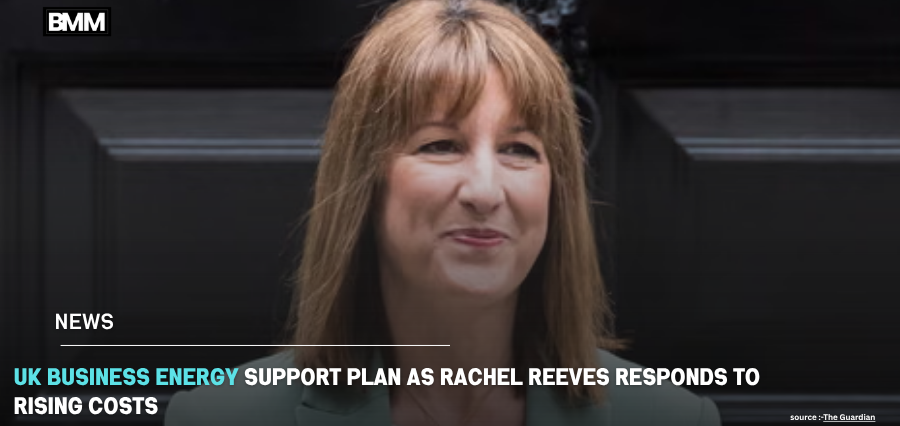
The UK business energy support plan is set to become a major economic policy focus this week as Chancellor Rachel Reeves prepares to unveil fresh measures aimed at helping businesses cope with soaring energy prices. The move comes amid continued instability linked to the conflict in Iran and the disruption of global oil and gas routes.
With Britain’s manufacturing and retail sectors already under pressure, Reeves’ announcement is expected to address both immediate cost relief and long-term competitiveness.
Why the UK Business Energy Support Plan Is Needed?
The necessity of a robust business energy support plan in the UK has been aggravated due to the current conflict in Iran and the shutdown of the Strait of Hormuz, which is one of the most important oil transportation routes in the world.
Any interference with this passage rapidly drives up the prices of crude oil and gas in the world markets, with a direct impact on the wholesale energy prices in the UK market. Reeves has cautioned that the war will have a cost to British families and businesses, with increasing fuel, electricity, and logistics costs being of concern.
Companies in the manufacturing, food supply, and transport industries are already experiencing the pressure. The increase in wholesale prices will trickle down into the cost of production, distribution costs, and finally consumer inflation.
What Rachel Reeves Is Expected to Announce?
The upcoming UK business energy support plan is expected to focus on measures that reduce the burden on companies facing unsustainably high electricity and fuel bills.
Previous government steps included:
- cutting selected green levies
- reducing bills for electricity-intensive firms
- extending fuel duty relief
- targeted support for key industries
Reeves has indicated that the next phase will go beyond short-term fixes and focus on improving Britain’s competitiveness, especially for the manufacturing sector.
According to her statement, the UK’s manufacturers have faced “uncompetitive energy prices for too long,” suggesting that industrial energy reforms may be central to the announcement.
Impact on UK Manufacturing and Businesses
The UK business energy support plan is particularly important for manufacturers, who are among the most exposed to rising power costs.
Factories rely heavily on stable electricity and fuel prices for production, transportation, and supply chain operations. Rising costs can quickly reduce margins and make British exports less competitive internationally.
Sectors likely to benefit include:
- steel and heavy manufacturing
- food and beverage supply chains
- logistics and transport
- energy-intensive industrial units
Industry groups have repeatedly warned that high costs could slow investment and lead to job pressures if support is delayed.
Possible Household Support Measures
Although the target now is the UK business energy support plan, Reeves has already given hints about the targeted household support.
The increase in energy bills is predicted to continue in July, and any consumer relief would most likely be income-based, but not universal. This implies that low-income families can be directly supported, and larger-scale business support is declared independently.
This is a two-step measure to strike a balance between fiscal responsibility and economic protection.
International Focus and IMF Discussions
Reeves will also attend IMF meetings in Washington, where she will discuss maritime security and how to restore safe navigation through the Strait of Hormuz.
The effectiveness of the diplomatic initiatives will be invaluable since the UK business energy support plan will merely mitigate the impact on the domestic scale, whereas the cause of the problem will be the disruption of supplies in the global arena.
Outlook for the UK Economy
Investors, manufacturers, and households will most likely pay close attention to the UK business energy support plan.
Assuming the conflict continues, the additional energy price shocks may continue to strain inflation and economic growth. The plan by Reeves can provide temporary stability, but the longer term will be largely dependent on the developments of geopolitics.
In the meantime, the businesses in the UK are on the lookout for the extent of relief the government is willing to offer and its speed in coming into effect.
Also Read :- Myanmar President Min Aung Hlaing Seeks to Rebuild ASEAN Ties Amid New Challenges