
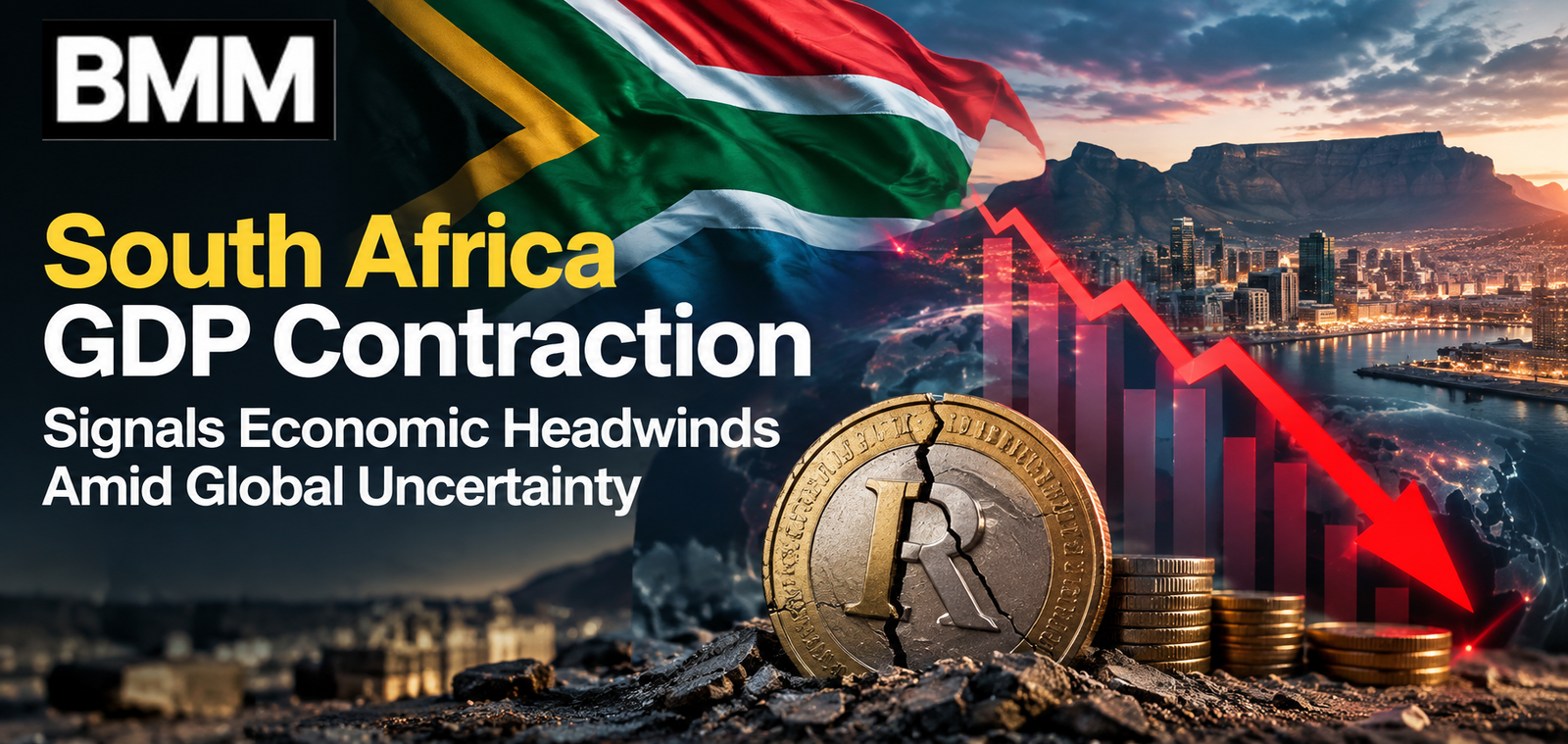
South Africa’s economy unexpectedly slipped into reverse during the second quarter of 2026, highlighting the growing challenges facing Africa’s most industrialized nation. Official data released by Statistics South Africa showed that the country’s gross domestic product (GDP) contracted by 0.2% on a seasonally adjusted quarter-on-quarter basis, marking the first economic decline in nearly two years. The figures have intensified concerns about the country’s growth prospects as geopolitical tensions and domestic economic weaknesses continue to weigh on business activity.
Economic Growth Reverses Course
These numbers mark a stark departure from the 0.4% growth witnessed in the first quarter of 2026. Analysts polled by Reuters had projected a lower number of -0.1%, putting these recent numbers below market expectations. This latest South Africa GDP Contraction is attributed to the combination of lower domestic demand as well as reduced production in several sectors.
Although the country had been demonstrating signs of economic recovery in the early part of 2026, these signs fizzled out during the second quarter due to increased costs and global uncertainties that had impacted both households and corporations.
Mining and Manufacturing Lead the Decline
The primary drivers behind the South Africa GDP Contraction were the mining, manufacturing, and trade sectors.
Output from the mining industry decreased by 3.0%, while that from the manufacturing sector decreased by 1.8%. Also, the trade industry, which consists of wholesale and retail trade registered a decrease of 1.9%. These sectors contributed to the recession in the economy.
Manufacturing has been more prone to increases in the cost of inputs and low consumer demand, whereas mining has faced challenges related to operations and the market. These sectors are critical for employment generation and exports; therefore, the decrease in these sectors is worrying.
Impact of Middle East Tensions
One of the main external factors that led to the South Africa GDP Contraction is the current conflict that is going on with Iran, according to economists. It is believed that high fuel prices resulting from the conflict have greatly affected the purchasing power of the population.
As South Africa imports most of its fuel, this factor has put pressure both on individuals and companies in South Africa.
As per analysts from Standard Chartered, high fuel prices have negatively affected domestic demand, which is one of the fundamental aspects of the South African economy.
Investment Remains Under Pressure
Another issue that has emerged out of the recent statistics is the ongoing weak performance on the front of investment activities.
Though there was a positive performance in consumption by the households, the investment expenditures witnessed a fall once again. Reduced investment would restrict the growth of productivity, employment and economy in the future.
Thus, the South Africa GDP Contraction is due not only to the immediate external factors but also because of structural issues that have been plaguing the growth of the country for quite some time.
Can the Economy Recover in the Second Half?
Even though the numbers are underwhelming, economists feel that there may be some hope in reversing the current scenario.
Statistics South Africa highlighted that third quarter performance is important as it will decide whether the growth rate will meet the current forecasts of being between 1.2% to 1.5%. However, before the geopolitical conflicts arose earlier in the year, the government’s forecast was an economic growth of 1.6% for 2026.
There are some people who feel that the South Africa GDP Contraction is a temporary disruption and not the end of the road for recovery. Recent surveys of businesses indicate growth of the private sector.
Looking Ahead
The latest GDP numbers highlight just how sensitive some economies are to the combination of global events and internal economic problems. Increases in energy prices, reductions in industrial production, and sluggishness in investments have all come together to make things difficult for South Africa.
Whether the South Africa GDP Contraction turns out to be a temporary problem or the start of an extended period of slowing growth will be determined by what happens in the world of international energy prices, business sentiment, and the mining and manufacturing industries. In any case, all eyes will now be on the third quarter data releases.