
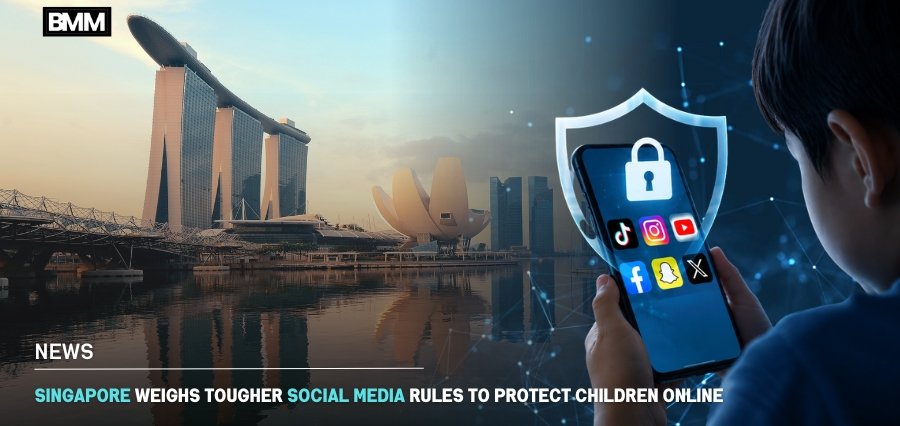
Singapore is considering stronger measures to safeguard young internet users, including the possibility of restricting access to social media platforms for people under 18 if companies fail to meet child safety standards. The proposal was announced by Minister for Digital Development and Information Josephine Teo during a forum on child online safety, signalling the government’s continued efforts to create a safer digital environment for children and teenagers.
Rather than imposing a blanket ban, Singapore is exploring a differentiated approach where platforms that demonstrate robust safety measures can continue serving younger users, while those that fail to provide adequate protections could face restrictions for minors. The proposal places child online safety in Singapore at the centre of the country’s evolving digital governance strategy.
A Balanced Approach Instead of a Blanket Ban
In contrast to nations that have suggested comprehensive bans on social networking sites for the young generation, the approach adopted by Singapore emphasizes on inducing such platforms to enhance their safety standards first. As stated by Josephine Teo, restriction of access should be the measure of last resort.
The proposed framework would allow regulators to distinguish between platforms based on their ability to create child-safe digital spaces. Services that implement effective safeguards could remain accessible to users under 18, while those unwilling or unable to comply could be restricted. This measured approach reflects Singapore’s belief that child online safety in Singapore can be strengthened through accountability rather than outright prohibition.
Greater Responsibility for Technology Platforms
This framework broadens the responsibility of technology companies not just to filter out the dangerous material but also to evaluate the structural aspects that contribute to shaping user behavior, such as the recommendation algorithm, addictive interface design, and the capability for kids to contact strangers online.
Involving the design of platforms in their approach to safety will help to lower digital threats even before they become harmful to children. According to industry experts, this broader notion of online safety may have an impact on future regulatory structures around the world.
Strengthening child online safety in Singapore therefore, involves both content moderation and responsible product design.
Education Remains a Key Priority
It was clear from the statements made by the government that regulation alone will not be enough to overcome the difficulties that young internet users will face. There is a need for parents, teachers, tech firms, policymakers, and the youths themselves to contribute to forming healthy digital habits.
According to Josephine Teo, today’s children live in an age when the world online and offline are so intertwined together. Rather than trying to totally keep the youths away from social media, the government seeks to give them the ability to maneuver through the digital world safely.
Another point that the government emphasized was the need to encourage feedback from the youths, many of whom were willing to leave sites that do not put their wellbeing first.
This growing awareness is viewed as an important element in improving child online safety in Singapore over the long term.
Building on Existing Digital Safety Measures
Singapore has already rolled out several regulatory initiatives meant to enhance the safety of its younger population on the internet. Some of these initiatives are mandatory Codes of Practice for Online Safety, age assurance for online services, and annual reporting from big social media companies.
The most recent regulatory initiative adds to these existing regulatory frameworks by considering the option of platform access for children based on compliance with safety for children. According to the officials, the government is actively working with parents, teachers, industry players, and youths as it seeks ways to ensure child online safety in Singapore.
Looking Ahead
Singapore’s suggested approach is in keeping with the increasing global discussion on how governments need to manage the availability of social media among children without undermining their usefulness. Singapore’s suggested regulatory framework is one that does Singapore’s suggested approach is in keeping with the increasing global discussion on how governments need to manage the availability of social media among children without undermining their usefulness. Singapore’s suggested regulatory framework is one that does not treat all platforms in the same manner, but instead considers those that can create a truly safe internet environment.
Should this suggestion become a reality, it would certainly serve as a new benchmark when it comes to regulating digital platforms by promoting the development of technology that promotes child safety as an inherent part of its design. In view of the similar challenges faced by other governments, Singapore’s shifting policy towards child online safety may very well provide another approach.
Also Read :- Ukraine Presidential Elections and Referendum Amid War Pressures