
Strategic Direction Beyond Consulting
Kurt Strohmayer serves as Executive Director at QUANTUM Aluminum and Glass Industries. In this role, his focus is on shaping the long-term strategic direction of a growing manufacturing company in the facade and construction sector.
His mandate centers on three key areas. The first involves developing long-term growth strategies that position the company competitively within the regional market. This includes identifying emerging opportunities, expanding product capabilities, and strengthening the company’s market positioning.
The second focus is the creation of structured planning frameworks within the organization. Manufacturing businesses often operate under constant operational pressure, and long-term strategic planning can sometimes take a secondary role. Kurt works to embed structured planning processes into the company’s operational culture.
The third area involves strengthening partnerships and market relationships. In the construction and facade industry, collaboration with developers, consultants, and contractors is essential. Kurt works to expand the company’s presence in major projects and build alliances that support sustainable growth.
Reviving and Rebuilding a Manufacturing Operation
When Kurt joined QUANTUM in February 2025, the company was in the early stages of transformation. The owners, including Co-Founder and CEO Zabi Ziarmal, had just acquired an abandoned glass factory in Ras Al Khaimah. The site required significant rehabilitation before it could operate effectively.
One of Kurt’s early initiatives involved establishing the company’s digital presence and brand identity. Even the process of securing the company’s website domain required careful consideration. While a desirable domain name was available for a high price, Kurt identified an alternative that better reflected the company’s UAE identity while costing only a fraction of the price.
Operationally, the challenges were significant. The factory infrastructure, machinery, office spaces, and labor accommodation facilities were all in deteriorated condition. Restoring the facility required extensive investment and planning.
New aluminum production machinery had to be installed, while existing glass production equipment required complete overhaul and recommissioning. Kurt worked closely with experienced industry specialists to rehabilitate the production lines and bring the facility back into operational condition.
At the same time, market analysis was conducted to identify demand segments and develop a marketing strategy. These efforts were accompanied by internal assessments to evaluate the company’s operational strengths and areas for improvement.
Laying the Foundation for Sustainable Growth
Beyond infrastructure restoration, Kurt recognized the importance of building a strong organizational foundation. One of his priorities was introducing structured long-term planning frameworks within the company.
Manufacturing environments often operate under immediate production pressures, but sustainable growth requires clear strategic horizons. Kurt and his team began by analyzing market positioning, operational capacity, and product capabilities in order to identify opportunities for strengthening competitiveness.
Another critical focus was building the right team. Kurt believes strongly that organizational success depends on hiring the right individuals and supporting them effectively. In his view, when employees are treated with respect and provided with the right environment, they naturally contribute more strongly to the organization’s success and customer relationships.
Improving coordination between departments also became a key priority. Manufacturing, engineering, procurement, and sales functions must operate as an integrated system rather than isolated units. Through structured planning sessions, clearer performance metrics, and improved evaluation frameworks, Kurt helped translate strategic priorities into practical operational initiatives.
Aligning Strategy with Production Reality
Balancing strategic planning with daily operational realities is one of the central challenges in manufacturing leadership. Kurt approaches this by ensuring that strategic initiatives are always grounded in operational practicality.
Long-term strategies must account for production capacity, workforce capabilities, supply chain dynamics, and project timelines. For this reason, operational leadership is actively involved in strategic discussions rather than being presented with finalized plans afterward.
Incremental implementation also plays an important role. Instead of introducing sweeping changes all at once, Kurt focuses on gradual improvements that can be integrated into existing workflows. This approach allows strategic initiatives to support operational efficiency rather than disrupt it.
Planning for the Long Horizon in Manufacturing
Kurt has also been responsible for preparing detailed ten-year business plans and feasibility studies. Long-term planning in manufacturing requires careful evaluation of both opportunities and risks.
Market demand in the facade and construction sector is closely tied to economic cycles and real estate development activity. Therefore, macroeconomic trends and regional development forecasts form an important part of planning assumptions.
Technological evolution is another key factor. Advances in automation, digital production systems, and materials technology may reshape manufacturing processes over time. Kurt believes companies must anticipate these shifts and remain prepared to adapt.
Supply chain resilience has also become a critical consideration in recent years. Global disruptions have demonstrated the importance of diversified sourcing and strong supplier relationships.
Financial sustainability remains central to all planning efforts. Long-term strategies must include realistic investment timelines and clearly defined risk mitigation measures to ensure stability and growth.
The Next Phase of Industrial Growth
The manufacturing sector in the United Arab Emirates is rapidly evolving as the country positions itself as a hub for advanced industry. Kurt sees digitalization as a major force shaping this transformation.
Technologies such as automation, data-driven production systems, and digital supply chain management are becoming increasingly important. For facade and construction manufacturers, digital tools can improve production accuracy, project coordination, and cost management.
Operational excellence will also become a key competitive differentiator. Companies that successfully integrate advanced technology with strong project management capabilities will gain significant advantages in the market.
Sustainability is another emerging priority. Manufacturers will increasingly need to incorporate environmentally responsible practices into their operations while maintaining efficiency and profitability.
QUANTUM’s Path to Industry Leadership
In a highly competitive regional market, Kurt believes QUANTUM Aluminum and Glass Industries distinguishes itself through a combination of technical expertise, strategic partnerships, and a strong commitment to innovation.
The company focuses on advanced facade systems, precision manufacturing, and collaborative project delivery. These capabilities position it well within the Middle East’s dynamic construction sector.
Equally important is the company’s forward-looking vision. By continually strengthening technical capabilities and expanding partnerships with developers and consultants, QUANTUM aims to contribute to some of the region’s most ambitious architectural projects.
Constructing a Future Defined by Innovation
Looking toward the next three to five years, Kurt defines success in both organizational and personal terms. For QUANTUM, success means establishing the company as a leading regional player in facade manufacturing and engineering.
This vision includes expanding the company’s project portfolio, strengthening operational capabilities, and developing innovative facade solutions that meet the evolving demands of modern architecture.
From a leadership perspective, Kurt places strong emphasis on building effective teams and fostering a culture of collaboration, innovation, and continuous improvement. He views his role not only as guiding strategy but also as enabling people within the organization to succeed.
Ultimately, Kurt believes that true success is measured not only by financial performance but also by the long-term relationships a company builds with clients, partners, and employees. These relationships form the foundation of sustainable growth and lasting impact.
The Advantage of Cross-Sector Leadership
Alongside his work at QUANTUM, Kurt brings more than a decade of experience through Quatron Consulting, where he has advised organizations across multiple industries, including steel manufacturing, hospitality, and food and beverage. This cross-sector experience has shaped his leadership approach significantly.
While these industries may appear very different, they share common strategic principles such as operational efficiency, customer satisfaction, and financial sustainability. Kurt believes that working across industries encourages adaptability and broader thinking.
For example, the operational discipline required in hospitality, where service standards must remain consistent every day, can translate effectively into manufacturing environments where precision and reliability are equally critical.
This exposure to diverse sectors allows Kurt to approach business challenges from multiple perspectives and develop innovative solutions that might not emerge from a single-industry viewpoint.
The Human Side of Transformation
Organizational transformation can often encounter resistance, particularly when established routines are challenged. Kurt believes that successful change management depends on transparency and collaboration.
Employees are more likely to support transformation initiatives when they understand the reasons behind them. For this reason, Kurt prioritizes clear communication and early engagement with teams throughout the change process.
Rather than presenting decisions as finalized directives, he encourages dialogue and participation. Demonstrating the practical benefits of change also helps build support. When employees see how new processes reduce inefficiencies or create opportunities, they become more willing participants in transformation efforts.
Ultimately, Kurt views organizational transformation as a collective journey rather than a top-down directive.
Through Quatron Consulting Management SRL, some of the most remarkable places people experience in their lives, a breathtaking resort overlooking the sea, a tranquil golf retreat, a hotel that becomes the backdrop of unforgettable memories, begin as little more than an idea. Before the architecture rises and the doors open to guests, there are moments of uncertainty, ambition, and careful decision-making that shape whether that vision will ever become reality. Hospitality development is not only about financial models or construction plans; it is about imagination, responsibility, and the quiet determination to transform possibility into something people can truly experience. Behind every successful project are individuals who carry the weight of expectations from investors, developers, and future guests, working patiently to turn bold concepts into places that will one day host countless human stories.
For Kurt Strohmayer, that responsibility is both a challenge and a source of deep professional fulfillment. As Managing Director of Quatron Consulting Management SRL, he guides complex hospitality and leisure developments across international markets, helping ambitious ideas evolve into projects that are not only visionary but also practical and sustainable.
Quatron Consulting and the Blueprint for Global Hospitality
As Managing Director of Quatron Consulting Management SRL, Kurt oversees complex hospitality and leisure developments across multiple international markets. His responsibilities extend far beyond traditional consulting, encompassing the full journey of a project from concept development to operational readiness. Through his leadership, the company works on luxury hotels, integrated resorts, and golf developments that require both strategic foresight and operational practicality.
Kurt’s role involves ensuring that ambitious visions from investors and developers translate into viable and sustainable projects. At the strategic level, he leads feasibility studies, investor advisory processes, brand positioning, and development planning. However, he emphasizes that strategy alone is not sufficient. A hospitality project must ultimately function efficiently once it begins operations, which means operational planning must be integrated into every early stage decision.
To maintain consistency across diverse projects, Kurt relies on structured frameworks for feasibility analysis, operational planning, and project governance. These standardized approaches help maintain quality across markets while still allowing flexibility to adapt to the specific needs of each project.
Equally important is assembling the right team. Hospitality developments involve collaboration between architects, hotel operators, financial advisors, and developers. Kurt ensures that all stakeholders align around a shared vision and operate within clearly defined parameters. Continuous engagement throughout the project lifecycle also allows him to ensure that recommendations are not merely theoretical but are implemented successfully on the ground.
Navigating the Lifecycle of Hospitality Development
Managing several hospitality and golf projects simultaneously requires a disciplined approach to prioritization. Kurt approaches this challenge by carefully evaluating the stage of development for each project, recognizing that different phases require different types of leadership and attention.
In early development stages, his focus is strongly strategic. Feasibility assessments, market positioning, financial viability, and operator selection are all decisions that determine the long-term trajectory of a project. Because these early choices shape the entire development, they require careful attention and thoughtful analysis.
As projects move into construction and pre-opening phases, the focus shifts toward operational coordination. At this stage, Kurt works closely with teams to ensure that design decisions align with operational realities. Construction timelines, operational workflows, and staffing structures must all come together in a cohesive plan before a property opens to guests.
Communication plays a central role in this process. Kurt maintains structured and regular interactions with project teams and stakeholders, allowing potential issues to be addressed proactively rather than reactively. For him, effective prioritization is not about dividing time equally across projects but about directing attention where strategic decisions will have the greatest long-term impact.
Building Viable Hospitality Models
Consulting in the hospitality sector requires more than conceptual thinking. Kurt’s work often involves transforming strategic ideas into operationally viable business models that provide clarity for owners and investors.
Feasibility studies, for instance, must extend far beyond basic market analysis. Investors need clear financial projections, risk assessments, and actionable implementation strategies. Kurt ensures that every feasibility study integrates multiple layers of analysis, including market demand, revenue potential, operational cost structures, and capital investment requirements.
Brand selection is another critical area where strategic insight must translate into practical decisions. Choosing a hotel brand or operator is not merely about prestige or global recognition. Kurt evaluates how well a brand aligns with a property’s location, its target audience, and its financial expectations. A brand that performs well in one market may not necessarily be suitable in another.
Operational planning then bridges the gap between strategy and execution. This includes defining staffing structures, designing service concepts, planning facilities, and implementing revenue management strategies. For Kurt, the ultimate objective is clarity. Investors need not only to understand the opportunity but also to see a clear roadmap for achieving success.
“Only what gets measured, gets done.”
“A great hospitality project does not begin with buildings. It begins with clarity of vision and the discipline to turn that vision into something that can truly work in the real world.”
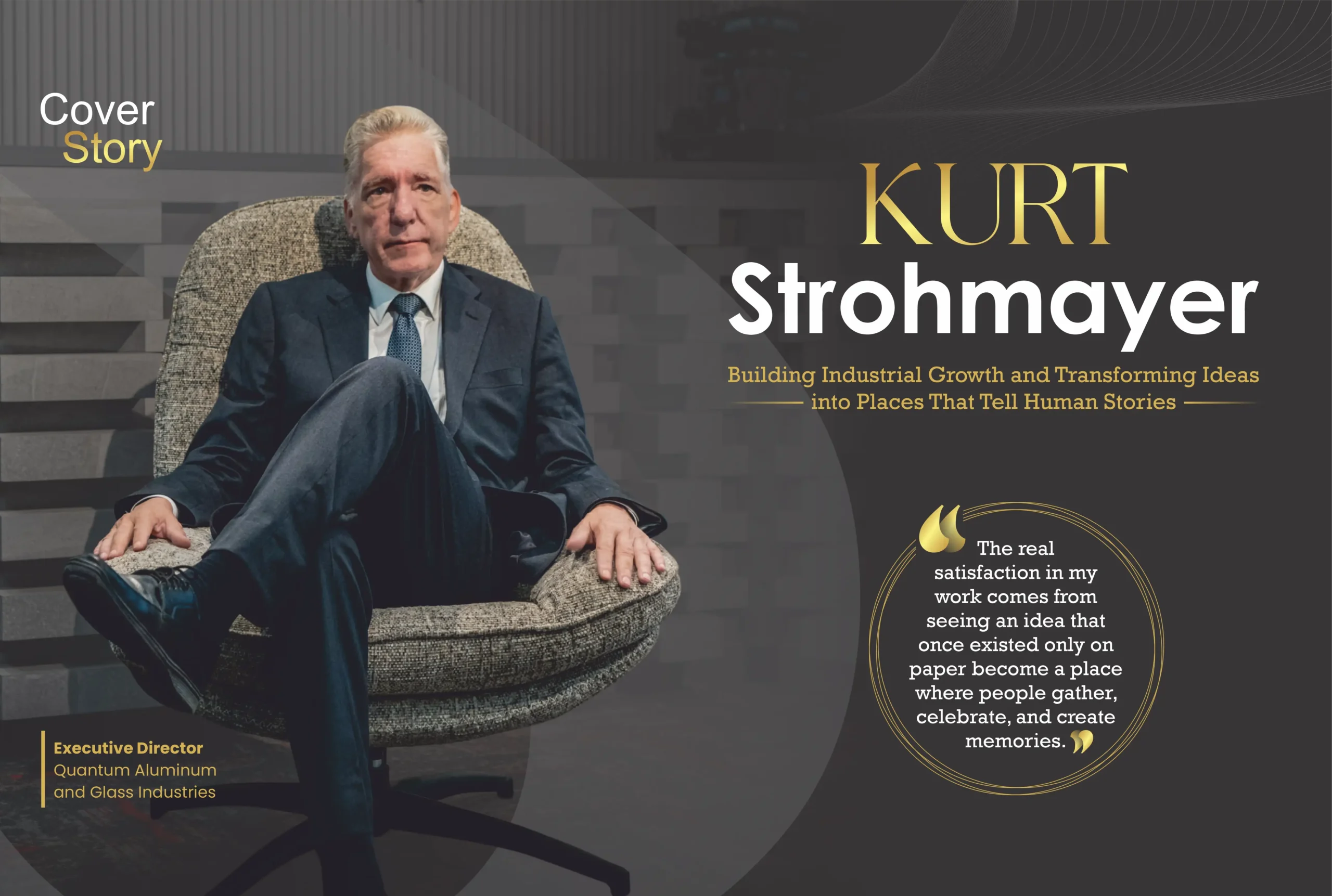
“The real satisfaction in my work comes from seeing an idea that once existed only on paper become a place where people gather, celebrate, and create memories.”
“Strategy in Hospitality, Real Estate Developments and our QUANTUM Aluminum & Glass Production Factories is not only about market numbers or financial projections, it is about designing experiences that will still feel meaningful years after the doors open.”
Also Read: Business Minds Media for more information