
Laboratories are places where precision determines progress. A sample can reveal the quality of a medicine, the safety of food, the composition of minerals or the presence of a disease. Yet behind every reliable result lies an intricate system of processes, records, instruments and human expertise. As scientific demands grow, laboratories must do more than generate accurate findings; they must ensure that every piece of information can be trusted, traced and translated into meaningful decisions. This makes laboratory informatics an increasingly important part of scientific and industrial development.
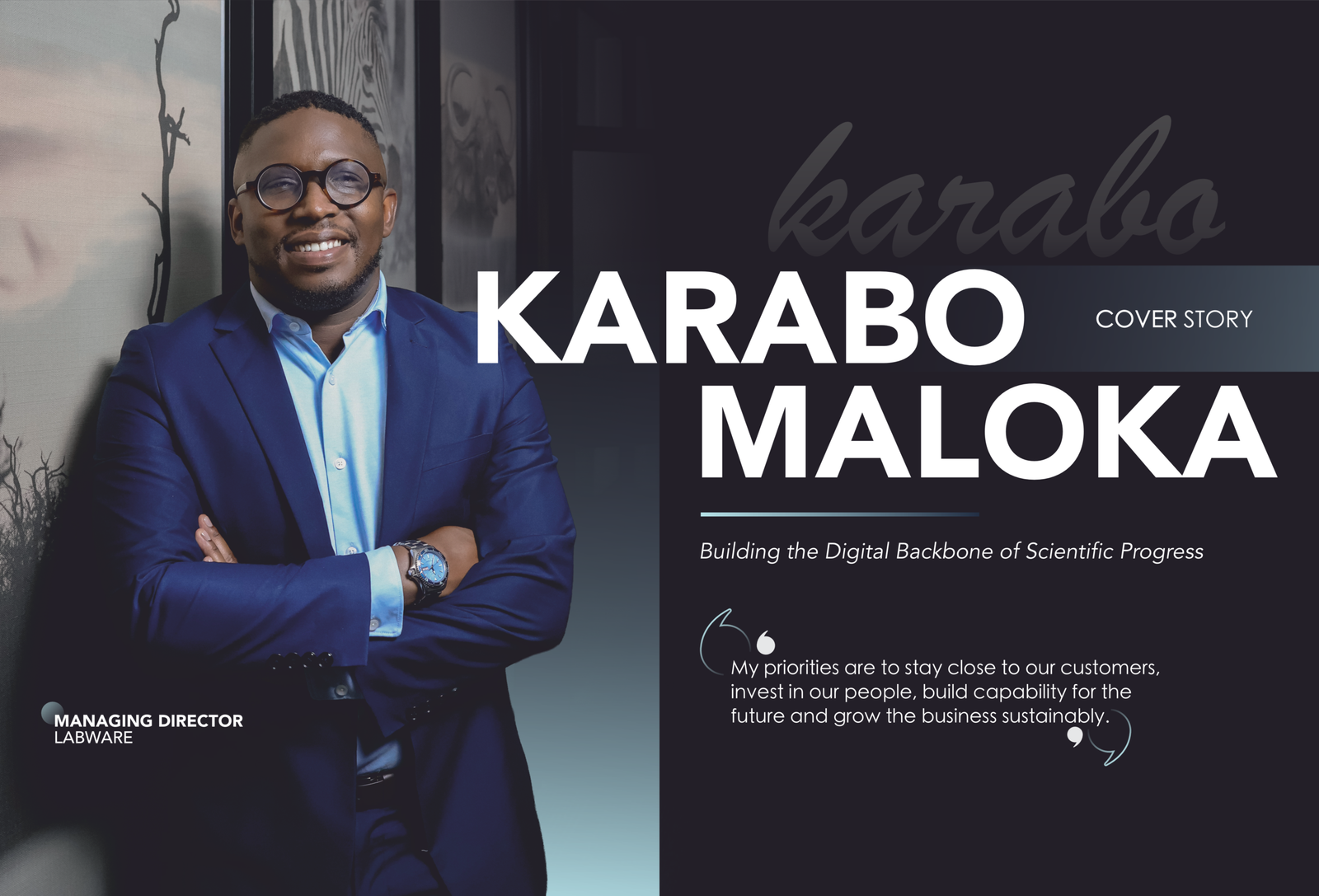
For Karabo Maloka, Managing Director of LabWare Africa, the evolution of laboratory technology is ultimately about improving the way people work. With more than 15 years at LabWare, his professional journey has moved from implementation and sales to understanding the wider organisational impact of digital transformation. He believes that successful laboratory solutions must extend beyond technical capabilities to improve efficiency, strengthen compliance, support quality and help organisations grow. This philosophy informs his leadership approach, which places customer relationships, employee development, future capabilities and sustainable business growth among its priorities. Reflecting on his experience, he remarked, “Technology alone doesn’t create transformation. People do.”
Building Digital Pathways Across Africa
Sub-Saharan Africa presents a considerable opportunity for laboratory digitalisation, although the pace and nature of adoption vary across markets. Some organisations are beginning their journey by replacing paper-based processes, while others are exploring automation, cloud infrastructure, SaaS solutions and advanced ways of using laboratory data.
Karabo believes that understanding these differences is essential to delivering meaningful results. Infrastructure, connectivity, regulatory requirements, workforce capabilities and investment capacity vary between countries and even between organisations operating within the same market. Consequently, a standardised approach cannot address every laboratory’s requirements.
He sees considerable potential for African markets to leapfrog traditional stages of digital development. Achieving this, however, requires more than introducing new software. Local expertise, skills development and long-term customer partnerships must accompany technological investment. His approach centres on identifying what each organisation needs and developing solutions that are both technologically appropriate and commercially sustainable.
One Platform, Multiple Scientific Realities
A pharmaceutical laboratory does not operate like a mining laboratory, just as healthcare testing environments have different priorities from food safety and environmental science facilities. Each operates under distinct conditions, with varying requirements for sample management, analytical processes, quality assurance, and regulatory compliance.
Karabo approaches these differences through a customer-first philosophy. Before recommending a solution, his team seeks to understand how samples and information move through an organisation, which regulations apply, and where operational difficulties exist.
For pharmaceutical organisations, data integrity and compliance may dominate priorities, while mining laboratories often deal with high sample volumes and complex analytical workflows. Healthcare facilities must account for patient-related processes and turnaround times, whereas food and environmental laboratories require dependable traceability and quality controls.
Rather than encouraging unnecessary customisation, Karabo advocates combining established industry practices with the flexibility required by individual customers. This balance allows laboratories to benefit from proven solutions without losing the ability to address their specific operational needs.
Giving Every Laboratory Result a Traceable History
Reliable laboratory results depend on more than the accuracy of an instrument. Organisations must also establish where information originated, who performed the work, what happened to the sample and whether the appropriate procedures were followed.
Karabo regards Laboratory Information Management Systems (LIMS) as essential to creating this level of confidence. By connecting sample management, testing, results, reviews and approvals within a controlled digital environment, LIMS provides laboratories with a traceable record of their activities.
He explains that digital workflows can reduce dependence on manual records and disconnected spreadsheets, helping minimise transcription errors while strengthening accountability. Access controls, audit trails and standardised procedures also make it easier for organisations to demonstrate compliance during inspections and accreditation assessments.
As he puts it, “It becomes part of the laboratory’s quality framework and provides greater confidence in both the process and the data it produces.”
Transformation That Begins With the Workforce
Technology may provide the tools for modernisation, but successful adoption depends heavily on the people expected to use them. Many laboratories have relied on paper records, spreadsheets and standalone systems for years, making the transition to integrated digital platforms a significant organisational change.
Karabo believes that transformation should begin with identifying the problems an organisation wants to solve. From there, laboratories can establish realistic roadmaps, prioritising processes where digitalisation can deliver the greatest value instead of attempting to change everything simultaneously.
Employee participation is another important consideration. Laboratory professionals understand their daily workflows and should be involved in shaping the systems that will eventually support their work. Leadership commitment, user engagement and appropriate training are therefore essential.
He also recognises that African organisations must account for infrastructure limitations, connectivity and available investment when selecting digital solutions. Ultimately, he views transformation as a broader organisational programme rather than a standalone technology implementation.
Connecting Capabilities for Greater Efficiency
Disconnected applications can create unnecessary complexity, even when individual systems perform their functions effectively. Repeatedly transferring information between platforms can introduce duplication, manual intervention and gaps in traceability.
Karabo sees integrated laboratory informatics as a way to address these challenges. By bringing together LIMS, Electronic Laboratory Notebooks (ELN) and other capabilities, laboratories can establish more connected information flows across their operations.
This integration allows data to be captured closer to its source and remain accessible throughout the laboratory process. It also creates stronger foundations for automation, particularly as laboratories connect more instruments, applications and operational systems.
For him, the objective is not simply to provide multiple software capabilities but to establish a digital ecosystem that can evolve alongside changing laboratory requirements.
Making Compliance Part of Innovation
Modernisation should not come at the expense of regulatory discipline. Karabo believes that digitalisation should strengthen compliance by embedding appropriate controls into everyday laboratory workflows.
His approach begins with understanding the regulatory obligations associated with each industry. Pharmaceutical, healthcare, mining and food-testing facilities operate under different requirements, making it important to account for these obligations during system design and implementation.
Through controlled workflows, electronic approvals, audit trails, security measures and traceability, laboratories can establish more consistent processes. However, he emphasises that compliance requires continuous attention through validation, governance, employee training and change control.
The broader objective is to create laboratory environments where innovation and operational discipline can progress together.
From Laboratory Data to Meaningful Decisions
Laboratories generate enormous volumes of information, but the ability to turn that information into useful insights is what creates additional operational value. Karabo believes that structured data and advanced analytics can help managers understand where bottlenecks occur, whether turnaround times are improving, which instruments are under pressure and where recurring quality issues may exist.
Automation can further improve efficiency by connecting instruments directly to laboratory systems, reducing repetitive activities and highlighting exceptions that require attention.
Importantly, he does not see automation as a replacement for scientists and technicians. Instead, its purpose should be to remove unnecessary administrative work and allow skilled professionals to concentrate on activities requiring their expertise.
He also anticipates a gradual shift from descriptive analytics towards predictive capabilities that can help laboratories identify potential problems before they occur. As Karabo explains, “That’s ultimately the opportunity: turning laboratory data into actionable intelligence.”
Creating One Cohesive Regional Team
Leading a regional operation across sales, consulting, finance and support requires coordination beyond individual departmental responsibilities. Karabo believes that customers should experience LabWare as one organisation, regardless of which team member they interact with.
He places considerable importance on communication, accountability and effective handovers. Sales commitments must align with delivery capabilities, consulting teams need visibility into customer expectations, and support professionals must understand the context of ongoing relationships.
Across Africa, maintaining consistent service standards while adapting to local market conditions remains equally important. He also prioritises employee development and knowledge transfer, recognising that a stronger collective skill base allows the organisation to expand without becoming overly dependent on individual employees.
Summarising this philosophy, Karabo states, “Irrespective of which person or function a customer interacts with; they should feel that they are dealing with one LabWare team.”
Bridging Global Expertise With African Realities
Maintaining global technology standards while accommodating regional requirements is an important part of LabWare’s approach to serving diverse markets. Karabo believes the two priorities are not mutually exclusive. While African customers benefit from a globally established platform and experience gained through laboratory operations worldwide, successful implementation requires an understanding of the environments in which individual organisations operate.
Across Sub-Saharan Africa, laboratories demonstrate varying levels of digital maturity. Differences in connectivity, infrastructure, workforce capabilities, regulatory expectations and investment capacity influence how technology can be adopted. Consequently, Karabo advocates standardising processes where consistency creates value while allowing flexibility wherever genuine local requirements exist.
This may involve adapting deployment models, integrations, implementation timelines, training programmes or ongoing support arrangements. However, he emphasises that localisation should never mean compromising quality. Instead, it involves identifying the most practical way to deliver established global standards within a particular operating environment. He sees the regional team’s responsibility as bringing LabWare’s global capabilities into the African context and ensuring that solutions remain technically strong, sustainable and relevant to customers.
Building Partnerships Beyond Implementation
Successful digital transformation extends well beyond the installation of a laboratory information management system. Karabo regards customer relationships as one of the most important elements of achieving lasting value from technology investments. Laboratories continue to evolve after implementation, with changing sample volumes, new instruments, revised processes, regulatory developments and emerging technological possibilities.
Understanding these changing requirements allows LabWare to move beyond addressing immediate operational needs and work with customers on longer-term digital roadmaps. Karabo believes organisations must consider where they intend to be three, five or even ten years from now when making technology decisions today.
Strategic partnerships also play an increasingly important role in this process. Laboratory digitalisation involves several interconnected capabilities, including instruments, enterprise applications, cloud infrastructure, automation and analytics. Collaborating with the right technology and implementation partners helps create an ecosystem capable of supporting these requirements.
His ambition is for customers to view LabWare not simply as the organisation responsible for implementing their LIMS but as a long-term partner committed to helping them extract greater value from their laboratories and the data they generate.
Preparing for the Next Chapter of Laboratory Informatics
Karabo expects the next stage of laboratory informatics to be shaped by cloud computing, SaaS, automation, connected instruments, analytics and AI working together. What excites him most is the change in what a lab system does. Instead of simply storing and managing records, these tools could start helping scientists spot patterns, make sense of results and decide with more confidence.
He also thinks Africa is in an interesting position. Labs across the continent sit at very different points in their digital journeys, so some may skip the older technology models altogether and move straight to connected, cloud-based, data-driven ways of working.
For LabWare Africa, that means more than opening new offices or signing new customers. Karabo wants a stronger footprint across Sub-Saharan Africa, but he knows growth only lasts if the company is built to carry it. So, he is putting money into its people, training the next wave of laboratory informatics professionals, building up consulting and support, and working to keep customers for the long haul.
His goal is simple. He’d like LabWare Africa to be known as the partner African laboratories trust to guide their digital transformation, not just as a vendor of LIMS software.
“Our job is to combine the right technology, expertise and partnerships to help our customers achieve lasting results.”
“My priorities are to stay close to our customers, invest in our people, build capability for the future and grow the business sustainably.”
“The technology is often the easier part of digital transformation. The more difficult aspects are changing established processes, bringing people on the journey and creating a clear business case for the investment.”