Some people remember places not for how they looked, but for how they felt. A quiet corner that offered comfort after a long day. A hotel lobby that instantly made a stranger feel welcome. A thoughtfully designed room that brought calm in moments when it was needed most. Design lives in these subtle, human experiences.
It is found in the way light falls across a table in the morning, in spaces that invite conversation, and in environments that quietly support the rhythms of daily life. For those who choose this path, design is rarely just about form or aesthetics. It becomes a deeply personal pursuit to create spaces that make life feel a little more thoughtful, a little more comfortable, and a little more connected.
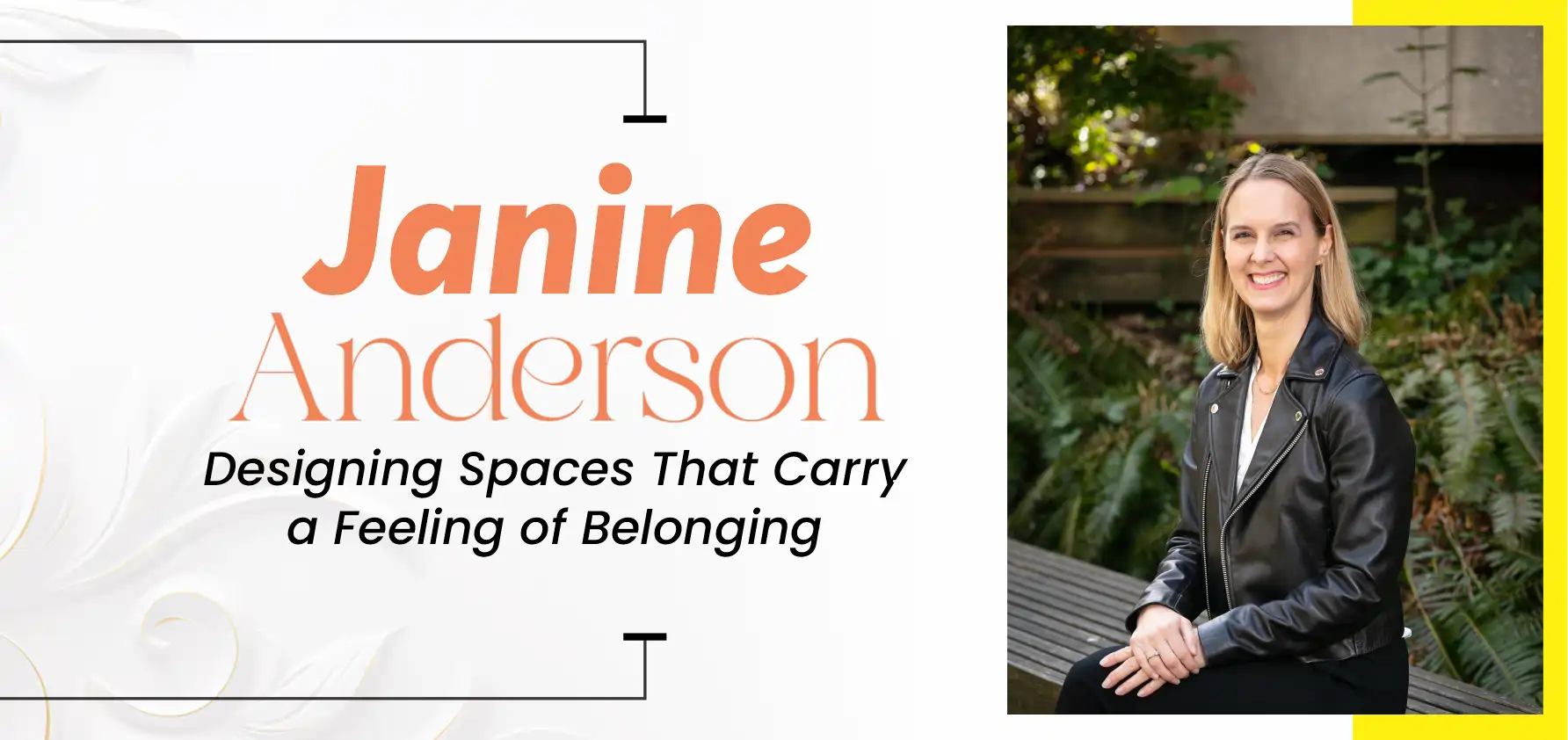
For Janine Anderson, that instinct began long before design became a profession. Rearranging rooms, repainting walls, and constantly imagining how spaces could feel better was simply part of who she was growing up. Today, as Managing Partner at Hager Design International Inc., that same instinct guides her work across hospitality and senior living environments.
The Foundations of a Creative Journey
From an early age, Janine Anderson found herself fascinated by the way spaces could be shaped and improved. Long before she considered architecture or interior design as a career, she instinctively gravitated toward rearranging rooms and experimenting with how environments felt and functioned. What began as a childhood habit of refreshing spaces eventually evolved into a defining passion that would shape her professional life.
During her teenage years, this curiosity became even more visible. When her parents went on holiday, they often returned to discover that a room in the house had been freshly painted or reorganized. For Janine, improving a space felt natural. It was simply something she enjoyed doing, and something she believed could make everyday life better.
As the time approached to choose a direction for higher education, Janine Anderson initially imagined pursuing architecture. She planned to attend the University of British Columbia with the long-term goal of eventually earning a master’s degree in architecture. However, at the time British Columbia offered limited opportunities for advanced interior design education, and leaving Vancouver at the age of seventeen did not feel like the right step.
Before continuing her education, Janine Anderson took time to travel through Southeast Asia and Australia. The experience exposed her to diverse cultures, architectural styles, and spatial traditions, broadening her understanding of how environments influence people’s lives. During that year abroad she applied to the Interior Design Degree program at Toronto Metropolitan University and was accepted.
The program proved to be both inspiring and demanding. Its strong theoretical foundation challenged students to think critically about design, while also pushing them to develop practical skills. Because the program emphasized conceptual thinking more than technical drafting, Janine Anderson initially struggled to keep pace with the technical drawing requirements expected early in her professional career. However, through persistence and long hours of practice, she quickly strengthened those skills once she began working in the field.
Her first professional experience as an intern designer at KPMP Architects taught her another important lesson. In the early stages of her career, she made several mistakes, which quickly revealed the importance of asking questions and seeking clarity before beginning a task. That approach has remained central to her professional philosophy. Speaking up, asking questions, and learning continuously have played a significant role in shaping the creative leader she is today.
Finding Direction Through Global Experience
After gaining experience in Canada, Janine Anderson spent time working in Australia, where she contributed to café rollout designs across multiple locations. The work provided valuable insight into large-scale design coordination and the importance of consistency across multiple projects.
When she eventually returned to her hometown of Vancouver, she joined Hager Design International. The transition marked a significant turning point in her career. At the firm she quickly advanced to an intermediate designer role, managing her own hotel projects. The scale and complexity of hospitality design represented a major leap from her earlier work.
Working alongside founder Doris Hager proved to be an influential experience. Doris demonstrated exceptional strength in client relationships and possessed a remarkable ability to encourage clients to push their creative boundaries. Through her mentorship, Janine Anderson gained a deeper understanding of how to communicate design vision and inspire confidence among stakeholders.
At the same time, Janine Anderson recognized that she still needed to strengthen her technical knowledge. Once again, the path forward required dedication and persistence as she worked through detailed design challenges she had not yet fully mastered.
That mentorship gap was eventually filled with the arrival of Zandro Tumaliuan, who later became both her colleague and professional partner. Zandro brought extensive experience in high-end hospitality design, along with a strong command of technical detailing. Under his guidance, Janine Anderson was able to refine her technical skills while continuing to develop her creative instincts.
More than two decades later, Janine Anderson and Zandro now lead the firm together. Their collaborative leadership style emphasizes the importance of producing designers who are both imaginative and technically capable. Rather than encouraging specialization too early, they guide junior and intermediate designers to develop a balanced understanding of creativity, technical knowledge, and problem-solving.
This holistic approach benefits both the company and the individuals working within it. Designers who understand the full spectrum of the design process are better equipped to grow in their careers and contribute meaningfully to complex projects.
Expanding Horizons in Hospitality and Senior Living
While many architects point to a particular project as the turning point in their career, Janine Anderson attributes a major shift in her professional trajectory to a client relationship.
For many years, the firm focused primarily on hospitality projects and quick service restaurant design. That direction changed in 2019 when a long-time client transitioned from the hospitality sector into senior living asset management. Recognizing the trust and success of their previous collaborations, the client invited the firm to participate in this new venture.
Although the firm had completed occasional senior living projects in the past, the opportunity introduced them to the sector in a much deeper and more consistent way. Today, the company’s work is divided almost evenly between hotel projects and senior living developments.
The expansion has proven both challenging and rewarding. Hospitality design brings a sense of experience and atmosphere, while senior living projects require a strong focus on comfort, functionality, and long-term well-being. By combining hospitality-inspired design with the specific needs of senior residents, Janine Anderson and her team have created environments that feel both welcoming and purposeful.
The growth of this sector within the firm has also led to the creation of a dedicated design team specializing in senior living environments. This focus allows the company to deepen its expertise while continuing to innovate within a rapidly evolving market.
The Strategic Side of Creative Design
In the world of architecture and interior design, creativity must constantly coexist with regulatory frameworks, client expectations, and financial constraints. For Janine, the key to achieving this balance lies in thoughtful planning and strong collaboration with clients.
Many of the firm’s projects involve experienced developers and asset managers who understand the complexities of the design process. These clients typically approach projects with realistic budgets that align with the scope of work, allowing designers to focus on creating meaningful solutions.
However, not every client enters the process with that level of familiarity. When working with individuals who are new to hospitality or senior living design, Janine Anderson often presents multiple options that reflect different levels of investment and design complexity. This helps clients understand the relationship between design quality, coordination, and long-term financial returns.
She often reminds clients that spending slightly more during the planning and design phases can reduce costs during construction. Well-coordinated drawings and thoughtful detailing help minimize change orders, which are often the most expensive part of any project.
At the same time, Janine Anderson encourages her team to think strategically about materials and finishes. A strong design does not necessarily require expensive products everywhere. Instead, she teaches designers to begin with economical materials in less visible areas and introduce premium finishes in focal spaces where they will have the greatest impact.
One memorable example involved a hotel owner who wanted automated draperies in every guest room, inspired by luxury properties in Las Vegas. While the feature sounded appealing, the economics of the project told a different story.
The hotel’s maximum room rate during peak season was approximately 280 dollars per night, and installing automated shades would have added roughly 120 thousand dollars to the construction cost. After careful discussion, Janine Anderson helped the client recognize that the investment would not produce a meaningful return.
Moments like these illustrate the importance of thoughtful decision-making in design. Creativity must always be supported by practical reasoning and an understanding of long-term value.
Designing for Longevity and Sustainability
Sustainability in interior design often begins with durability and longevity. From Janine’s perspective, the most environmentally responsible design choices are those that extend the life cycle of a space.
When a design is thoughtfully suited to its location and user group, it can remain relevant for many years without needing major renovations. Timeless aesthetics tend to age far more gracefully than designs driven purely by short-lived trends.
This philosophy is particularly important in senior living environments. Many properties undergoing renovation reveal carpets and finishes that are only five to eight years old yet already heavily worn. In many cases, the materials initially chosen were not durable enough to withstand the daily demands of a care environment.
To address this issue, Janine Anderson encourages clients to invest in higher-quality materials capable of lasting ten to twelve years. Although the initial cost may be slightly higher, the extended lifespan reduces both financial and environmental costs over time.
The Rise of Integrated Senior Living
As Canada continues to experience rapid urban transformation, Janine believes that integrated planning will play a defining role in the next decade of development.
One of the most significant shifts is the growing demand for senior living communities that support aging in place. Today’s seniors are often more active and financially secure than previous generations, and many are seeking environments that combine independence with access to services and social connection.
Developers are increasingly responding by creating senior living communities within walkable urban and suburban neighborhoods. These developments often blend residential spaces with hospitality inspired amenities such as multiple dining venues, expanded fitness centers, and communal gathering areas.
The result is a hybrid model that combines the comfort of home with the services and atmosphere of a resort or boutique hotel.
Technology as a Creative Accelerator
Technology is rapidly reshaping the design industry, and Janine Anderson sees artificial intelligence as a valuable tool for improving communication with clients.
By using AI-generated visual updates based on photographs of existing spaces, her team can quickly illustrate potential design directions. This allows clients to understand the design intent much earlier in the process without requiring extensive hours of technical rendering.
The result is faster feedback and stronger alignment between the design team and the client’s vision.
Creating Space for Creative Exploration
In a profession defined by schedules and deliverables, opportunities for experimentation can sometimes be limited. However, Janine’s team finds creative exploration during the early stages of project presentations.
For many projects, they present two distinct conceptual directions to the client. One option typically reflects a familiar and comfortable approach, while the other explores a more experimental design language.
This strategy allows clients to react to contrasting ideas and clarify their preferences. In many cases, clients select the more conventional direction, particularly in the senior living sector. Yet occasionally a project emerges that invites a more adventurous approach, creating opportunities for the team to explore new ideas and push their creative boundaries.
Designing with Empathy and Inclusion
Designing spaces that welcome diverse communities requires both awareness and empathy. In hospitality and senior living environments, the goal is often to appeal to a broad range of users while ensuring accessibility for everyone.
Barrier-free design is a fundamental consideration in many of the firm’s projects. Within the physical constraints of a building, Janine’s team works to make environments as accessible and comfortable as possible.
Cultural sensitivity also plays an important role, particularly in the selection of artwork. Designers strive to reflect the character of a location while avoiding imagery that could unintentionally offend or exclude. Because of the subjective nature of art, clients are closely involved in selecting pieces that align with both the design concept and the local community.
Community engagement at an operational level further strengthens these projects. When hotels or senior living homes build strong relationships with surrounding neighborhoods, they often experience greater guest referrals, stronger resident satisfaction, and improved long-term stability.
Passing the Torch of Thoughtful Design
Mentorship remains a central priority in Janine’s leadership philosophy. She encourages young designers to approach every project by imagining themselves in the position of the end user.
Understanding the needs of residents is particularly important in senior living design, where functionality and emotional comfort must coexist. A space must work efficiently while also feeling welcoming and uplifting.
Janine Anderson and her partner spend considerable time reviewing the work of junior designers, examining everything from spatial flow and aesthetic choices to detailed technical drawings. Rather than shielding young designers from responsibility, they encourage them to take ownership of projects and learn through both successes and mistakes.
Mistakes are viewed not as failures but as opportunities for growth, provided they are identified and corrected before leaving the office.
Collaboration is another critical lesson. Designers are encouraged to maintain open communication with architects, engineers, and consultants throughout the project. By anticipating the information that other disciplines require, the design process becomes more efficient and cohesive.
Imagining a Transformative Community
If given the opportunity to design a transformative project anywhere in Canada without constraints, Janine Anderson envisions a master planned community centered around intergenerational living and accessibility.
Her concept would include both an affordable purpose built seniors’ residence and a high end senior living community integrated with residential towers, cafes, and shared amenities. At the heart of the development would be a community center dedicated to wellness, recreation, and social engagement.
Outdoor activity spaces would connect these elements, encouraging interaction between residents, visitors, and the surrounding neighborhood. Such a development could serve as a model for future urban planning, demonstrating how thoughtful design can foster relationships between people, buildings, and communities.
For Janine Anderson , the ultimate legacy of such a project would not simply be its architecture. It would be the sense of belonging and connection it creates for those who live within it.
Also Read :- Business Minds Media for more information
“Great design is not always about spending more money. It is about knowing where it matters most and making thoughtful choices that bring the greatest value to a space.”
“In senior living design, functionality and emotion must exist together. A space needs to work well, but it also needs to feel warm, comforting, and dignified for the people who live there.”
“Mentorship is something I care deeply about. Helping young designers understand the ‘why’ behind their decisions is just as important as teaching them how to design.”