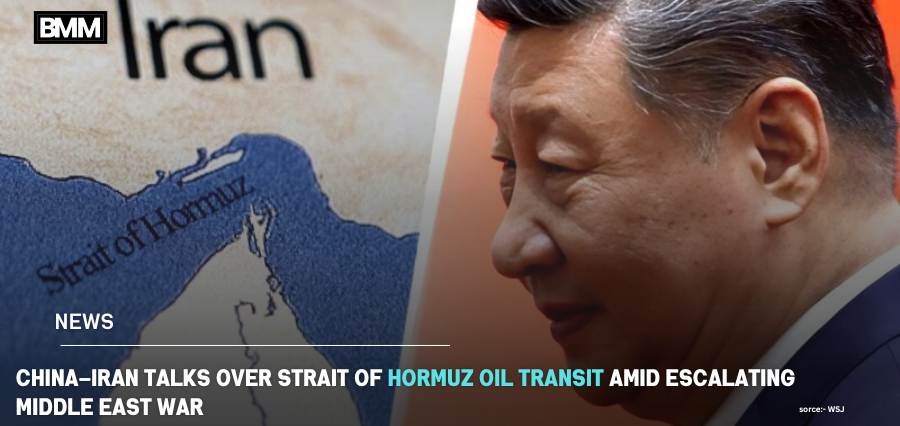
The ongoing conflict between the United States, Israel, and Iran is beginning to reshape global energy supply routes, with China stepping in to secure critical shipping access. Diplomatic sources say China is negotiating with Iran to allow crude oil and liquefied natural gas vessels safe passage through the Strait of Hormuz Oil Transit , a key global shipping corridor.
The talks come as the war intensifies and shipping traffic through the strategic waterway has slowed dramatically, raising fears of a global energy supply shock. The discussions highlight the urgent importance of maintaining Strait of Hormuz oil transit, which carries a large share of the world’s energy supplies.
China Pushes for Strait of Hormuz Oil Transit Access
According to diplomatic sources, China is pressing Iran to ensure that Chinese-owned vessels can continue navigating the Strait of Hormuz oil transit route despite the escalating conflict.
China relies heavily on energy imports from the Middle East, and the strait remains one of the most critical maritime corridors for its economy. Nearly 45% of China’s oil imports pass through the Strait of Hormuz, making uninterrupted Strait of Hormuz oil transit vital for the country’s energy security.
Sources indicate that Beijing has expressed concern over Iran’s move to effectively paralyse shipping in the region. While Iran has restricted vessels linked to Western countries, it appears to be more flexible with ships connected to China or Iran.
Ship-tracking data shows that a vessel named Iron Maiden successfully passed through the strait after altering its signal to indicate a Chinese owner. However, analysts say significantly more shipments will be required to stabilize global markets and restore confidence in Strait of Hormuz oil transit routes.
War Disrupts Global Energy Shipping
The conflict involving United States, Israel, and Iran has now entered its sixth day, and the effects on global energy supply chains are already becoming visible.
The Strait of Hormuz oil transit corridor has been severely disrupted. Ship-tracking data from Vortexa shows that tanker traffic dropped sharply after hostilities began. On March 1, only four crude oil tankers crossed the strait, compared to the average of 24 vessels per day recorded since January.
Approximately 300 oil tankers remain stranded within the Strait of Hormuz, according to maritime tracking platforms including Vortexa and Kpler. The slowdown in Strait of Hormuz oil transit has heightened concerns about potential shortages of crude oil and liquefied natural gas.
Since the conflict began, global oil prices have surged by more than 15%, reflecting fears that the crisis could lead to a prolonged supply disruption.
Energy Infrastructure Attacks Raise Market Concerns Hormuz Oil Transit
The war has led to disruption in shipping. Market anxiety has been reported to be caused by Iranian strikes on energy facilities in the Gulf region using its missiles.
Geopolitical tensions have also been reported, with missile attacks being reported in areas as far as Cyprus, Azerbaijan, and Turkey, which have further increased the risk posed to the infrastructure of the region.
The policymakers and investors across the globe are sounding an alarm over these developments. When the interference to Strait of Hormuz oil transportation does not cease, analysts have cautioned that the increased prices of energy will bring about inflation in most economies and retard the development of the world economy.
The waterway normally transports approximately a fifth of the world’s oil and liquefied natural gas shipments, and therefore, the water plays an important role as one of the most strategic routes of energy in the world.
Limited Shipping Still Moving Through the Strait
Nevertheless, notwithstanding the limitations, there are still cargo ships that are going through the strait.
The industrialists are quoted as saying that the majority of the vessels that are passing over the route are either Chinese-owned or Iranian-owned. Sugar industry veteran, Mike McDougall, has reported that the executives of the sugar trade in the Middle East have confirmed that few ships are still passing through the Strait of Hormuz oil transit route.
On the same ground, Jamal Al-Ghurair said that certain vessels taking sugar are being cleared to pass through the strait, while others are blocked.
Iran already stated that it would not allow ships of the United States, Israel, European nations, and their allies to pass the Strait. China was not mentioned in the announcement, which further fuels the speculation that Beijing might be negotiating special access so that it can retain Strait of Hormuz oil transit of its energy supplies.
Global Markets Watching Strait of Hormuz Oil Transit Closely
The world markets are keeping a keen eye on the events taking place around Strait of Hormuz oil transit as the conflict progresses.
Any sustained break would redefine the world energy trade patterns, produce inflationary tendencies, and destabilize the economic development in various areas.
In the case of China, the safe passage through the strait is its strategic priority. The stability of Strait of Hormuz oil transit can make the difference between the current geopolitical crisis developing into the broader energy shock of the world.
Also Read :- China Bank Capital Injection Plan Aims to Strengthen Financial Stability