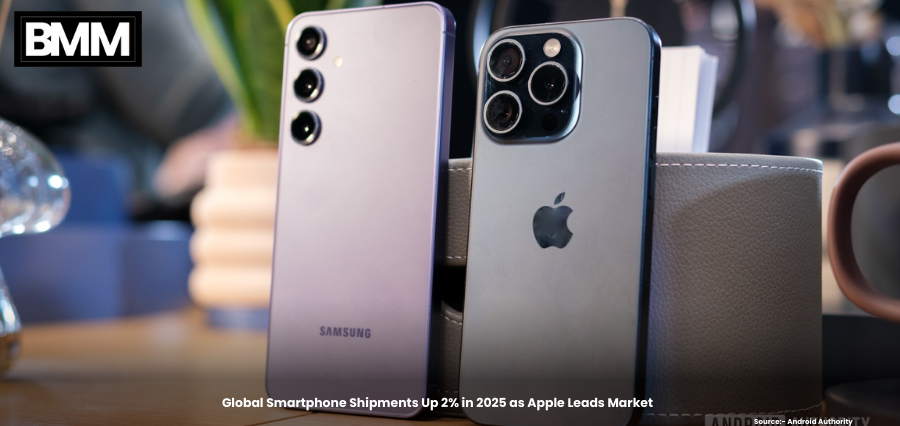
Global smartphone shipments rose 2% in 2025, driven by stronger demand in emerging markets and resilient economic activity, according to Counterpoint Research’s latest industry analysis. Analysts reported that the increase in global smartphone shipments marks a notable rebound after several years of sluggish growth and contributes to renewed optimism for manufacturers and component suppliers.
Counterpoint Research said that this growth was widespread but not even across regions and brands. Southeast Asia, India, and parts of Africa were especially strong. These new markets helped make up for slower demand in older markets like North America and Western Europe. The rise in global smartphone shipments was also helped by manufacturers making smart moves with their inventory at the beginning of the year, though the company said these effects wore off in the second half of 2025.
Apple Retains Top Position in Global Smartphone Shipments
Apple dominated the 2025 global smartphone landscape, capturing a 20% share of total shipments, the largest among the top five vendors. Strong sales of the iPhone 17 series were credited for Apple’s performance, particularly in mid-sized and emerging markets where demand for premium devices is rapidly growing. Counterpoint analyst Varun Mishra said Apple’s ability to sustain consumer interest, even in regions with traditionally lower smartphone spending, helped drive its leadership in global smartphone shipments.
Apple’s performance was especially impressive given the problems the rest of the industry was facing, such as macroeconomic pressures and supply chain problems. The company’s strong ecosystem, regular software updates, and focused marketing strategies all helped make the latest iPhones very popular all year long.
Samsung, Xiaomi and Other Brands in the 2025 Rankings
Samsung kept its place as the second-largest seller of smartphones in the world, with a 19% market share in 2025. Samsung’s shipments only grew a little bit compared to the previous year, but its wide range of devices, from high-end Galaxy models to more affordable A-series phones, kept demand strong in many markets.
Xiaomi, a Chinese company, came in third with a 13% share of global smartphone shipments. This was thanks to steady sales in cost-sensitive markets and new regions. Xiaomi’s value-driven models were still popular with people who were buying their first smartphone and people who wanted to upgrade from an older one.
Other brands besides the top three also helped global smartphone shipments grow. Manufacturers focused on localized strategies, making affordable models, and working with carriers to reach more people. Even though the top vendors had different levels of performance, their combined output helped make sure that sales went up every year.
Early Year Shipments and Tariff Dynamics
Analysts noted that smartphone companies moved shipments up to early 2025 to lessen the effects of tariffs in important markets. The goal of this preemptive strategy was to lock in volumes before any possible tariff hikes. This would help keep wholesale prices and inventory costs from going up too much.
However, Counterpoint noted that these tariff-related shipment boosts were predominantly a first-half phenomenon. As the year progressed, the influence of tariff-driven adjustments faded, resulting in second-half global smartphone shipments that aligned more closely with organic demand patterns.
Emerging Risks Ahead for 2026 Shipments
Even though things looked good in 2025, experts in the field said that global smartphone shipments might have problems in 2026. Tarun Pathak, the director of Counterpoint Research, said that there are problems on the horizon, such as a lack of chips and rising costs of important parts. These limits are likely to make it harder for manufacturers to increase production.
One of the main reasons for these supply-side pressures is that chips for artificial intelligence data centers are getting more attention than chips for smartphones. As chipmakers give more space to high-performance AI and cloud computing platforms, mobile processors and related parts may become harder to find.
This could slow the growth of global smartphone shipments in the next year.Rising component costs, which are partly caused by supply chains that are stretched too thin and higher demand for advanced features like high-refresh-rate displays and better camera systems, are also likely to have an effect on pricing strategies. This could slow down consumer buying, especially for mid-range devices that have traditionally driven volume growth.
Outlook and Industry Expectations
Even though the outlook for 2026 is cautious, the strong performance of global smartphone shipments in 2025 shows that the smartphone market is still strong, especially in fast-growing and changing areas. Manufacturers are changing their plans to deal with changing supply and demand conditions. They are focusing on diversifying their sources, optimizing their portfolios, and forming strategic partnerships to keep things moving.
As brands get ready to launch new products, invest in their supply chains, and do targeted marketing, the growth of global smartphone shipments will continue to follow larger economic trends, new technologies, and consumer preferences in all markets.
Also Read :- Disney China Strategy Gains Momentum Amid Shifting US–China Dynamics