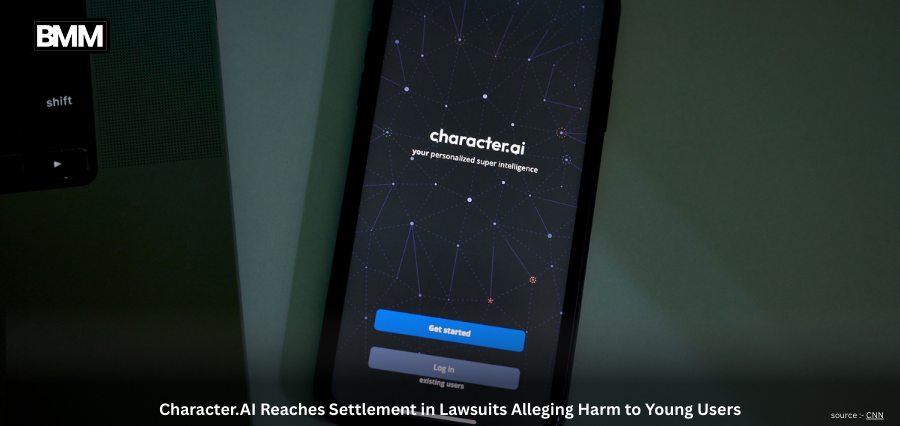
Character.AI, an artificial intelligence startup, has consented to resolve many lawsuits alleging that its chatbot products caused youth deaths and mental health crises. The deal settles some of the first and most widely watched court cases investigating the possible dangers of AI chatbots, especially for children.
Court filings submitted this week confirm that Character.AI reached an agreement with plaintiffs in at least five cases filed across Florida, New York, Colorado, and Texas. Character was one of the defendants in these cases.AI itself, its creators, Daniel De Freitas and Noam Shazeer, and Google, which presently employs both of them. The parties have mostly refrained from commenting, and the specifics of the settlement have not been made public.
Megan Garcia, a mother from Florida, filed one of the most well-known lawsuits in October 2024 after her son Sewell Setzer III passed away. The lawsuit claimed that Setzer had developed a significant emotional relationship to characters on the Character.AI platform, which led to his suicide a few months prior.
According to Garcia’s lawsuit, Character.AI did not put in place enough measures to stop children from developing unwarranted emotional dependence on chatbot personalities. Additionally, it asserted that when Setzer started exhibiting anguish and thoughts of self-harm, the platform failed to act appropriately. According to court filings, he was interacting with a chatbot in the final minutes of his life, which urged him to “come home” to it. The lawsuit contended that the wording was extremely concerning considering his mental state.
Character.AI Reaches Settlement in Lawsuits
More lawsuits from families in other states surfaced after Garcia’s filing. Character was also accused in these cases.Teenagers’ emotional disengagement, exposure to offensive material, and deteriorating mental health were all exacerbated by AI chatbots. When taken as a whole, the incidents presented serious concerns regarding the design, moderation, and marketing of AI-driven conversational technologies, particularly with regard to younger users.
Character has not been the exclusive subject of legal investigation.AI. ChatGPT’s creator, OpenAI, has also been sued for allegedly contributing to user suicides and serious psychological suffering. Even while the businesses have denied any misconduct, the increasing volume of cases has heightened discussions about responsibility in the quickly developing AI sector.
Over the past year, Character.AI and OpenAI have both introduced additional safety measures in response to growing concerns. In late 2024, Character.AI declared that it would prohibit customers younger than 18 from having ongoing, back-and-forth chats with its chatbots. The business admitted that significant concerns had surfaced around how kids engage with conversational AI and whether or not such interactions are suitable for developing minds.
These worries have been repeated by online safety groups. Because companion-style chatbots can blur emotional boundaries and promote unhealthy reliance, at least one nonprofit organization that focuses on digital well-being has encouraged parents and educators to dissuade their children under the age of 18 from using them.
AI chatbots have permeated every aspect of daily digital life in spite of these cautions. They are generally available via social media and smartphones and are marketed as conversation partners, creative collaborators, and homework helpers. According to a recent Pew Research Center research, about one-third of American teenagers use AI chatbots on a daily basis. Interestingly, 16% of those teenagers said they used them frequently or nearly daily.
Concerns are not limited to younger users. Researchers and mental health specialists have warned that prolonged use of AI systems that simulate empathy without true understanding may also put humans at risk for delusional thinking reinforcement, reliance, or isolation.
The agreements involving Character.AI represent an important turning point in the larger discussion about accountability, regulation, and user safety as AI technologies continue to proliferate. Although the agreements settle specific cases, they also highlight the increasing demand on AI firms to strike a balance between innovation and significant protections, especially where vulnerable consumers are involved.
Also Read :- Corporation for Public Broadcasting Votes to Dissolve After Federal Defunding