
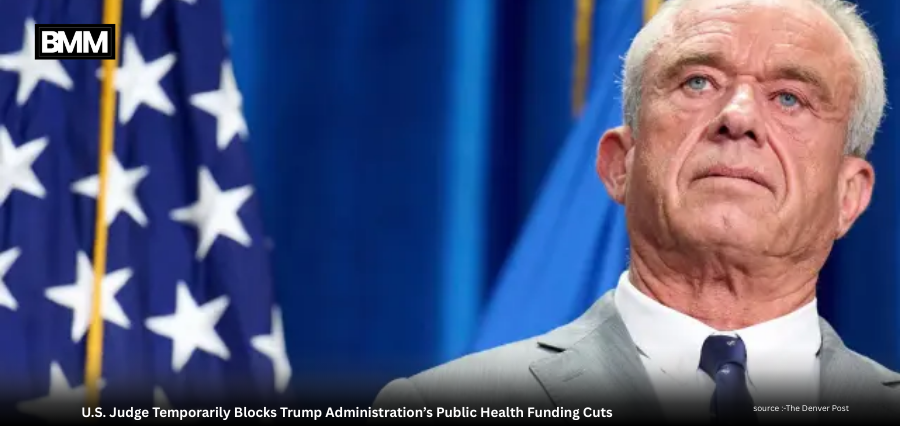
A federal judge in Chicago on Thursday temporarily blocked the Trump administration from moving forward with nearly $600 million in public health funding cuts affecting four Democratic-led states, marking the latest judicial setback for efforts to withhold federal funds tied to immigration policy disputes.
U.S. District Judge Manish Shah ruled that California, Colorado, Illinois, and Minnesota were likely to succeed in their lawsuit challenging the proposed reductions. The judge ordered a 14-day pause on the disputed public health funding cuts while the case proceeds, preventing the federal government from implementing the reductions during that period.
States Argue Cuts Were Retaliatory
The lawsuit, filed on Wednesday, alleges that the Trump administration sought to impose public health funding cuts as retaliation against states perceived to oppose federal immigration enforcement policies. Judge Shah agreed that the states had made a strong preliminary case, concluding that the funding reductions could violate constitutional protections by targeting states for their political positions.
The ruling said that the states showed a credible risk of irreparable harm if the funds were not given. This was especially true because the grants support important public health functions that state budgets can’t easily replace.
Impact on CDC-Funded Programs
Grants run by the Centers for Disease Control and Prevention (CDC) are at the heart of the disagreement. State health departments use the money to keep an eye on new health threats, respond to disease outbreaks, and plan for public health emergencies. These are the main things they do to keep people safe.
The lawsuit highlights that the proposed public health funding cuts would affect programs supporting HIV prevention, surveillance, and testing, as well as broader disease tracking systems. State officials warned that interruptions to these programs could undermine early detection of outbreaks and weaken preparedness for future health crises.
Federal Government Response Pending
After the ruling, the Department of Health and Human Services (HHS), which is in charge of CDC spending, did not respond right away to requests for comment. The temporary restraining order doesn’t end the case, but it does show that the court thinks the states’ claims are strong.
Judge Shah’s order prevents the administration from implementing the public health funding cuts for two weeks, giving both sides time to present further arguments as the litigation unfolds.
Pattern of Court Challenges
This isn’t the first time courts have stopped the Trump administration from getting money. Donald Trump has tried many times to stop or redirect federal money from states run by Democrats. He often says he is worried about immigration enforcement or fraud.
Last month, a federal judge put a stop to the administration’s plan to freeze more than $10 billion in family and childcare assistance funds for five states run by Democrats. In that case, the government said the freeze was necessary because of worries about fraud, but the court said the states were likely to win.
Legal experts note that these rulings reflect judicial skepticism toward broad public health funding cuts or freezes that appear to be linked to political disagreements rather than statutory authority.
Sanctuary City Warning and Broader Implications
The most recent decision comes after Trump sent out new warnings to so-called “sanctuary cities or states.” He said last month that his administration would start cutting off funding in February, saying that these areas encourage “fraud and crime and all of the other problems that come.”
The Chicago ruling underscores the legal hurdles facing any attempt to impose sweeping public health funding cuts tied to immigration policy. States argue that Congress, not the executive branch, controls spending decisions, particularly for programs explicitly authorized by law.
What Comes Next?
The 14-day block sets the stage for further court proceedings that could determine whether the public health funding cuts are permanently barred. If the states ultimately prevail, the case could limit the federal government’s ability to use health funding as leverage in broader policy disputes.
For now, public health officials in the states that were affected say that the temporary relief gives them some much-needed breathing room. This lets life-saving programs keep running without interruption while the legal battle goes on.
Also Read :- U.S. Job Growth Shows Modest Uptick in January Labor Market Strains | Business Minds Media