
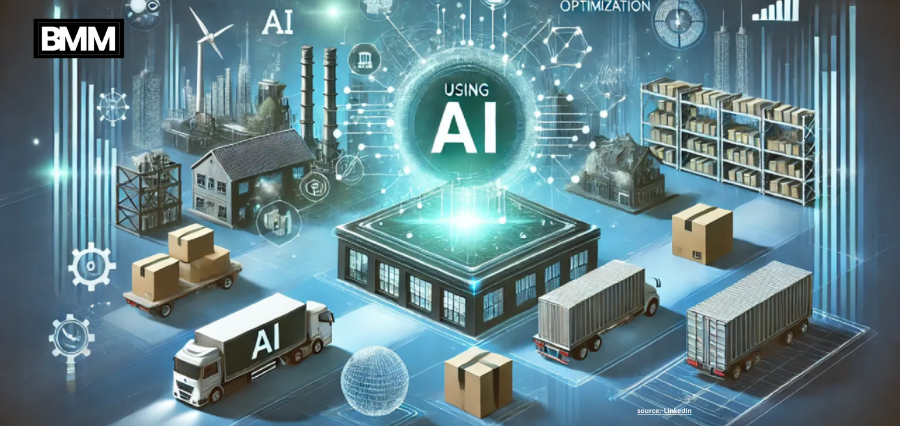
The supply chain is no longer a purely physical network of factories, warehouses, and trucks. In the past, its performance depended largely on human planning, manual data analysis, and historical experience. Today, it is increasingly shaped by AI-Driven Supply Chains, which is transforming how businesses forecast demand, plan operations, and even make decisions without human intervention. This shift from prediction to autonomy is one of the most significant developments in global commerce.
From Data to Insight
The starting point for AI-Driven Supply Chains has been prediction. Traditional forecasting relied on historical sales data, seasonal patterns, and expert judgment. AI, particularly through machine learning, takes this further by processing massive amounts of data from multiple sources in real time. These sources include point of sale transactions, supplier lead times, weather patterns, social media sentiment, and even geopolitical events.
By analyzing these diverse datasets, AI models can generate highly accurate demand forecasts. Retailers can adjust inventory levels to avoid stockouts or overstocking. Manufacturers can schedule production runs that match market needs more precisely. Logistics companies can optimize routes based on predicted traffic and weather conditions. The result is a more agile and cost-effective supply chain that is less vulnerable to sudden disruptions.
The Leap Toward Decision Making
Prediction is powerful, but the real breakthrough comes when AI moves beyond suggesting actions to actually executing them. Autonomous decision-making in the supply chain is enabled by advanced algorithms that can evaluate multiple scenarios, weigh trade-offs, and choose the best course of action without waiting for human approval.
For example, if a shipment is delayed at a port, an AI-Driven Supply Chains can automatically reroute goods through an alternative route, update delivery timelines, and notify customers. In procurement, AI can detect supplier performance issues and instantly switch orders to a more reliable partner. In warehouses, AI-powered robots , AI-Driven Supply Chains can adjust their picking and packing priorities based on real-time order data.
This level of autonomy reduces delays caused by manual decision making and frees human managers to focus on strategic issues rather than day to day problem solving.
The Role of Digital Twins
A key enabler of AI-Driven Supply Chains, autonomy is the concept of the digital twin. This is a virtual model of a supply chain that mirrors its real world counterpart. Every event, from raw material sourcing to final delivery, can be simulated within the digital twin. AI systems can run thousands of scenarios in this virtual environment, testing how different decisions might affect costs, service levels, and sustainability goals.
By experimenting in the digital twin, companies can safely explore strategies that would be too risky or expensive to test in real life. Once the AI identifies an optimal solution, it can implement the changes in the actual supply chain almost instantly.
Benefits Across the Value Chain
The impact of AI driven supply chains is felt across every stage of the value chain. In procurement, AI can assess supplier risk by monitoring financial health, compliance records, and geopolitical factors. In production, it can detect equipment malfunctions before they occur through predictive maintenance, reducing downtime and extending asset life. In distribution, AI can plan delivery routes that cut fuel consumption and emissions, supporting sustainability commitments.
These improvements translate into tangible financial gains. Companies can lower operating costs, improve service levels, and respond to market changes with unprecedented speed. The competitive advantage lies not only in efficiency but also in resilience.
Challenges and Considerations
The transition from prediction to autonomous decision making is not without challenges. One major concern is trust. Many executives hesitate to let AI systems make critical supply chain decisions without human oversight. This is especially true when the consequences of a wrong decision can be severe.
Data quality is another obstacle. AI systems are only as good as the information they receive. Inconsistent data from different suppliers, outdated inventory records, or incomplete shipment tracking can undermine AI performance. Ensuring data integrity requires investment in robust data management systems and strong partnerships across the supply chain.
There is also the question of ethics and transparency. AI decisions must be explainable, especially when they affect customers, employees, or suppliers. Businesses will need to establish clear governance frameworks to ensure AI operates in a fair, accountable, and compliant manner.
The Human Element in an Autonomous Future
While AI can automate many aspects of supply chain management, it does not eliminate the need for human expertise. People will remain essential for setting strategic direction, managing relationships, and handling complex exceptions that AI may not be able to resolve.
In fact, as AI takes over routine operational tasks, supply chain professionals will need to develop new skills in data interpretation, strategic thinking, and cross-functional collaboration. The most successful organizations will be those that integrate AI as a collaborative partner rather than viewing it as a replacement for human intelligence.
Looking Ahead
The rise of AI-driven supply chains is still in its early stages, but its trajectory is clear. As technology advances, we can expect to see more fully autonomous systems capable of managing global supply networks with minimal human intervention. These systems will be faster, more accurate, and more adaptable than anything possible with traditional methods.
In the coming years, the most successful supply chains will not just predict the future. They will actively shape it through intelligent, autonomous decision-making powered by AI. This evolution will redefine efficiency, resilience, and innovation across every industry.
Also Read :- Business Minds Media for more information