
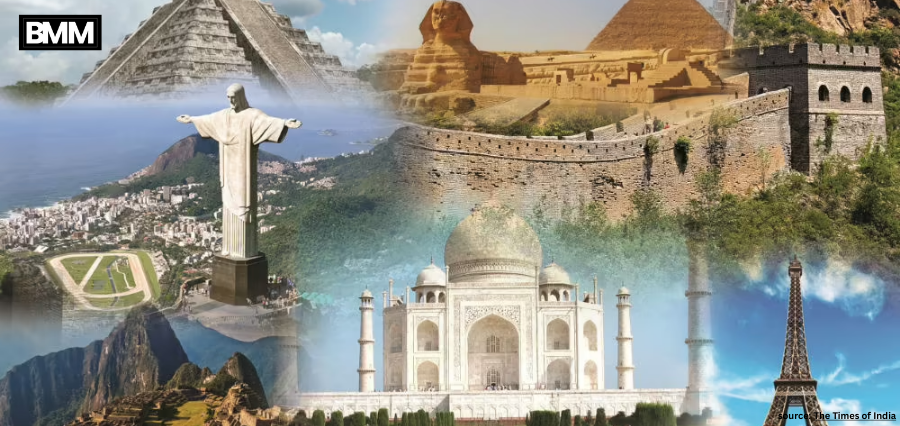
Across history, humanity has sought to leave behind symbols of ambition, faith, power, and imagination. From towering walls and sacred temples to cities carved from stone, these creations reflect the highest expressions of human creativity and engineering. Collectively known as the wonders of the world, these landmarks transcend borders and eras, reminding us of what civilizations can achieve when vision meets determination.
The idea of finding the world’s greatest wonders started a long time ago, when ancient scholars made lists of amazing buildings they knew about. This idea grew over time to include a more global view, recognizing monuments that have stood the test of time and continue to shape cultural identity. The wonders of the world are not only historical artifacts today; they are also living links to the shared heritage of all people.
The Ancient Wonders of the World
The first known list of the wonders of the world came from ancient Greece and included seven amazing buildings. Only one of these is still intact today.
Great Pyramid of Giza
The Great Pyramid of Giza is in Egypt and was built as a royal tomb. It is a great example of ancient engineering. Historians and engineers are still trying to figure out how it was built so perfectly.
The remaining ancient wonders are still famous, even though they are no longer standing:
- The Hanging Gardens of Babylon
- The Zeus statue in Olympia
- The Temple of Artemis in Ephesus
- The Halicarnassus Mausoleum
- The Colossus of Rhodes
- The Lighthouse of Alexandria
These monuments set the first standard for what people think are the wonders of the world.
The New Seven Wonders of the World
In 2007, a global project chose seven existing landmarks that best show what the modern wonders of the world are like. These places are spread out across continents and cultures, showing how different people are and how much they have in common.
1) The Great Wall Of china
The Great Wall was built to protect ancient kingdoms and runs through northern China. It is still one of the biggest and most ambitious building projects in history.
2) Petra
Petra was a major trade center and is known for its incredible architectural precision. It was carved directly into rose-colored rock.
3) Christ the Redeemer
This famous statue looks out over Rio de Janeiro and stands for peace, faith, and Brazilian culture.
4) Machu Picchu
Machu Picchu, which is high up in the Andes, shows how advanced the Inca civilization was in terms of engineering and living in harmony with nature.
5) Chichen Itza
Chichen Itza is a center of Mayan culture that shows a lot of knowledge about astronomy and has a lot of ceremonial meaning.
6) Colosseum
The Colosseum was once the center of Roman public life and is now a symbol of imperial power and architectural innovation.
7) Taj Mahal
The Taj Mahal is a perfect example of white marble that combines symmetry, art, and emotion. It was built as a monument to love.
These sites make up the most well-known list of the world’s wonders today.
Why the Wonders of the World Matter ?
The wonders of the world are not just buildings. They show how people think about religion, science, politics, and art. Every monument has a story about the people who built it and what they believed in.
They also help people from different cultures get to know each other by linking modern societies to ancient ones. By learning about the wonders of the world, we can see how people have always pushed the limits of what is possible.
Preserving the Wonders of the World
As tourism around the world grows, it is now everyone’s job to protect the world’s wonders. Their survival is at risk because of climate change, pollution, and too many tourists. To make sure these landmarks last, we need to work together on conservation, sustainable tourism, and international cooperation.
To protect the wonders of the world, it’s not enough to just keep stone buildings; we also need to protect the legacy of human achievement for future generations.
A Living Testament to Human Achievement
The wonders of the world, like deserts, mountains, ancient cities, and sacred monuments, show us that the greatest things humans have done are not just done with tools and technology, but also with vision and purpose. They are lasting examples of what civilizations can do when they work together with creativity, resilience, and ambition.
Also Read :- Business Minds Media For more information