
Uganda’s growth does not announce itself only through skylines or statistics. It reveals itself in quieter signals: a production line that runs through the night; harvests that are preserved rather than lost; hospitals where life-saving equipment operates without interruption; and digital services that remain seamless long after sunset.
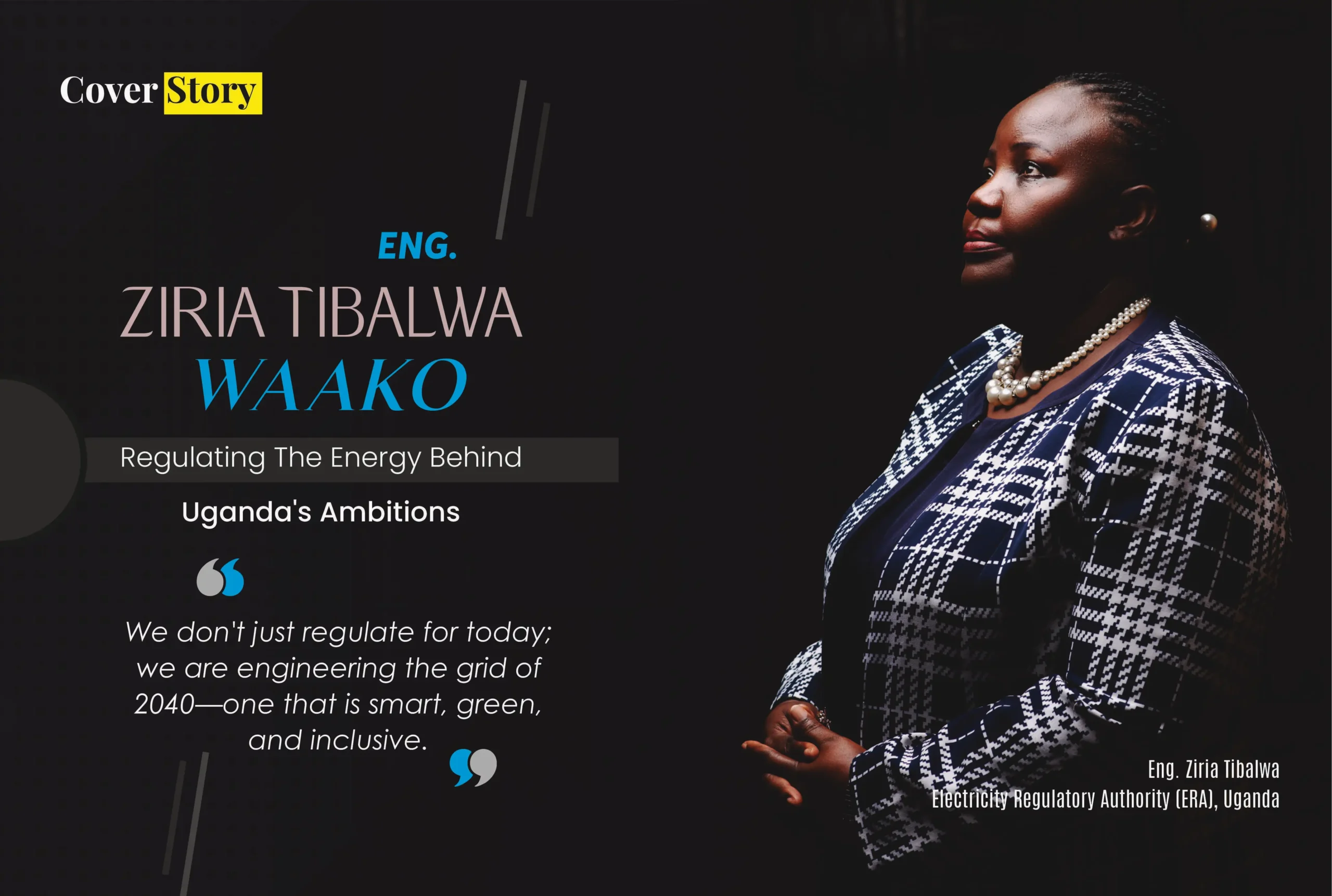
Each of these moments hinges on a single, non-negotiable condition: electricity must be reliable, affordable, and trusted. Without it, ambition fragments; with it, national plans acquire momentum, scale, and permanence. Sustenance of this condition is the responsibility of effective regulation, and this is where Eng. Ziria Tibalwa Waako’s leadership is most evident. As the Chief Executive Officer of the Electricity Regulatory Authority (ERA), Ziria shapes the rules that ensure energy reaches the industries at the right cost, households with dignity, and investors with confidence.
Anchoring Uganda’s Power Sector in National Development
Ziria Tibalwa Waako’ has guided Electricity Regulatory Authority through a period of growing national and international recognition by aligning regulatory leadership with Uganda’s broader development ambitions. Her strategic focus has consistently centred on supporting industrialisation through value addition and expanding universal access to affordable and reliable electricity.
A core priority of her leadership has been investment across the entire electricity value chain—from generation to the “last mile”— which has positioned Uganda as a regional energy hub. Strengthening electricity generation capacity, improving grid reliability, and ensuring value-for-money investments have been essential to securing long-term supply sustainability.
Ziria Tibalwa Waako has also placed strong emphasis on Uganda’s energy sector transition, promoting renewable energy development, expanding off-grid solutions, and improving energy efficiency while keeping consumer protection and stakeholder engagement at the forefront of regulatory decision-making.
At an institutional level, she has prioritised strong governance frameworks, staff capacity building, and data-driven regulation. These combined efforts have positioned Uganda’s electricity supply industry as a stable, resilient, and globally competitive sector capable of supporting economic growth and investor confidence.
A Three-Decade Journey of Transformation and the Road Ahead
With over thirty (30) years of experience in Uganda’s energy sub-sector, Ziria views the industry’s evolution as both profound and encouraging. The sector has transitioned from a period marked by limited electricity generation and frequent outages to one defined by diversified supply, improved network management, and a regulatory environment that fosters transparency, efficiency, and consumer protection.
Significant growth in the electricity generation capacity, major upgrades to electricity transmission and distribution infrastructure, and the strengthening of regulatory systems have made the sector increasingly attractive to private investment. These developments have laid a strong foundation for the next phase of transformation.
Looking ahead, Ziria anticipates even greater change. Uganda is accelerating the adoption of renewable energy and investing in digitalised grid technologies that enable real-time monitoring, predictive maintenance, and improved service delivery. Legislative reforms, including amendments to the Electricity Act, have opened the entire electricity value chain to greater private-sector participation across generation, transmission, and distribution.
As the country moves towards full electrification, rural access will continue to expand, and energy-efficient technologies will become increasingly embedded in daily life. Ziria sees the future power sector as cleaner, smarter, and more innovative, positioning Uganda as a regional leader in modern energy systems.
The Governance Compass Guiding Electricity Regulatory Authority
In providing strategic direction to the Electricity Regulatory Authority Secretariat, Ziria Tibalwa Waako is guided by a clear set of regulatory and leadership principles. Predictability, transparency, and fairness form the foundation of her approach, ensuring confidence among the electricity consumers, operators, and investors alike. Accountability and integrity remain central, reflecting her belief that a regulator’s credibility is its most valuable asset.
She also champions innovation and adaptability, recognising the Authority’s need to remain aligned with emerging technologies and evolving sector dynamics. Environmental, Social, and Governance (ESG) is viewed as critical to the long-term resilience of the electricity supply industry.
Equally important is inclusive engagement; Ziria places strong emphasis on listening to stakeholders, including consumers, utilities, communities, policymakers, legislators, and development partners, to ensure that regulatory solutions are responsive and balanced. At the heart of her leadership is a commitment to building a motivated and professional organisation, driven by selfless service, continuous improvement, and a clear sense of public responsibility.
Blending Engineering Insight with Strategic Leadership
Ziria’s engineering background provides her with a strong analytical foundation for understanding the technical realities of the electricity sector. This is complemented by her leadership training, which equips her with strategic thinking, effective team management, and balanced stakeholder engagement.
This combination allows her to navigate complex technical and policy environments with clarity. Decisions are grounded in data and engineering principles while remaining aligned with national development priorities and consumer-centred outcomes. Her leadership style balances empathy with execution, creating an environment where technical experts are motivated to perform and innovate.
Ziria’s impact goes beyond technical codes. She is deeply committed to mentoring the next generation of African engineers and regulators. “Strong regulation begins with the person,” she says. “When our engineers and managers are ethical, technically sound, and selfless, the entire nation reaps the rewards.”
Regulation as a Catalyst for Socio-Economic Transformation
Ziria Tibalwa Waako views Uganda’s progress toward a sustainable electricity supply industry as the result of deliberate and well-targeted regulatory interventions. Central to this journey has been the establishment of stability, improved access to electricity, enhanced reliability, and a policy environment that encourages long-term investment in the electricity sub-sector. One of the most impactful interventions under her leadership has been the introduction of a transparent and predictable electricity tariff methodology. This framework has carefully balanced consumer affordability with the sector’s financial sustainability, creating confidence among private investors while protecting end users.
She has also prioritised robust licensing and compliance oversight across the electricity generation, transmission, and distribution segments. By enforcing clear technical, financial, and quality of service standards, the regulatory framework has enhanced system reliability, reduced losses, and improved safety across the national grid. In parallel, support for renewable energy through feed-in tariffs, competitive procurement, and off-grid regulations has accelerated Uganda’s energy transition and expanded access, particularly in rural and underserved communities.
Consumer protection remains a core pillar of Ziria’s regulatory philosophy. Strengthened complaint resolution mechanisms, improved service standards, and active public engagement have ensured that consumer voices influence regulatory decisions. The promotion of innovation through smart metering, digital monitoring, and data-driven oversight has further improved transparency and operational efficiency. Together, these measures have positioned Uganda’s electricity sector on a sustainable path that supports industrial growth, improved livelihoods, and long-term socio-economic transformation.
Protecting Consumers While Powering Investment
Tariff setting is one of the Authority’s most visible and closely scrutinised responsibilities, and Ziria approaches it with a strong sense of balance and accountability. She emphasises that tariffs sit at the intersection of consumer welfare and sector viability, requiring careful judgement and robust analysis. The Authority applies a transparent and data-driven methodology that reflects actual costs, efficiency benchmarks, and long-term system requirements.
Under her leadership, ERA has focused on keeping electricity affordable for households and businesses by rigorously reviewing utilities’ budgets, driving operational efficiencies, and ensuring that only prudent and justified costs are passed on to consumers. At the same time, Ziria recognises that the electricity industry must remain financially viable to attract continuous investment in electricity generation, grid expansion, and modernisation.
The tariff framework, therefore, provides investors with predictability, supports performance-based outcomes, and encourages innovation that improves reliability and reduces system losses. This balanced approach has helped Uganda maintain one of the most stable and credible regulatory environments in the region. For Ziria, the ultimate objective is to ensure tariffs remain fair and equitable, aligned with national socio-economic goals, while giving sector players the confidence to invest in Uganda’s energy future.
Enforcing Excellence Across the Power Chain
Ziria has placed strong emphasis on improving how electricity generation, transmission and distribution licensees across the electricity value chain meet their obligations. Ensuring high standards of safety, reliability, and performance has been central to building a resilient electricity supply industry. Over time, ERA has introduced more rigorous and transparent systems, including data-based performance audits and enhanced safety and reliability inspections.
Licensing requirements have been strengthened to reflect emerging sector priorities, including grid modernisation, environmental sustainability, and consumer protection. Licensees are now subject to clearer quality of service standards, stricter safety protocols, and defined timelines for corrective action when gaps are identified.
Enforcement mechanisms have also been enhanced through a structured system of incentives and penalties, promoting accountability while supporting capacity building where needed. These reforms have encouraged a more disciplined, responsive, and performance-driven sector. Through these measures, Ziria has reinforced ERA’s role in safeguarding the public interest and ensuring that every licensed entity contributes meaningfully to a modern, reliable, and sustainable electricity supply industry.
Positioning Uganda for Regional Power Integration
Ziria sees regional power integration as a strategic opportunity to strengthen Uganda’s energy security and economic competitiveness. As electricity generation capacity expands and cross-border interconnections increase, she has focused on preparing a regulatory framework that enables Uganda to participate effectively in the regional electricity markets. This includes aligning national regulations with the evolving requirements of the East African Power Pool and related regional initiatives.
Under her leadership, ERA has increased transparency in power trading rules, strengthened grid codes, and ensured system operators adhere to international reliability and safety standards. The Authority has also refined tariff methodologies to reflect regional market dynamics, improved wheeling and export pricing structures, and strengthened the reliability of contractual instruments such as power purchase and transmission service agreements.
Ziria has further championed the use of data-driven regulatory tools that support real-time system monitoring, demand forecasting, and grid stability analysis. These measures are essential for managing a more interconnected network. Her goal is to ensure that Uganda exports surplus power efficiently and competitively while enhancing national revenue and contributing to regional energy security.
Safeguarding the System
Throughout her career, Ziria has been a strong advocate for engineering excellence, professionalism, and ethical conduct. She believes these values begin with clear expectations and visible leadership. As a result, ERA has strengthened technical standards, codes of conduct, and accountability frameworks across the electricity sector.
Professional competence is encouraged through continuous development initiatives, support for certification and advanced training, and close collaboration with institutions such as the Engineers Registration Board. Ethical practice is reinforced through transparent procurement and licensing processes, strong compliance systems, and strict safety requirements.
Ziria has also invested in knowledge-sharing platforms, mentorship initiatives, inclusive recruitment, and innovation programmes that inspire young professionals to take responsibility and strive for excellence. She aims to build a sector where technical experts are empowered, accountable, and equipped to deliver safe, reliable, and transformative solutions for Uganda’s energy future.
Renewables at the Core
Renewable energy forms a central pillar of Ziria’s long-term regulatory strategy. She views clean energy as essential to building a resilient, affordable, and sustainable electricity industry. Uganda’s abundant renewable resources, including hydro, solar, biomass, and geothermal, are being unlocked through clear policies, predictable licensing processes, and tariff structures that encourage responsible investment.
Under her guidance, the share of renewables in the national energy mix has increased, alongside growing support for decentralised and off-grid solutions and energy efficiency measures. To foster innovation, ERA has enhanced its regulatory sandbox and technical standards to accommodate new business models, such as mini-grids, advanced metering, energy storage, and electric mobility.
Ziria actively promotes collaboration with research institutions, development partners, and the private sector to test emerging technologies and scale those that deliver tangible value. Her focus is on ensuring renewable solutions are dependable, affordable, and accessible to households, businesses, and industry.
Strengthening Customer Satisfaction and Service Quality
Customer satisfaction remains central to Ziria’s regulatory mission. She believes the quality of service consumers experience ultimately measures the strength of the electricity sector. Electricity Regulatory Authority has therefore established a comprehensive performance monitoring framework built around clear quality of service standards, detailed reporting requirements, and regular technical audits.
These mechanisms enable the Authority to track outages, response times, voltage quality, and investment delivery with greater accuracy. Consumer protection has been strengthened through dedicated complaints handling systems, regional service desks, and direct public engagement platforms. Utilities are required to resolve complaints within defined timelines, with Electricity Regulatory Authority enforcing compliance through incentives, penalties, and follow-up audits.
Digital tools such as automated reporting, customer service scorecards, and data analytics have further improved transparency and accountability. Through these measures, Ziria has ensured utilities remain responsive and aligned with public expectations.
A ‘Digital-First’ Vision for Uganda’s Energy Future
Looking ahead, Ziria envisions a regulatory framework that fully integrates digital technologies across the electricity value chain. This includes the use of artificial intelligence in advanced metering, automated grid management, and data-driven compliance monitoring to improve decision-making, transparency, and service delivery.
She is also focused on reforms that enhance the efficiency and financial sustainability of sector players, ensuring investments support productivity, expanded access, and socio-economic transformation. Future priorities include smart grids, a balanced generation mix, accelerated adoption of clean energy, innovation in mini grids and energy storage, and stronger participation in regional electricity markets.
Strengthening consumer protection, expanding last-mile connectivity, promoting net metering, and maintaining affordability remain central to her vision. Ziria’s goal is a modern, adaptive regulatory environment that delivers reliable electricity to every household and business while driving industrial growth, digital innovation, and inclusive economic development across Uganda.
Closing Vision: Powering Africa with Purpose
As Uganda deepens its integration into the East African Power Pool, Eng. Ziria Tibalwa Waako is helping position the country as a trusted and forward-looking contributor to regional power markets. Her vision extends beyond national borders: to see Ugandan-generated clean energy support homes, businesses, and industries across the region, strengthening trade, cooperation, and shared prosperity. At the heart of this ambition is a firm belief that electricity is more than infrastructure—it is a catalyst for opportunity and shared growth.
In this context, Eng. Ziria Tibalwa Waako’s leadership reflects the impact of combining technical expertise with purpose. Through steady and principled regulation, she has worked to build the confidence required for long-term investment, while ensuring that the benefits of energy access are felt by households, communities and industries. Her contribution to Uganda’s power sector underscores a broader truth: that when regulation is guided by integrity, inclusion, and vision, it can illuminate pathways not only for national development, but for a more connected and resilient Africa.
Also Read :- Business Minds Media For More information
“Electricity is the heartbeat of national development; our job is to ensure that heart never skips a beat.”
“We don’t just regulate for today; we are engineering the grid of 2040—one that is smart, green, and inclusive.”
“Professional integrity is the foundation of energy security. If the regulator is trusted, the sector thrives.”