
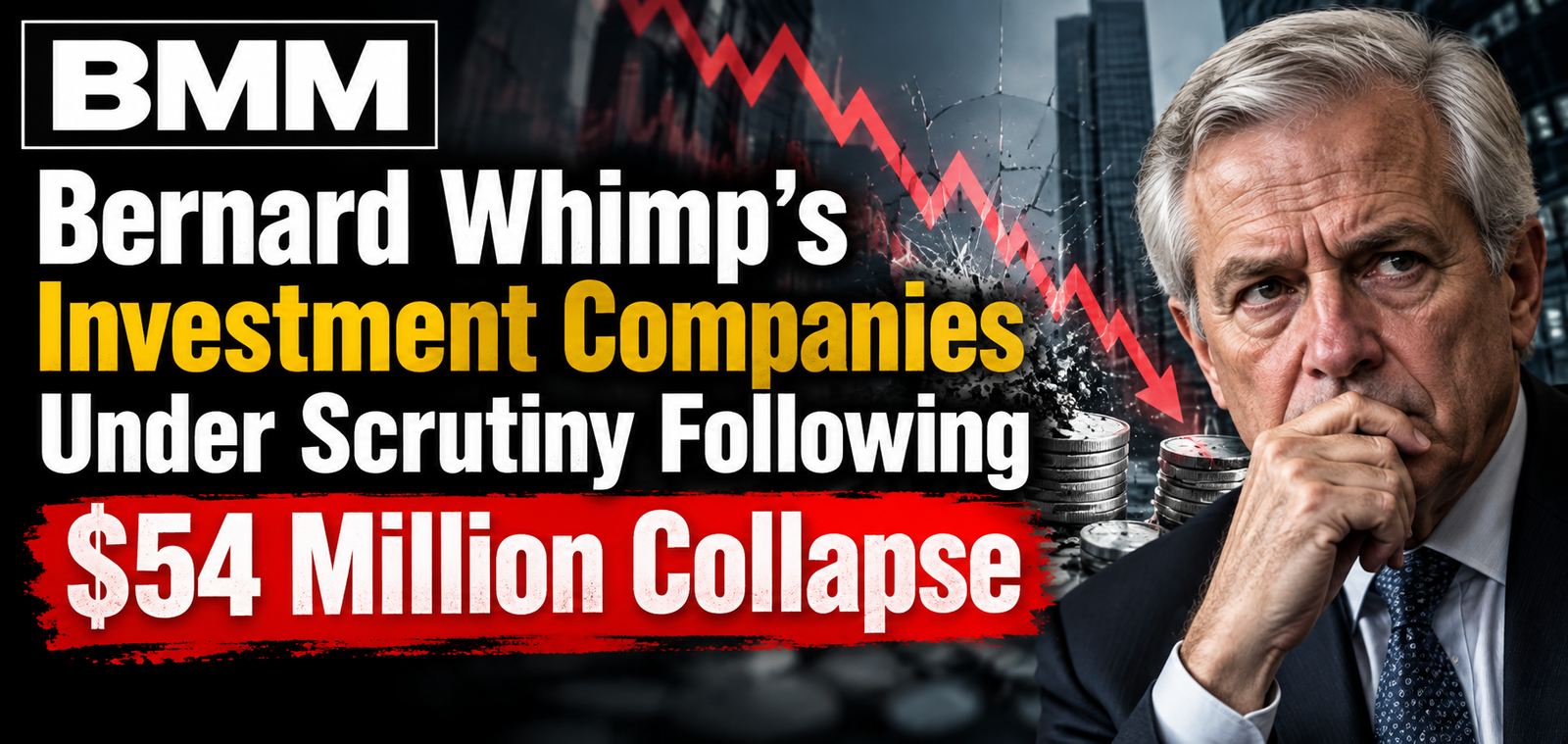
The collapse of the Chance Voight investment group has become one of New Zealand’s most closely watched financial scandals in recent years. What began as a regulatory investigation into a Canterbury-based investment company has evolved into a major insolvency case involving tens of millions of dollars in investor funds, dozens of interconnected entities, and serious questions about corporate governance and financial management.
At the center of the controversy is businessman Bernard Whimp and the Chance Voight Group, a network of companies that attracted millions of dollars from investors across New Zealand. Following the group’s collapse, regulators and liquidators are now examining how investor money was managed and whether the companies complied with financial markets regulations.
The $54 Million Collapse Explained
This magnitude of the crash has shocked many investors. According to liquidators, six important companies under the Chance Voight Group had a total of NZ$54.2 million worth of investments when the companies went into liquidation. In late 2025, the FMA filed for court action and this led to the appointment of liquidators to look into the financial state of the business.
The investigations found that some of the companies under the group seemed to be financially insolvent and that they had no external source of income which would enable them pay promised returns to the investors.
The case has been compared to similar cases of financial crashes in New Zealand in terms of magnitude and complexity due to the involvement of numerous investors.
Regulatory Concerns Emerge
Since 2025, the Financial Markets Authority has been conducting an investigation into the Chance Voight Group. The issues raised by the authority go further than simply being financially struggling and also cover how funds were acquired and provided to investors.
The FMA says that the investigation will look into whether any of the disclosures made to the investors were accurate and complete, whether funds were used for the right purposes, and whether companies followed their requirements as per New Zealand’s financial markets legislation. It also has issues whether some members of the group have violated the Companies Act and Financial Markets Conduct Act.
For the safety of the investors, asset preservation orders have been issued against Bernard Whimp and the related companies.
Liquidators Raise Serious Questions
One of the major discoveries that came to light during the liquidation procedure is about the funding source for the payments to the investors. As stated by the liquidators, the interest payments and, in some instances, redemption payments to the existing investors seem to have been made mostly through the funds obtained from new investors, and not from profits or revenues of operations.
Furthermore, it was reported by the liquidators that they could not find any sources of income other than those that could have explained the income for the investors. Such discoveries are likely to increase the criticism on the financial model and practices of the group.
Also, the investigators noted issues concerning transactions with related parties and the activities conducted because of personal gain of the group’s director and relatives.
A Complex Corporate Structure
Another issue that has made the investigation difficult is the vast size and structure of the corporate network related to Chance Voight. In this respect, the FMA has filed lawsuits against more than 30 companies linked to the corporation. This includes a wide variety of companies such as investment funds, finance companies, property companies, aviation companies, and different shares.
So far, the liquidation of some of the companies has been sought by the regulator and further legal actions continue with other companies. Such a structure has made it harder for the investigators and liquidators to track the flow of funds and find out the real state of affairs in the corporation.
It was stated that such a structure could complicate understanding by the investor of the way investments are conducted.
Impact on Investors
The fall has significantly affected the investors, most of whom have been identified as retired persons or people looking to make consistent investments. The interim liquidators have been advising that there may be substantial shortfalls affecting the recovery of investors’ money.
There is still a lot of uncertainty for the affected investors. The final recovery will be dependent on the amount of asset value left, asset recovery processes, and the outcomes of the legal battles. It is expected that due to the complexities involved, the process of liquidation will take some time.
The FMA has advised that investors should seek independent financial and legal advice and be wary of any further demands for their money from the organization.
Bernard Whimp’s History Under Regulatory Attention
The present case is not the first time Bernard Whimp has faced problems with regulations. More than a decade ago, the financial watchdog of New Zealand released warnings concerning investments related to Whimp and related companies. In 2011, the High Court declared some of the share purchasing arrangements connected to Whimp misleading and canceled many of them.
Previously, the share purchasing arrangements were considered potentially misleading for the investors by the regulators. These arrangements included those that could mislead investors in regard to payments and value of the investments. Although this case is unrelated to the present Chance Voight case, it has increased public interest in the ongoing investigations.
What Happens Next?
The future of the Chance Voight Group will now depend very much upon how the courts rule, what the liquidations reveal, and the results of the FMA’s investigations. The hearings of other companies are to continue, as are the liquidators’ searches for assets, which should help establish the financial standing of the whole group.
The regulator has made clear that its investigation is still ongoing and that more information may yet come to light in the course of looking through more evidence.
Conclusion
The downfall of Bernard Whimp’s empire in investments in companies named Chance Voight has become an important challenge to the existing regulation of finance in New Zealand. Being connected with the disappearance of more than NZ$54 million of investor money, numerous companies in the process of being investigated, and a number of questions regarding the flow of money within the empire, the case remains interesting not only to financial specialists but also to investors.
The case can become one of the examples of how to discuss such aspects of the issue as investor protection and financial regulation in the investment sector of New Zealand in the future. It is hoped by the investors that all the processes concerning the case will provide clear results and return the maximum amount of lost money.
FAQ
1. Who is Bernard Whimp?
Bernard Whimp is associated with investment activities in New Zealand. His investment companies have attracted attention in connection with a reported $54 million collapse.
2. Why are Bernard Whimp’s investment companies under scrutiny?
The companies have come under scrutiny following reports of a significant financial collapse. The circumstances surrounding the collapse, the companies’ financial dealings, and the responsibilities of those involved are key areas of interest.
3. What is the Chance Voight group?
Chance Voight Investment Corporation Ltd (CVICL) is a New Zealand investment company associated with Bernard Whimp. The group raised approximately NZ$54.2 million from investors through debt investments and equity before entering liquidation proceedings.
4. How much money was involved in the collapse?
According to an interim liquidators’ report, the group had received approximately NZ$54.2 million in investor funds as of December 10, 2025. This included about NZ$50.4 million in debt investments and NZ$3.8 million in equity.
5. What concerns did the liquidators identify?
The interim report identified concerns about financial record-keeping, limited independent oversight, related-party transactions, and the use of new investor funds to pay existing investors’ interest and some redemption payments. These are findings reported during the liquidation process.
6. What role does New Zealand’s Financial Markets Authority play?
The Financial Markets Authority (FMA) is New Zealand’s financial markets regulator. It launched a formal investigation into Chance Voight Investment Corporation, its subsidiaries, and associated parties. The investigation concerns the group’s investment activities and compliance with applicable financial markets laws.
6. What role does New Zealand’s Financial Markets Authority play?
The Financial Markets Authority (FMA) is New Zealand’s financial markets regulator. It launched a formal investigation into Chance Voight Investment Corporation, its subsidiaries, and associated parties. The investigation concerns the group’s investment activities and compliance with applicable financial markets laws.
7. Have Bernard Whimp’s investment companies been placed into liquidation?
Yes. Reports published in 2026 state that Chance Voight Investment Corporation and related entities were placed into liquidation. Liquidators are examining the group’s assets, liabilities, transactions, and potential recoveries for creditors.
8. Will investors recover their money?
The amount investors may recover remains uncertain. Liquidators must assess available assets, outstanding debts, and the costs of the liquidation before determining potential distributions. Investors should refer to official liquidator updates for information about claims and recovery prospects.
9. What should investors do if they invested in the Chance Voight group?
Investors should contact the appointed liquidators, retain investment agreements and payment records, review official creditor notices, and seek independent legal or financial advice about submitting a claim and understanding their options.