
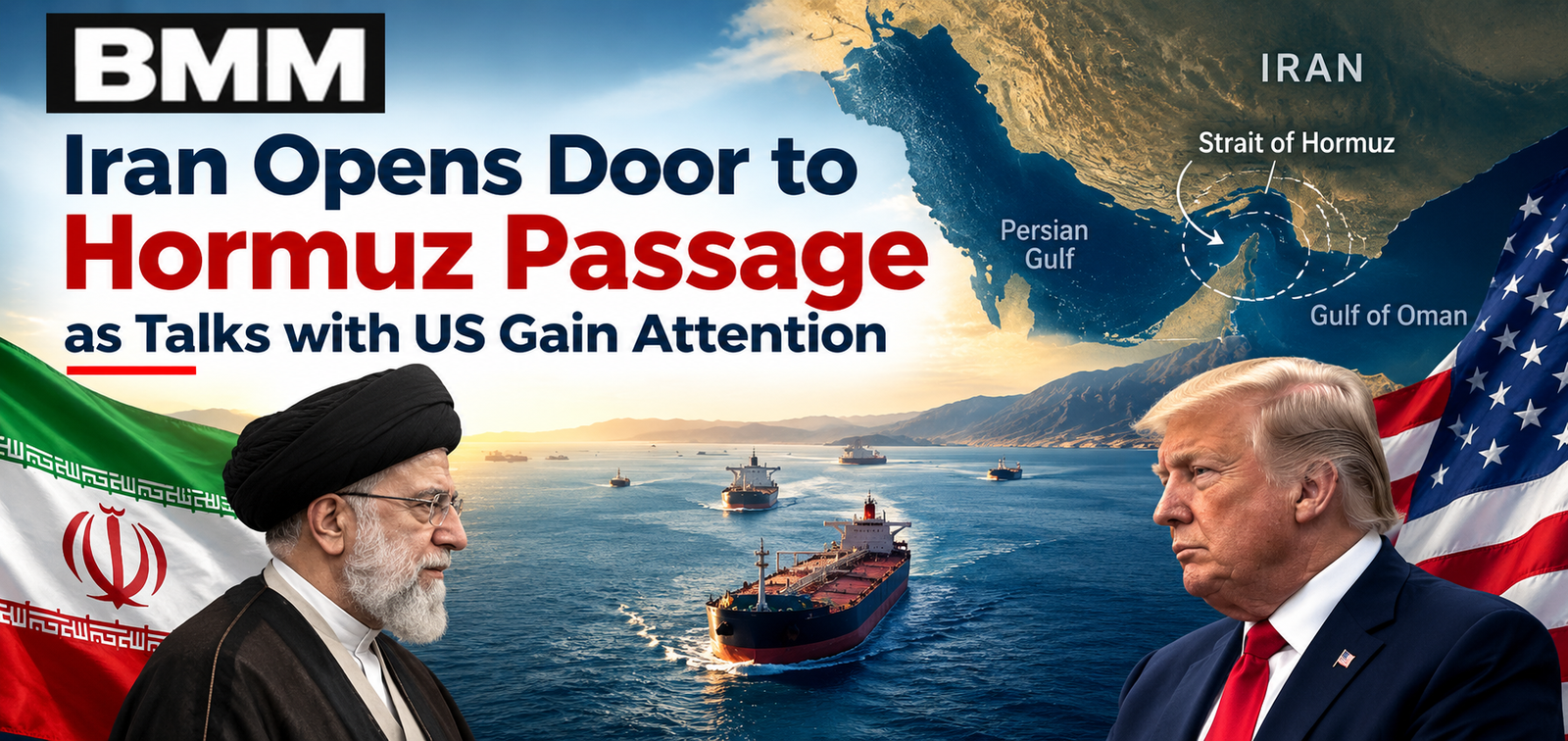
Iran has indicated that the future of the Strait of Hormuz depends largely on decisions made by the United States, introducing a potential diplomatic opening amid months of heightened tensions in the Gulf. Iranian officials stated that a Strait of Hormuz reopening could take place if Washington reduces military pressure and eases restrictions imposed on Iranian ports and trade. The comments come as global leaders gather at the United Nations General Assembly, where regional security and energy stability have become major discussion points.
The Strait of Hormuz remains one of the world’s most important maritime chokepoints, serving as a critical route for global oil and liquefied natural gas shipments. Any disruption to traffic through the narrow waterway has significant implications for energy markets, trade flows, and geopolitical stability.
Tehran Places Conditions on Renewed Access
Based on statements by Iranian officials, Iran is ready to help restore the Strait of Hormuz within days provided that there are tangible moves by the US government towards easing military and economic pressures. Iranian officials attending the UN General Assembly have allegedly been authorized to work on possible diplomatic options.
The Iranians believe that the restoration of the strategic passageway must be considered in relation to the reduction of tensions between the two nations. The Iranian officials have insisted that diplomatic engagement is the only way out for normal maritime activities.
United States Maintains Firm Position
Although Iran has shown its readiness for negotiations, the United States has adopted an approach based on caution. At the UN General Assembly, US President Donald Trump showed his tough stance against Tehran but at the same time suggested that a deal is possible in the future.
The US has already demanded assurances about freedom of navigation and the security of ships in the region before. The United States sees this aspect as one of the most important preconditions for reaching an agreement.
The differing positions underscore the complexity surrounding any Strait of Hormuz reopening, with both sides seeking concessions before moving toward a formal agreement.
Energy Markets React to Diplomatic Signals
Developments pertaining to the water passage have been under scrutiny by financial markets. News of the possibility of a successful Strait of Hormuz reopening has helped in decreasing the global prices of crude oil due to the lowered risk for supplies.
The strait transports a major portion of the world’s exports of crude oil, and hence is one of the most significant passages in the global economy. Earlier disruptions in the region had raised fears of shortages of supply and increased costs.
Regional Tensions Continue
Nevertheless, diplomatic communication continues, yet tensions within the region still persist. It was emphasized by several episodes which took place recently, such as shipping-related activities, issuing of threats by military officials, and conflicts in neighboring states.
There are persistent efforts of the regional authorities and their partners abroad to de-escalate the situation, since it can affect both international shipping and energy security. Moreover, some of the Gulf states are currently considering the creation of the regional security structure.
Outlook for Diplomacy
The Strait of Hormuz reopening seems linked now with broader negotiations between Iran and the US. Although there are still many areas of disagreement between the two, it is clear that diplomatic efforts have continued and that both sides realize the necessity of bringing back the economic and strategic benefits from normal operation of the waterway.
For the time being, all eyes continue to be on the UN and on any movement by the two opponents. If successful, not only will this be a relief for the global energy market, but it will also serve as a good indication of de-escalation of one of the most troubled parts of the world.