
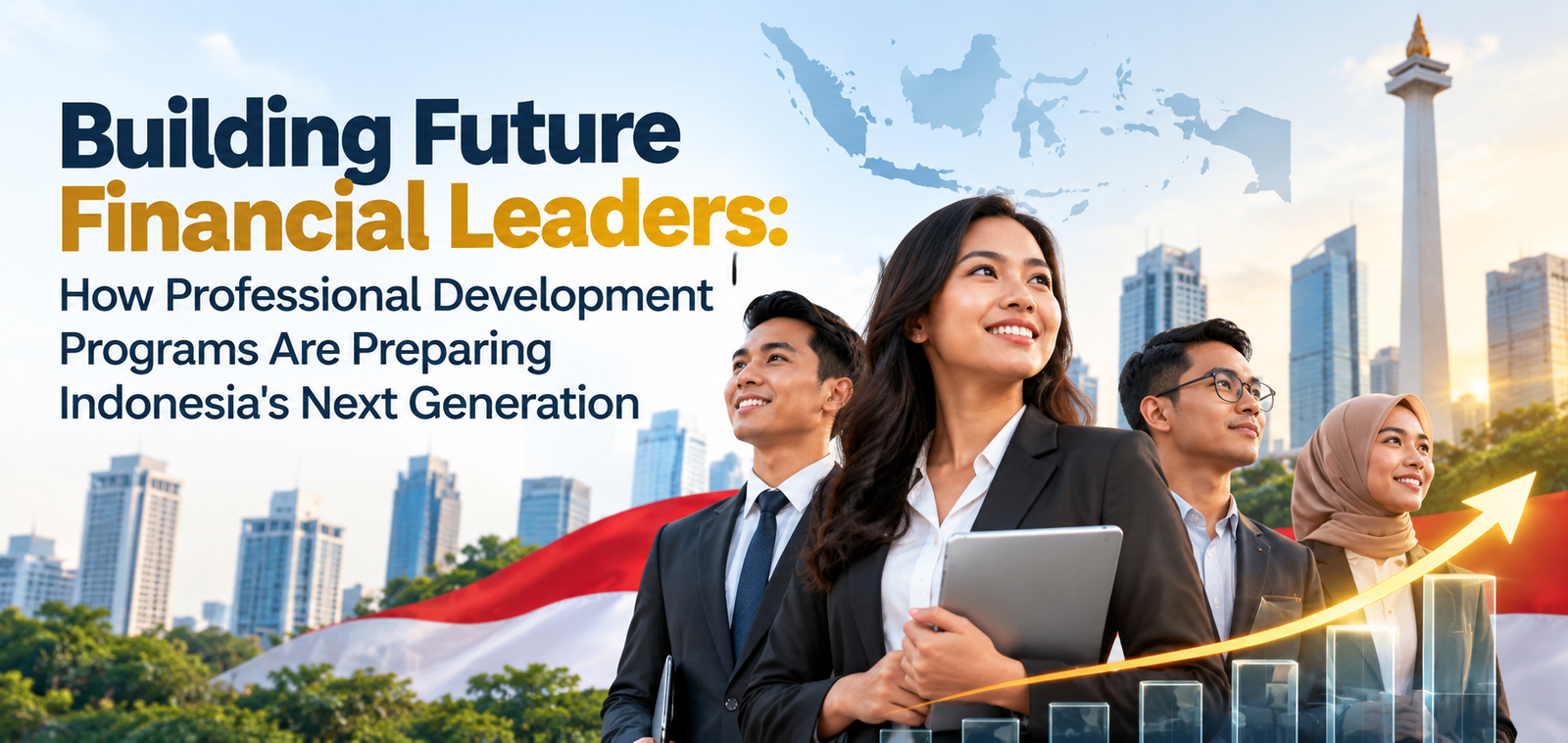
Indonesia is entering a new era of economic growth and financial transformation. As the country strengthens its position as one of Southeast Asia’s largest economies, the demand for skilled financial professionals is rising rapidly. From banking and investment management to fintech, corporate finance, risk management, and public financial administration, organizations are seeking individuals who can navigate increasingly complex financial environments while driving innovation and sustainable growth.
At the same time, technological advancements, digital banking, artificial intelligence, and evolving regulatory frameworks are reshaping the financial services industry. These developments are creating exciting opportunities but also increasing the expectations placed on future financial professionals. Academic qualifications remain important, but employers are increasingly looking for candidates who possess practical expertise, leadership capabilities, analytical thinking, and strong ethical foundations.
In response, professional development programs are playing a critical role in preparing Indonesia’s next generation of financial leaders. Through specialized training, mentorship, certifications, leadership initiatives, and industry partnerships, these programs are helping young professionals build the skills required to succeed in a rapidly changing financial landscape.
The Growing Need for Financial Leadership
The Indonesian economy is getting more sophisticated with each passing year. With the rapid development of financial markets, electronic payment services, investments, and participation in financial services, there is an obvious need for specialists with deep financial skills.
Today, the country’s financial sector includes not only banks but also such entities as financial technology companies, investment companies, insurance companies, wealth management companies, and regulatory agencies. All of them need highly qualified specialists who can handle their financial systems and help the country develop economically.
Such specialists are required not just to do the work, but also to be able to make decisions and take into account different risks, to have leadership skills, creativity, and ability to adapt to the constantly changing conditions.
It is important that these skills cannot be gained in classrooms.
Beyond Academic Qualifications
Higher institutions of learning offer basic fundamentals in accounting, economics, finance, and business management. Nevertheless, transitioning from academia to practice is not always easy for those entering the job market.
Financial professionals must work in a setting where their decisions will have grave consequences. Financial professionals are required to understand how to analyze data, understand regulations, communicate effectively with various stakeholders, and make quick decisions in a highly volatile environment.
Professional development activities enable graduates to fill the gap between what they learn at school and what they need at the workplace. Through exposure to various real-life situations, financial practitioners learn valuable skills which cannot always be learned in the classroom environment.
Increasingly more employers look for people who are well prepared both theoretically and practically. For this reason, participating in professional development activities has become an important part of career advancement.
Developing Technical Expertise
A key purpose of professional development programs is developing technical skills. Professional finance people need to have an extensive knowledge of regulatory changes, accounting policies, investment approaches, risk management models, and technological advancements.
Professional training programs help one remain updated on industry changes while developing more technical skills. Areas including financial analysis, corporate finance, audit services, taxation, treasury management, and investment planning keep changing and, therefore, require constant training.
The emergence of digital finance has made the development of technical skills even more important. Nowadays, finance professionals come across advanced technological tools like artificial intelligence, blockchain technology, data analytics, cloud computing, and financial automation in their day-to-day tasks.
Leadership Development as a Strategic Priority
Technical expertise is no longer enough for career success in the financial industry. Leadership skills become more significant as finance professionals rise up through the ranks of their chosen professions.
A financial leader should lead the team, utilize resources in the organization, make crucial decisions, and help businesses grow. Such people should be effective communicators, establish trust with stakeholders, solve problems, and motivate high-level performance among their employees.
Modern professional development programs usually feature training on leadership as an integral part. The topics of decision-making, emotional intelligence, teamwork, negotiation, strategy, and leadership are considered in these programs.
Young finance professionals gain the required confidence and a new perspective for further growth through such training.
It is especially critical for the Indonesian financial sector to have well-trained leaders given the increasing importance of the digital transformation and competition in the industry.
The Role of Mentorship in Professional Growth
Mentoring continues to be one of the most significant elements in professional development. It helps learn from those who have gone through the experience and thus have a deeper understanding of what is expected of the professional in the industry.
Through mentoring, young professionals are made aware of the kind of decisions to make in order to advance within the industry. Mentors can give advice on how to approach career matters within the industry.
There are a number of leadership development programs that include mentoring programs where young professionals are connected with mentors such as executives, industry specialists and other practicing professionals.
Mentoring is likely to make a significant contribution to career development beyond technical knowledge since mentors may assist mentees develop career strategies, among other things.
For financial managers seeking to rise through the ranks, mentorship is quite significant.
Strengthening Financial Ethics and Governance
Ethics and governance have become critical issues in the global financial system. Financial professionals have the responsibility of asset management, stakeholder interests and organizational integrity.
Global financial issues in recent years have highlighted the need for ethical leadership and proper decision making. Consequently, professional training now puts a lot of emphasis on ethics, compliance, governance and risk management.
Participants are supposed to know not only what decisions they could make, but also what decisions they should make.
This is especially true for future leaders who are expected to shape organizational culture and strategy. Ethical foundations assist in establishing trust with investors, clients, regulators, and the public in general.
Indonesia’s expanding financial industry greatly relies on financial professionals who value transparency and ethical financial management.
Preparing for the Digital Future
The digital transformation is changing all areas of financial services. Customers are expecting digitalized solutions now, whereas organizations depend on technology to become more efficient, cut costs, and make better decisions.
Hence, future financial leaders will need to feel at ease with technology-driven environments.
Professional development courses react accordingly and integrate digital skills into their programs. Students gain knowledge in such areas as data analytics, digital banking, cybersecurity, fintech innovation, AI applications, and new digital business models.
Knowledge of the listed technologies is not an option anymore. Financial leaders should be able to analyze technologies, assess their risks, and implement transformations with them in their organizations.
The integration of financial knowledge with technology will allow professionals to thrive in the digital economy.
Building Global Perspectives
The financial industry in Indonesia is becoming more integrated with the global economy. The influence of foreign investments, multinational companies, international transactions, and global economic events play an important role in financial decisions within all different industries.
It means that future leaders need a wider perspective on the issues of international financial systems and global economy trends.
There are many professional development courses that include international perspectives in their programs using such things as partnerships, conferences, case studies, and cooperation with global organizations. Knowledge of international financial systems gives participants an opportunity to learn how financial systems work outside the borders of their country.
In addition, these programs help professionals to think globally and become ready for competition in today’s interconnected business environment.
Encouraging Lifelong Learning
In the field of finance, there are rapid changes occurring in terms of regulation, technology, market environment, and even business model.
Due to these changes, financial leaders need to be flexible and to continue learning for life, not just during their education period.
Professional development training provides an approach for people to develop the habit of continuous improvement and adaptation.
Participants understand the importance of acquiring new information, gaining new certifications, and keeping themselves up-to-date with the changes in the industry.
All of these traits are especially useful in finance, since keeping oneself up-to-date can have an important impact on professional success.
Supporting Indonesia’s Economic Future
However, grooming future financial leaders goes beyond personal professional success. Professional financial managers directly help contribute to the growth of the economy, investment, business growth, and financial stability.
Efficient leadership among financial organizations leads to efficient utilization of resources, innovative management, and instills confidence in the financial system. The effects of this are beneficial for the companies, their shareholders, and the community.
Given the economic targets that the government of Indonesia is setting for itself, there is a clear requirement for good financial leadership.
Professional development is a vital tool that ensures the building of the necessary human capital needed for the growth of the nation.
Looking Ahead
The financial industry in Indonesia finds itself at a critical junction at this point in time. Technological innovations, financial inclusion, changes in regulation, and increased globalization create many opportunities as well as challenges for professionals in the future.
At such a juncture of events, professional development programs have become indispensable means to foster the next generation of financial professionals. Using technical training, leadership development, mentoring, ethics education, digital competency development, and lifelong learning programs, such programs are helping professionals to get prepared for the challenges of today’s financial world.
In the future, the Indonesian financial industry will rely not only on technological innovations or economic growth but also on the professionalism of its future leaders. Developing professionals today will ensure that in the future Indonesia will have the right people to steer it on the path of further development and success.
With all these organizations involved in fostering talent, Indonesia ensures its future as regards professional development.
FAQ
1. What are professional development programs for financial leaders?
Professional development programs are structured training initiatives that help individuals build financial, leadership, analytical, communication, and strategic decision-making skills needed for careers in finance.
2. Why are professional development programs important for Indonesia’s future financial leaders?
These programs help Indonesian professionals and graduates develop practical skills, industry knowledge, and leadership capabilities that can support their careers in Indonesia’s evolving financial sector.
3. What skills do future financial leaders in Indonesia need?
Key skills include financial analysis, strategic planning, risk management, digital finance, communication, leadership, problem-solving, and data-driven decision-making.
4. How do professional development programs prepare young Indonesians for finance careers?
They combine theoretical knowledge with practical training, case studies, workshops, mentoring, and industry-focused learning to help participants apply financial concepts in real-world situations.
5. How does technology influence financial leadership development in Indonesia?
Technology is transforming financial services through digital banking, fintech, data analytics, automation, and artificial intelligence. Professional development programs increasingly include digital and technology-related skills.
6. Can professional development programs help graduates enter Indonesia’s financial sector?
Yes. Programs can strengthen graduates’ technical and professional skills, improve their understanding of industry practices, and help them become better prepared for finance-related career opportunities.
7. What role does leadership training play in developing financial professionals?
Leadership training develops skills such as communication, teamwork, strategic thinking, ethical decision-making, and people management, which are important for professionals moving into managerial and leadership positions.
8. How can universities support the development of future financial leaders?
Universities can provide industry-oriented courses, internships, professional certifications, mentoring, career development programs, and partnerships with financial institutions and businesses.
9. What are the benefits of mentorship for aspiring financial leaders?
Mentorship can provide career guidance, practical industry insights, professional networking opportunities, and feedback that helps young professionals understand workplace expectations and leadership responsibilities.
10. How can Indonesia build a stronger pipeline of future financial leaders?
Indonesia can strengthen financial education, expand professional development opportunities, encourage industry-academic partnerships, promote digital finance skills, and provide young professionals with practical leadership and career development experiences.