
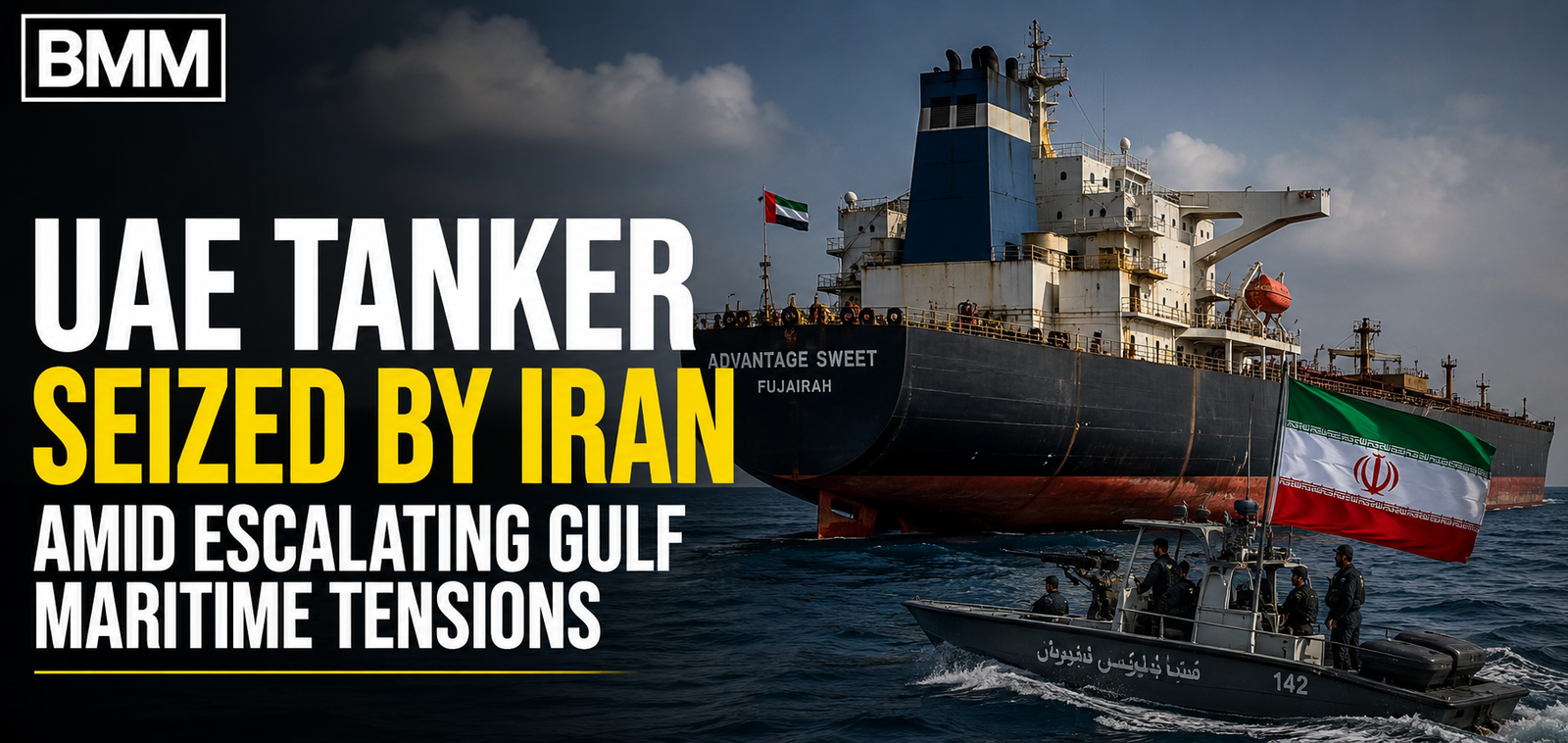
Regional tensions have intensified after Iranian authorities claimed they had detained a UAE-linked tanker in the Strait of Hormuz. According to Iranian state media, the vessel was seized for allegedly violating maritime regulations while operating in Iranian waters. The development has drawn international attention, as the UAE tanker seized by Iran comes amid a series of recent attacks on commercial vessels in the Gulf.
Iranian officials have not released extensive details about the cargo, crew, or the duration of the detention. However, the move has added to concerns over the security of one of the world’s busiest energy transit routes.
Seizure Follows Multiple Maritime Attacks
This alleged arrest has come barely few days after various attacks on ships related to the United Arab Emirates. The government of the UAE has accused Iran of playing an instrumental role in such attacks carried out against ships belonging to the Abu Dhabi National Oil Company (ADNOC).
The timing of this incident has created some doubts in the minds of people regarding whether this move by Iran has any connection with the recent escalation in the maritime tensions in the region. Security experts have opined that this new development may add to the existing tensions in the region.
Strategic Importance of the Strait of Hormuz
Strait of Hormuz continues to be one of the most important maritime choke points in the world. A large percentage of the world’s oil exports move through this strategic maritime choke point, connecting oil-producing nations of the Persian Gulf region to the rest of the world.
Due to the importance of this strait, any disruption in the region is always subject to worldwide attention. The case of the UAE tanker seized by Iran has again brought to light the danger faced by the shipping channels in the region.
Shipping companies keep an eye on the happenings in the strait, as even the slightest disruption could cause increased transport costs and delays in energy supply.
Impact on Global Shipping and Energy Markets
The current development is already raising alarms with shipping companies. There have been reports that ships passing through the Strait of Hormuz have been experiencing delays as companies evaluate the risks involved and formulate a different approach to the situation.
The energy sector too is approaching the situation cautiously. Traders have been keeping an eye on the situation as the disruption can pose threats to oil shipments from Gulf producers. Indeed, the situation with the UAE tanker seized by Iran is not only a regional problem but a global one as well.
Industry specialists have said that the current uncertainty can lead to higher prices of shipment, insurance, and other costs for shipping companies in the region.
International Reactions and Security Concerns
The governments and relevant maritime institutions should be on high alert in anticipation of increased information regarding the matter. The freedom of navigation is one of the major issues of concern for the nations depending on Gulf waters for the movement of their energy imports and exports.
The issue of the UAE tanker seized by Iran is likely to spark the need for diplomacy and maritime security. There are many international actors who have stressed the importance of preventing any kind of escalation that might jeopardize the commercial interests of the region.
What Happens Next?
Although there are not many details that have been reported about the seizure of the ship, the case will definitely attract a lot of international attention in the coming days. The incident involving the UAE tanker seized by Iran occurs at a very sensitive time for security in the Gulf region, especially in terms of attacks and shipping safety.
While investigations and diplomatic talks are still ongoing, the maritime community is going to keep an eye on this case, as it can signal de-escalation or escalation of conflict. For now, the case of the UAE tanker seized by Iran shows once again how fast regional conflicts affect international business and global energy market.
The coming weeks will be very significant for determining the direction of development of this situation.