
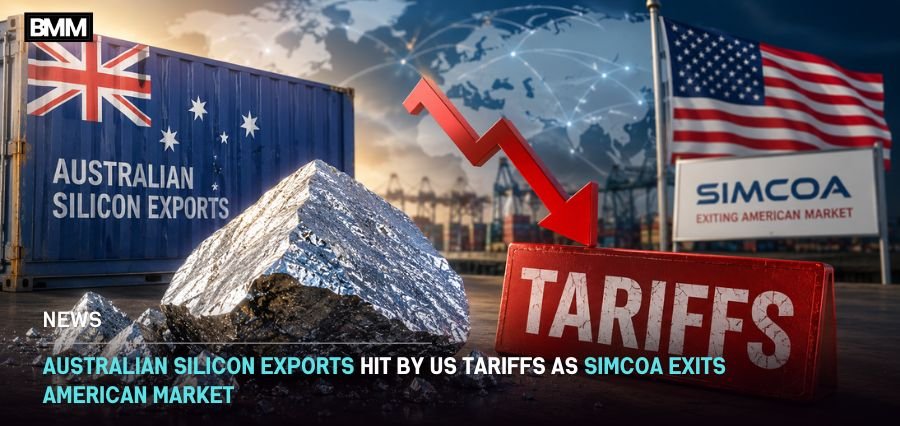
Australia’s only silicon producer, Simcoa, has announced it will permanently exit the United States market after the Trump administration imposed an additional tariff of around 40% on its silicon metal exports. The decision marks a major setback for Australian silicon exports, highlighting growing trade tensions between two strategic allies despite an existing critical minerals partnership. Simcoa says the new duties have made its products commercially unviable in the US, forcing the company to redirect its business toward alternative international markets.
Why Simcoa Is Leaving the US Market
Simcoa has affirmed that the company will stop shipping to the US from August 14 once it has shipped the inventory that is left within American warehouses.
This move comes after the decision by the United States International Trade Commission (USITC), which decided that imports of silicon metal from Australia and Norway were materially injuring the US producers. The commission was satisfied that these products were subsidized and dumped into the country below fair value, compelling the US Department of Commerce to impose anti-dumping and countervailing duties of almost 40 percent.
Simcoa Rejects the Allegations
Simcoa has strongly challenged the conclusions that have formed the basis of the imposition of the duty. The company’s vice president, David Miles, said that the claim that the company is dumping silicon at unfair prices to the market was “absolute rubbish.”
The company believes the decision effectively excludes it from one of the world’s largest industrial markets despite years of supplying American manufacturers. As a result, Simcoa has begun reshaping its export strategy, acknowledging that future Australian silicon exports will need to focus on regions offering stronger growth opportunities
Looking Toward New Markets
With the US market no longer commercially viable, Simcoa plans to expand sales across Southeast Asia, India, and Europe. Company executives believe growing global demand for silicon used in solar panels, semiconductors, and advanced manufacturing will create new opportunities outside the United States.
Industry observers note that diversifying Australian silicon exports could reduce dependence on a single market while strengthening Australia’s role in global clean-energy supply chains. Demand for silicon continues to rise as countries accelerate investments in renewable energy technologies and electronics manufacturing.
Concerns Over the Critical Minerals Partnership
This development has also sparked some doubts about the efficacy of the critical minerals deal between Australia and the US signed in 2025. This deal sought to enhance collaboration in securing critical minerals and minimizing reliance on China.
But according to Simcoa, this recent development negates the whole purpose of the deal. It has posed some questions about the practicality of the deal given that trade remedies can prevent Australian silicon exports from entering the US. Regardless of these reservations, the government of Australia still holds the view that the deal is vital in the overall scheme of things.
Australian Government Responds
The Australian Resources Minister Madeleine King has called the tariffs unnecessary and inconsistent with the spirit of free trade. The Australian government intends to continue talks with the US government while assisting Simcoa in looking for other markets for its exports.
It has been stated that Australia will continue to support the development of trade in critical minerals despite the disagreements. It is believed that supporting the diversification of Australian silicon exports will become an important task after the US market was lost.
Conclusion
The withdrawal of Simcoa from the United States highlights the increasing influence of trade disputes on the global supply chain of critical minerals. The additional tariffs imposed by the US government have forced the company to exit the market, thus necessitating a strategic shift of the Australian silicon exports to other regions like Asia and Europe. Despite Australia’s continued promotion of fair trade practices and increased cooperation, the example shows how political trade actions can quickly change business strategies.
Also Read :- Ukraine Presidential Elections and Referendum Amid War Pressures