
The right to heal is among the most fundamental promises any society can make to its people. Long before prosperity can be measured in numbers, it is reflected in whether a mother can access timely care for her child, whether a patient can receive a life-saving diagnosis without crossing borders, and whether illness is met with dignity rather than despair. Quality healthcare is not merely a service delivered within hospital walls; it is the quiet assurance that human life is valued at every stage, in every community, and under every circumstance. When access to care is limited, the consequences extend far beyond the individual, touching families, livelihoods, and the strength of an entire nation. To strengthen healthcare, therefore, is to strengthen the social fabric itself, preserving both life and hope.
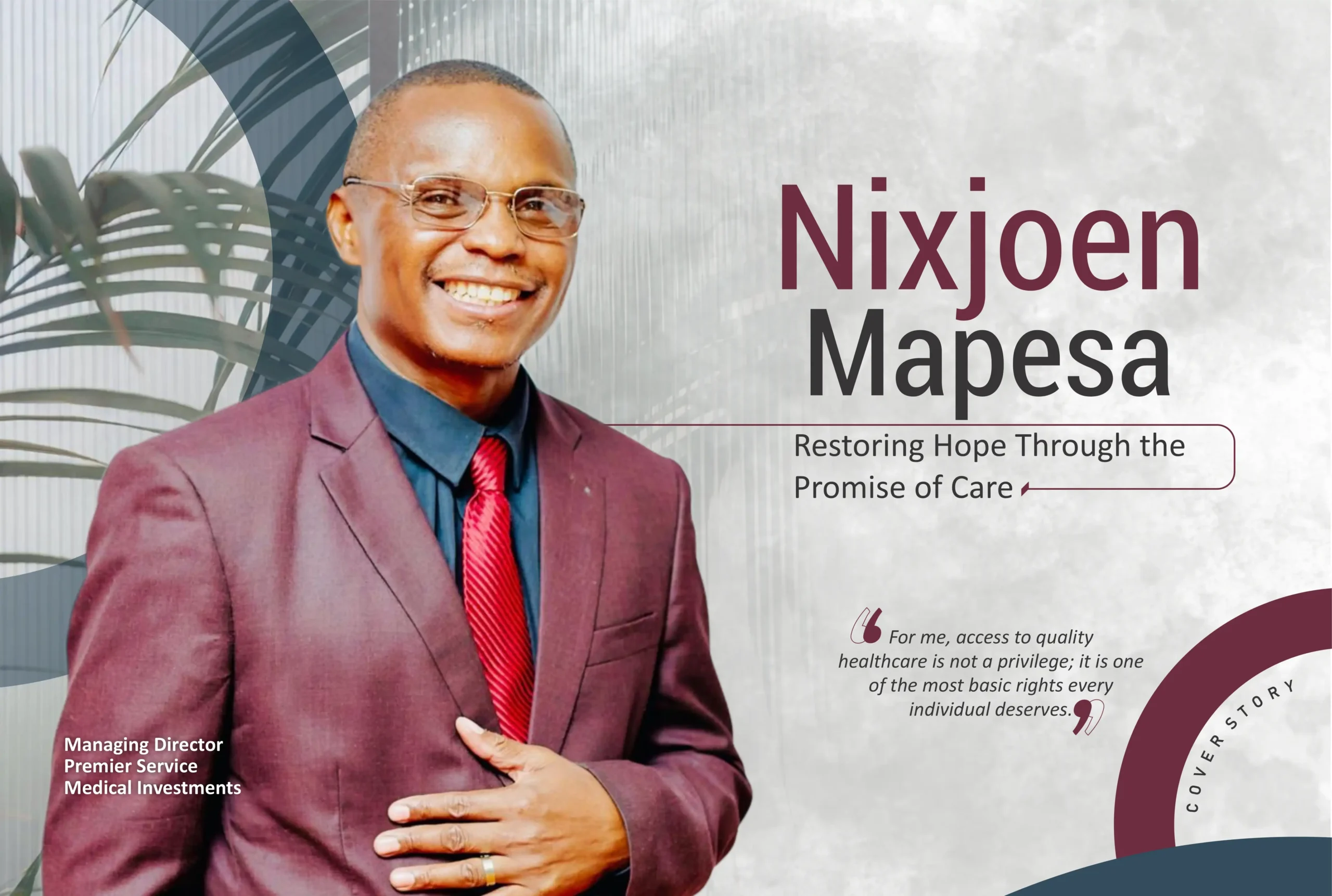
This conviction finds powerful expression in the work of Nixjoen Mapesa and Premier Service Medical Investments, an organization committed to transforming healthcare delivery across Zimbabwe. Under his leadership as Managing Director, the organization has distinguished itself through a rare integration of clinical excellence, financial sustainability, and system-wide reach.
A Vision to Redefine Healthcare Delivery in Zimbabwe
Nixjoen’s vision over the years is built on three deeply interconnected pillars: clinical excellence, geographic reach, and operational integration. Under his leadership, the organization is making deliberate investments in specialist services such as oncology, cardiology, renal care, and orthopaedics, critical areas where many Zimbabweans have historically had to seek treatment abroad at high personal and financial cost. By strengthening these services within the country, he aims not only to improve patient outcomes but also to reinforce Zimbabwe’s healthcare economy.
A major component of this vision lies in expanding access through a hub-and-spoke model, where tertiary referral hospitals in urban centres are linked to a growing network of primary and secondary facilities across peri-urban and underserved rural districts. For Nixjoen, this is not simply an outreach initiative but a long-term market development strategy designed to build trust, strengthen community relationships, and create a sustainable healthcare ecosystem.
He also sees operational integration as a defining strength of the organization. As a subsidiary of PSMAS, Premier Service Medical Investments benefits from a unique alignment between medical aid administration and service delivery, creating end-to-end visibility across patient pathways. By 2030, Nixjoen measures success not by infrastructure alone, but by patient outcomes, clinical quality scores, and the lasting impact on communities served.
Reimagining Care Through Outcomes and Efficiency
For Nixjoen, value-based care represents a fundamental shift away from the traditional volume-driven models that have long shaped healthcare delivery in Zimbabwe. His focus is on embedding clinical quality indicators such as readmission rates, complication indices, and patient-reported outcomes directly into the performance frameworks of healthcare facilities.
This model is already taking shape through the organization’s chronic disease management programmes, particularly for conditions such as diabetes, hypertension, and chronic obstructive pulmonary disease. Through structured protocols, trained clinical coordinators, and digital monitoring tools, the organization is reducing preventable complications and emergency admissions.
He believes that this approach benefits both patients and the broader healthcare system by improving outcomes while ensuring that high-cost resources are used more efficiently. More importantly, he advocates for a healthcare ecosystem where providers, funders, and regulators align around measurable outcomes rather than service volumes.
Technology as the New Backbone of Healthcare
Nixjoen views technology as central to redefining healthcare systems in emerging markets. His digital strategy is built on three layers: data infrastructure, clinical decision support, and patient-facing digital access.
At the foundation is the implementation of an integrated electronic health record system across the facility network. This eliminates fragmented patient information and ensures continuity of care, allowing clinicians across different levels of the network to access full medical histories instantly.
The second layer focuses on clinical decision support through AI-assisted tools for medical imaging analysis and inpatient early warning systems. In settings where specialist clinicians are limited, these tools are helping reduce delayed diagnoses in critical areas such as tuberculosis, diabetic retinopathy, and early-stage sepsis.
The third layer is telemedicine, which allows specialists to consult remotely, significantly reducing the burden of travel for patients while extending specialist expertise into underserved regions. For Nixjoen, the success of digital healthcare lies in coupling innovation with strong partnerships across government and telecommunications providers to address infrastructure challenges.
The Pillars of Sustainable Healthcare Growth
Nixjoen approaches sustainability and growth in healthcare financing with the same discipline applied to any capital-intensive industry, while recognizing the human stakes involved.
His model rests on four pillars: portfolio diversification, evidence-based capital allocation, supply chain optimization, and workforce development.
The organization’s diversified portfolio spans primary care, diagnostics, specialist ambulatory services, inpatient surgery, and allied health services. This creates financial resilience across economic cycles while allowing stronger-performing specialist services to support broader community-focused care.
He also emphasizes rigorous data-driven capital decisions, ensuring that facility expansions and service rollouts are guided by population demographics, disease burden, and referral trends. This protects against unsustainable growth.
Supply chain resilience is another strategic focus, particularly in Zimbabwe’s volatile import environment. Through centralized procurement and local sourcing partnerships, the organization is reducing foreign currency exposure and strengthening reliability.
For Nixjoen, however, the most valuable resource remains people. Workforce pipeline development through training and leadership programmes is central to sustaining quality care and long-term institutional strength.
Advancing the Promise of Universal Health Coverage
Nixjoen sees Universal Health Coverage as a systems achievement rather than a policy promise.
From his perspective, the most urgent priority for Zimbabwe is strengthening the primary healthcare tier. He believes that community-based primary care is the most effective and sustainable pathway toward UHC, as it enables early intervention and cost-effective management of high-burden conditions.
Human resources remain equally critical. While Zimbabwe produces highly skilled clinicians, retention remains a major challenge. Nixjoen stresses the need for a national strategy focused on remuneration, professional development, working conditions, and incentives for rural service.
He also sees the private sector as a key partner in this journey. Through organizations like Premier Service Medical Investments, he believes private providers can extend geographic reach, drive best practices, and build public-private partnerships that support national healthcare goals.
For Nixjoen, Universal Health Coverage is not solely the responsibility of the government but a shared national mission requiring collaboration, innovation, and long-term commitment.
Closing the Policy Gaps That Limit Access
From Nixjoen’s perspective, several critical policy gaps continue to slow the pace at which healthcare access can expand effectively in Zimbabwe. One of the most significant challenges, in his view, is the absence of a coherent regulatory framework for private healthcare. He believes that clear standards around licensing, quality assurance, and accountability are essential not only for patient safety but also for attracting serious healthcare investment into the country.
At present, the regulatory environment remains fragmented across multiple agencies, with limited clinical auditing infrastructure. Nixjoen sees this as a structural barrier that undermines operational predictability and investor confidence. He strongly advocates for well-designed regulation that creates standards assurance while enabling sustainable private sector growth.
A second area of concern lies in pharmaceutical and medical device regulation. He emphasizes the need for a medicines regulatory authority capable of approving new technologies at a pace that remains competitive with regional markets. Delays in approvals, in his assessment, directly translate into delayed patient access to life-improving innovations.
He also highlights the importance of infrastructure investment policy, particularly through tax incentives for healthcare capital, import duty exemptions on medical equipment, and faster approvals for facility development. Alongside this, he sees the absence of a national health information governance framework as a major limitation, especially in relation to interoperability standards, clinical data architecture, and national data repositories that support evidence-based planning.
Leadership Forged Through Crisis and Resilience
Reflecting on his decades in the healthcare sector, Nixjoen identifies Zimbabwe’s prolonged periods of macroeconomic instability as the most defining challenge of his journey.
Leading through hyperinflation, currency transitions, supply chain disruptions, and severe workforce attrition fundamentally shaped his leadership philosophy. For him, these were not isolated crises but prolonged conditions that tested every dimension of institutional resilience.
Those experiences reinforced his belief that survival during adversity is rooted in design rather than chance. He observed that the organizations that endured were not necessarily the most financially powerful, but those that had invested early in strong governance, diversified operations, community trust, and adaptive problem-solving cultures.
This period also reshaped his leadership approach. Nixjoen moved away from directive and insulated leadership styles toward distributed leadership, where clear strategic direction is combined with genuine empowerment across all levels of the organization. He learned to lead not only through instruction but through inquiry, creating space for capable teams to exercise judgment and escalate concerns without fear.
Most importantly, those years deepened his understanding of the moral responsibility of healthcare leadership, ensuring that every strategic decision remains grounded in its human consequences.
Converting Barriers into Breakthroughs
Nixjoen approaches systemic healthcare challenges as opportunities for structured innovation and sustainable growth.
A discipline he describes as structured constraint analysis has become central to his approach. This involves carefully identifying where the system is failing, who is affected, and whether a clinically sound and financially sustainable model can address the gap.
Zimbabwe’s specialist care deficit offers a clear example. Rather than accepting the lack of domestic oncology, cardiology, and neurosurgical services as an environmental limitation, he identified it as a clearly defined service gap with a measurable patient population. By investing in specialist infrastructure, internationally trained clinicians, and strong referral protocols, the organization transformed this deficit into some of its highest-utilization and highest-satisfaction service lines.
The same strategic thinking informed investments in diagnostics, imaging, pathology, and laboratory services. What initially emerged as an internal operational necessity has evolved into a strategic capability serving broader referral networks.
He also points to workforce development as one of the most powerful innovations, building an internal clinical training pipeline rather than relying solely on an increasingly competitive external recruitment market.
The Balance of Care and Commerce
Nixjoen’s unique combination of clinical and business expertise plays a defining role in his leadership.
For him, clinical knowledge provides an indispensable evidence base for evaluating service proposals beyond financial metrics. When new service lines are proposed, he engages deeply with the clinical rationale, operational implications, and patient impact rather than focusing solely on projected returns.
This perspective also serves as an ethical safeguard. He recognizes that competitive markets often create pressure to prioritize revenue and service volumes. His clinical background enables him to identify these risks early and address them with credibility and authority.
At the same time, his business acumen brings financial sustainability, operational efficiency, and strategic coherence into every decision. Nixjoen strongly believes that healthcare leadership requires the integration of both lenses, clinical excellence and financial durability, as the only ethically sound and practically sustainable model.
Building Enterprises That Endure
For Nixjoen, resilient and financially sustainable healthcare enterprises are built through coherence across strategic architecture, operational discipline, governance quality, and culture.
Diversification remains a central principle. By spreading services across multiple clinical lines, geographic markets, and revenue streams, the organization reduces vulnerability to external shocks. Lessons from the pandemic reinforced this approach, particularly for organizations overly dependent on elective procedure income.
Operational discipline is equally critical. Rising costs in staffing, pharmaceuticals, consumables, and equipment require continuous optimization without compromising clinical safety. Investments in health technology assessment, supply chain systems, and energy efficiency infrastructure form part of this long-term discipline.
He also emphasizes governance quality as foundational. Independent oversight, strong clinical governance committees, transparent reporting, and rigorous internal audit systems create the credibility necessary for partnerships, funding, and sustainable growth.
Above all, he believes that a culture of clinical excellence remains the most enduring competitive advantage.
The Culture Behind Continuous Improvement
Nixjoen sees innovation as fundamentally rooted in organizational culture.
At PSMI, he has fostered cross-functional clinical improvement forums where frontline clinicians, operations managers, and administrative teams collaboratively identify challenges and develop evidence-based solutions. Successful proposals are resourced, implemented, and visibly recognized, reinforcing a culture that values intelligence and initiative at every level.
Leadership development has also become highly structured under his guidance. Rather than relying on seniority alone, the organization actively identifies high-potential individuals early and supports them through cross-functional exposure, formal management education, and mentorship.
Nixjoen personally invests in coaching professionals through the difficult transition from clinical specialist to leader, recognizing that enabling the excellence of others requires a fundamentally different mindset.
The Future of Care Across the Continent
Looking ahead, Nixjoen believes four major forces will shape the future of healthcare across Africa.
The first is the epidemiological transition toward non-communicable diseases such as cardiovascular disease, diabetes, and cancer. He sees this as one of the most consequential structural changes facing African healthcare systems.
The second is the rapid maturation of health technology, including AI-assisted diagnostics, digital therapeutics, and advanced remote monitoring. His organization is already investing in the infrastructure and expertise required for responsible adoption.
Third, he identifies climate change as an increasingly significant risk to healthcare systems, affecting disease patterns, supply chains, and facility resilience. Finally, he sees pan-African clinical collaboration as a strategic imperative. Cross-border specialist networks and continental centres of excellence, in his view, will play a major role in shaping the next decade of healthcare transformation, and PSMI is actively positioning itself within that evolving ecosystem.
“For me, access to quality healthcare is not a privilege; it is one of the most basic rights every individual deserves.”
“I have always believed that the true strength of a healthcare system is measured not by its infrastructure alone, but by the lives it is able to heal and the communities it continues to serve.”
“Every challenge within the healthcare system presents an opportunity to innovate, strengthen delivery, and create lasting impact.”
Also Read: Business Minds Media for more information.