
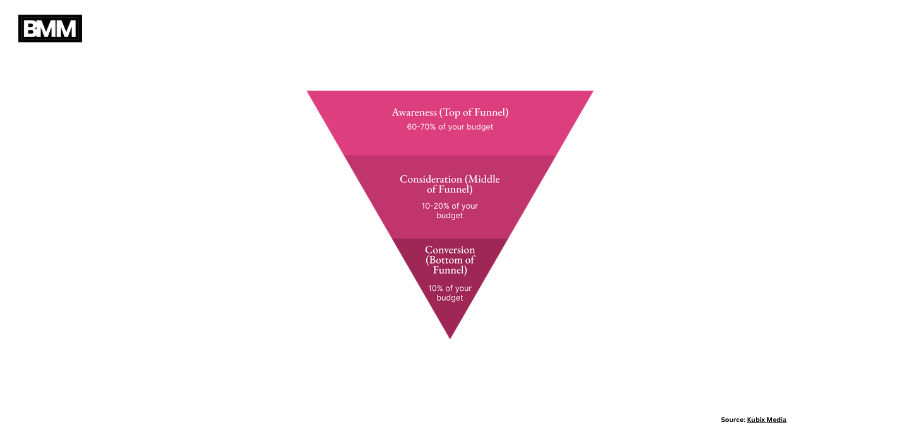
In today’s competitive digital landscape, businesses must guide potential customers through a structured journey before achieving conversions. One of the most critical stages in this journey is the Marketing Middle Funnel, where leads are nurtured and transformed into serious prospects. While the top stage focuses on awareness and the bottom on conversions, this phase plays a vital role in building trust, educating audiences, and influencing decision-making. For marketers, mastering this stage is essential to creating meaningful engagement and long-term business growth.
Understanding the Marketing Middle Funnel Strategy?
The Marketing Middle Funnel represents the stage where potential customers have already shown interest but are not yet ready to make a purchase. At this point, they are actively researching, comparing options, and seeking deeper insights into available solutions.
This stage acts as a bridge between awareness and conversion. It requires businesses to move beyond basic messaging and deliver valuable, relevant content that addresses specific needs. Without a strong approach at this level, even highly interested leads may lose momentum and drop out before making a decision.
Why the Marketing Middle of the Funnel Is Important
The significance of the middle part of the sales funnel is in helping the prospects create trust and credibility around a company or product. This point is different from the others because here consumers do not just explore but evaluate a particular product or service in accordance with their needs.
Offering valuable information enables companies to present themselves as trustworthy and authoritative sources of information. Understanding and support that prospects receive during the middle of the funnel can help them advance in their journey to purchase.
Moreover, qualification is another significant function of the middle of the funnel. Not all prospects proceed further, and this stage is responsible for finding and selecting them.
Key Strategies for the Marketing Middle Funnel
In order to succeed at this stage of the funnel, one should pay attention to engagement and value that can help prospects make decisions. It is crucial to provide relevant information about products and services offered.
1. Educational Content
Articles, papers, and case studies provide valuable, detailed information that enables prospects to make informed decisions and choose solutions to their problems.
2. Email Nurturing
Email marketing is very effective in nurturing leads. By using personalized emails that take into account behavior, the business will be able to keep the prospect informed and engaged.
3. Product Demos
A product demo or webinar enables one to understand how the product works or serves their interests. This will help reduce uncertainties and envision possible benefits.
Best Types of Content for Each Funnel Section
The Marketing Middle Funnel will require content whose sole purpose is problem-solving. Content that helps a prospect compare alternatives, solve problems, and see applications of the solutions will work well here.
Storytelling will also do wonders at this point. Telling the story of other customers who have had similar problems solved by the company builds credibility. Interactive content can also prove valuable at this stage.
Challenges Faced During This Stage
The implementation of the middle of the funnel is associated with some challenges. First, there is the challenge of consistency when it comes to engaging prospects. Inability to engage prospects consistently could mean that the content is not relevant or current.
Personalization is another challenge associated with this stage. Prospects vary greatly, hence making the choice of messages to deliver harder.
Measurement may also present some difficulties since, unlike during the final stage, it requires measuring how prospects respond.
Impact on Conversion Rate
The performance of the Marketing Middle of the Funnel will influence the performance of the conversion rate of prospects. By nurturing them and providing information, the chances of making a hasty decision become less.
The decision-making process will be shortened considerably. An effective approach will lead to more prospects reaching the final stage easily.
Companies that invest in the middle of the funnel build a better relationship with customers.
Future Trends in Marketing Funnels
In terms of future trends, the middle of the funnel looks to be becoming more data-driven and personal. The use of advanced technologies, such as artificial intelligence, helps to understand users better and provide them with more targeted content.
Also, due to automation tools, it is possible to ensure more efficient communication and engagement without adding any extra effort to the work of businesses.
With ever-changing customer expectations, the importance of this stage will be even greater in the future.
Conclusion
The Marketing Middle Funnel is an essential step in the process of marketing that bridges the gap between awareness and conversion. Here is where relationships with leads are built and decisions made.
Thus, it is essential to provide valuable and personalized content for customers and engage them in the process actively and continuously.
Also Read :- The Growing Impact of AI in Social Media on Digital Communication