
Renewable energy development is not simply about replacing one source of power with another. It is about deciding who gets access, who participates, and who benefits when infrastructure is built. In regions where energy shortages shape daily life, renewable projects carry long-term consequences that reach far beyond generation capacity. They influence employment, skills transfer, local economies, and whether communities remain spectators or become contributors. The difference between impact and extraction is often determined at the design stage, long before the first panel is installed.
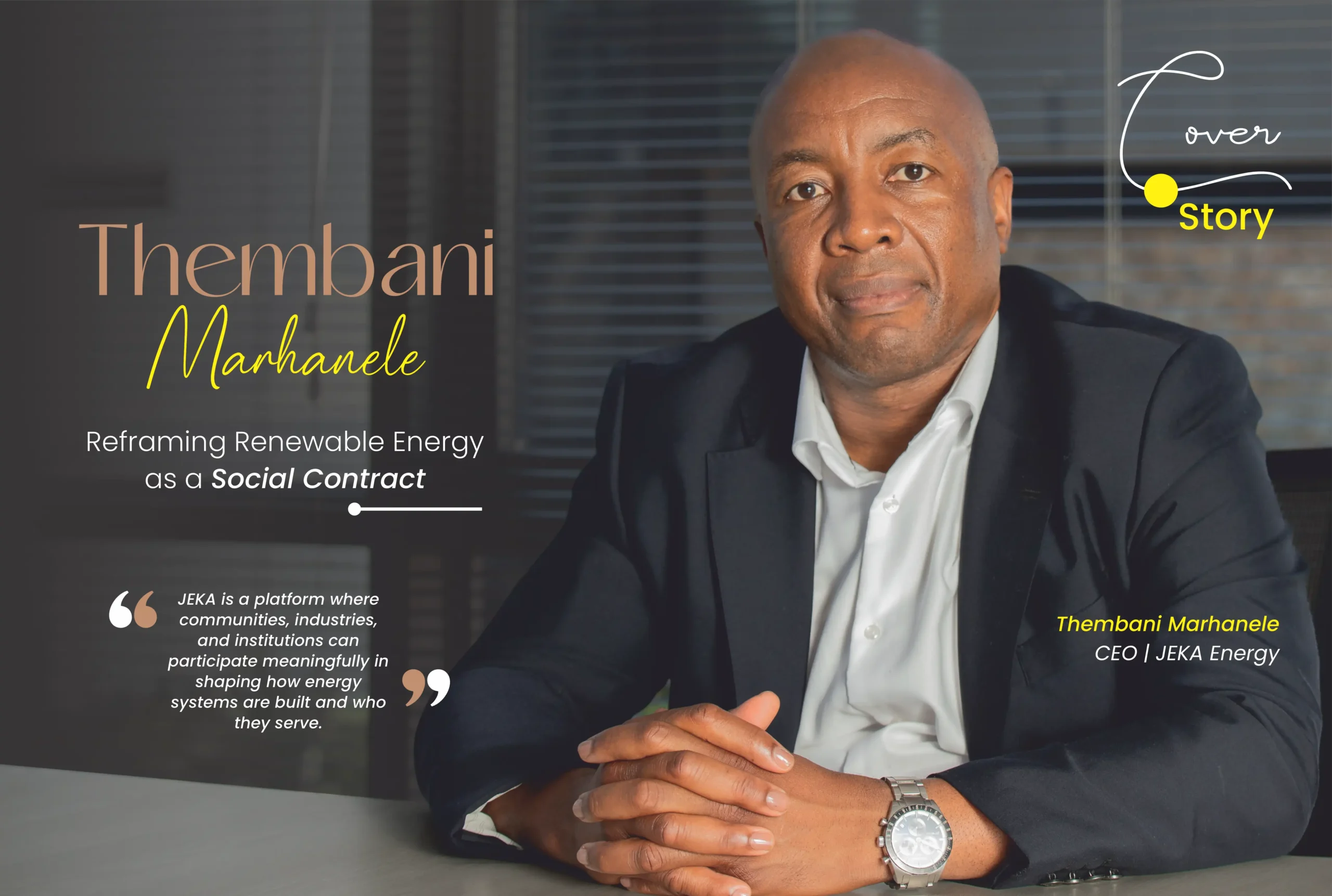
That distinction defines the work of Thembani Marhanele at JEKA Energy. As Chief Executive Officer, he leads the development of utility-scale renewable energy projects with a deliberate focus on inclusion, local capability, and long-term value.
Purpose as the Point of Origin
For Thembani, the journey into renewable energy was never a commercial decision alone. It was rooted in a deep sense of purpose and responsibility that emerged from a realization far larger than technology or infrastructure. He came to understand that renewable energy projects offer a rare opportunity to change lives while simultaneously caring for the planet. That realization marked a turning point, helping him recognize what he describes as another purpose in his lifetime.
JEKA Energy became the platform through which this purpose could be expressed. Beyond being a project developer, the company serves as a space for conversations that shape how communities, industries, and institutions participate in the future of energy. It also acts as a channel that opens access to opportunities across the entire value chain of the projects it develops. For Thembani, renewable energy is not just about generation. It is about inclusion, participation, and creating pathways for people to be part of something transformative.
Building With Intention and Collective Upliftment
Thembani’s philosophy of serving life purpose through meaningful achievement is embedded in how JEKA Energy builds its projects, teams, and partnerships. From the earliest stages of design to long term operations, intentionality guides every decision. He believes deeply in the idea of lifting others while rising, ensuring that success is shared rather than concentrated.
Everyone who becomes part of a JEKA Energy project enters a broader ecosystem. This includes suppliers, financiers, professionals, unskilled labor, and clients. Each participant is given the opportunity to engage meaningfully, learn, grow, and ideally carry those lessons forward into future projects. For Thembani, this approach creates a ripple effect. The success of one project feeds into the empowerment of people who then help shape others, creating continuity and shared progress rather than isolated wins.
Scaling With Confidence Through Lived Experience
JEKA Energy’s growth to a renewable energy portfolio exceeding 350 megawatts did not happen by accident. Thembani attributes this scale and clarity to a combination of international exposure, technical training, and deeply personal life experience. Global exposure to technological advancements gave him a clear understanding of how JEKA Energy could contribute meaningfully to Africa’s Integrated Resource Plan 2030 and beyond.
Yet confidence did not come solely from boardrooms or global conferences. It came from lived experience. Thembani was born in communities facing the very challenges that renewable energy now seeks to address. He lived through energy insecurity, limited access, and systemic inequality. That lived reality fuels his clarity of purpose and strengthens his resolve.
One defining moment that continues to stand out was JEKA Energy’s decision to self fund and complete feasibility studies for a 90 megawatt solar photovoltaic plant in Limpopo, South Africa. That decision demonstrated belief in both the vision and the capability of the company. It also reinforced the importance of telling Africa’s own stories while developing innovative solutions that empower future generations.
Balancing Profitability with Community Impact
As an Independent Power Producer focused on Africa’s green energy future, Thembani understands the delicate balance between commercial viability and inclusive socio-economic impact. He rejects the notion that profitability and social benefit must exist in opposition. At JEKA Energy, the approach is intentionally designed to ensure both outcomes reinforce each other.
Strong relationships with original equipment manufacturers and distributors allow the company to implement community outreach strategies that are practical and impactful. Localized skills training programs form a core part of project delivery, ensuring that communities are not only beneficiaries but active participants. These programs enhance economic benefits for JEKA Energy, its clients, and the communities they serve.
For Thembani Marhanele, the guiding principle is simple. Every project should be a win win. There is no room for greed or exploitation. Sustainable success comes from shared value and long-term trust.
Translating Clean Energy into Human Opportunity
While clean energy discussions often focus on megawatts and emissions, Thembani places equal emphasis on employment creation and social impact. He believes that energy projects must translate abstract sustainability goals into tangible opportunities for people on the ground
JEKA Energy conducts energy forums in communities served by its clients. These forums are designed to inform, educate, and empower community members. People are given insight into project designs, procurement processes, and timelines, allowing them to prepare themselves to participate meaningfully in the value chain.
Beyond construction, JEKA Energy localizes operations and maintenance teams for the full lifespan of its projects. This ensures long term employment, skills retention, and community ownership of the infrastructure that serves them.
Designing Beyond Compliance for Lasting Impact
Thembani views the integration of policy, economics, and social outcomes as essential to responsible renewable energy development. He believes this integration is the global blueprint for renewable energy projects. However, the true differentiator lies in how that blueprint is applied in Africa.
While global frameworks such as the Sustainable Development Goals provide guidelines, Thembani believes developers must go deeper. Projects should be designed not only for economic and environmental benefits but for human thriving. This requires extensive socio-economic obligation schedules that lead to sustainable societal outcomes.
For him, compliance is the minimum. True leadership lies in designing projects that leave communities stronger, more resilient, and better equipped for the future.
Climate Leadership Beyond Infrastructure
Being trained as a Climate Reality Leader was a defining milestone for Thembani. The experience deepened his understanding of the pollution crisis, the drivers of global warming, and the long-term consequences of current decisions on future generations.
Equally impactful were the discussions around interconnected global systems such as food security, water scarcity, and public health. These insights reshaped JEKA Energy’s business models, leading to the intentional integration of climate change mitigation strategies into future project designs.
Thembani actively participates in advocacy programs that prioritize climate-resilient solutions using currently available resources. For him, leadership in climate action extends far beyond project execution. It includes education, advocacy, and influencing systems toward long-term resilience.
Measuring Value Beyond Megawatts
As a RENAC-certified Country COBENEFITS Specialist, Thembani places strong emphasis on measurable social and economic outcomes alongside environmental gains. JEKA Energy projects are designed to deliver affordable access to clean energy while strengthening energy security.
Direct and indirect benefits are built into project designs to enhance economic performance. Through structured socio-economic impact strategies, JEKA Energy accelerates clean energy access, reduces poverty and inequality, promotes healthier environments, and increases economic participation and public acceptance.
These outcomes are not abstract ideals. They are tracked, measured, and evaluated on a project-by-project basis. The data gathered informs continuous improvement, ensuring that future projects deliver even greater social and economic value.
Addressing Systemic Barriers to Equitable Growth
Thembani is clear about the challenges facing Africa’s renewable energy landscape. While opportunity is abundant, systemic barriers continue to slow equitable growth. Chief among these is the gap between governance and industry innovation.
He believes collaboration is essential in shaping effective policies, project designs, finance models, and innovative products. Access to affordable clean energy must be treated as a national priority and recognized as a basic human right.
Planning, action, and oversight must align with energy policy priorities. When this alignment is achieved, Thembani believes Africa can accomplish most, if not all, Sustainable Development Goals in the near future. Empowerment, rather than exploitation, is the foundation of that progress.
Learning as a Catalyst for Innovation
Continuous learning is central to JEKA Energy’s ability to innovate and adapt. Thembani and his team regularly travel across continents and throughout Africa to study deployed systems and observe how future designs have evolved through stakeholder input.
Engagements with original equipment manufacturers allow JEKA Energy to contribute directly to future designs and evolving funding models. Many of these collaborations result in proof-of-concept projects where JEKA Energy installs systems that generate valuable data for further innovation.
This culture of learning ensures that the company remains agile, informed, and positioned at the forefront of technological and financial evolution in renewable energy.
Staying Grounded Through Service
Leadership in sustainability often requires patience. Regulatory processes, infrastructure constraints, and long development cycles can slow progress. During these periods, Thembani remains grounded by focusing on service.
Much of his time during downtimes is dedicated to extensive social programs. JEKA Energy provides free services to vulnerable communities, financing and installing off-grid systems for those most in need. The company also donates lighting systems, sharing what Thembani calls the gift of light.
These interventions are intentionally inclusive. They support early childhood development centers, primary and high schools, and facilities caring for the elderly. For Thembani, these efforts reaffirm purpose and renew motivation.
Lighting the Path for Future Generations
Looking ahead, Thembani envisions JEKA Energy as a leader in redefining how renewable energy projects are designed, financed, implemented, and operated across Africa. The company has adopted a robust socio-economic obligation framework that supports a just energy transition driven not only by industry and government but by empowered communities.
The legacy he hopes to leave is one of equality, shared progress, and continuity. A future where empowered generations thrive together and pay forward the opportunities they received.
Africa was once labeled the dark continent. Thembani rejects that narrative. Through partnerships, rural electrification programs, and tireless commitment, he and JEKA Energy are lighting up communities across the continent. Africa, in his vision, is not dark. It is rising, illuminated by purpose, innovation, and people.
“I do not believe energy infrastructure should be built in isolation from the people who live around it. The design stage determines whether a project empowers communities or simply extracts value.”
“JEKA is a platform where communities, industries, and institutions can participate meaningfully in shaping how energy systems are built and who they serve.”
Also Read :- Business Minds Media for more information