
Workplaces hold far more than desks and deadlines. They carry the quiet energy of ambition, the spark of new ideas, and the countless conversations that slowly shape a company’s future. A thoughtfully designed office can change how people feel about their work. It can invite collaboration, encourage creativity, and create moments of connection that turn colleagues into communities. When a space truly understands the people who inhabit it, it becomes something more meaningful than architecture or design. It becomes a place where culture grows, where people feel supported, and where work begins to feel purposeful.
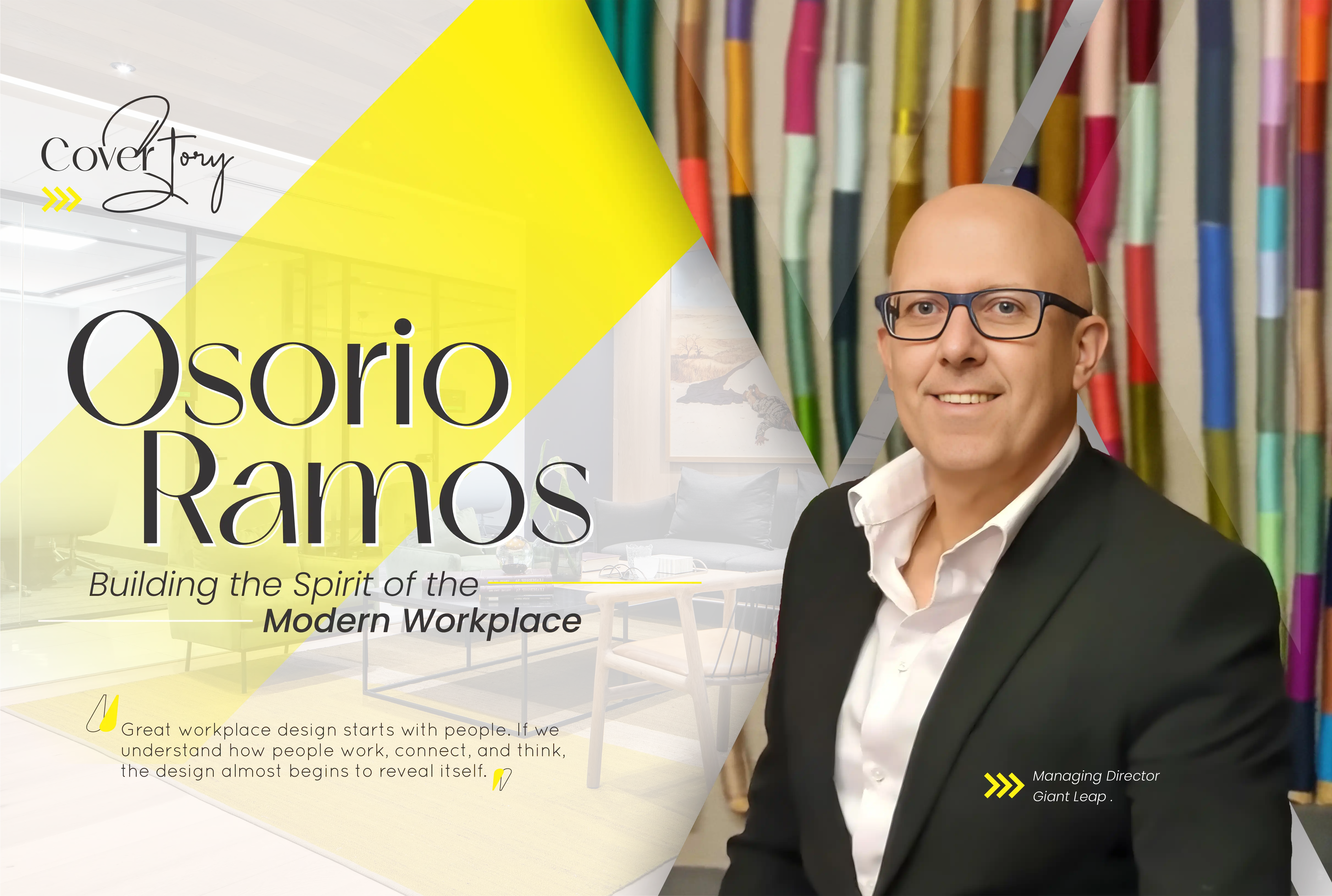
For Osorio Ramos, creating those environments has been the driving force behind a career built on experience, curiosity, and leadership. As Managing Director of Giant Leap, he leads the company with a vision that sees workplaces not simply as physical environments but as powerful tools that shape how organizations function and how people experience their day.
A Journey Built Through Experience and Leadership
Osorio Ramos’s professional journey is rooted in both technical mastery and hands-on industry experience. Over the past twenty-four years, he has immersed himself in nearly every aspect of the built environment, steadily developing the knowledge and leadership perspective that now define his role as Managing Director at Giant Leap. His career reflects a careful blend of architectural understanding, operational insight, and the ability to lead teams toward ambitious goals.
After completing his National Diploma in Architecture, Osorio Ramos began his career by working directly within the industry for four years. This early stage allowed him to gain practical exposure to the realities of design and construction. It was during this time that he developed a strong foundation not only in architectural thinking but also in the collaborative processes required to bring projects from concept to completion. These formative experiences gave him a deep appreciation for the technical discipline and coordination required in successful design and build environments.
His next major step came when he took on leadership of the design department at Contract Interiors. In this role, Osorio Ramos refined his creative direction while strengthening his ability to guide and inspire a team. Managing a design department required more than technical capability. It demanded strategic thinking, communication, and the ability to align creative ideas with client expectations and business objectives. The experience sharpened his leadership skills and allowed him to develop a more holistic perspective on the role design plays in shaping workplaces.
Driven by a desire to broaden his understanding of the industry, Osorio Ramos later transitioned into project management. This move allowed him to expand his operational knowledge and gain a deeper understanding of how projects move through complex phases of planning, coordination, and execution. Through project management, he strengthened his ability to manage timelines, budgets, and cross functional teams while ensuring that design intent remained intact.
His career continued to evolve when he joined JHI as Senior Portfolio Manager. In that position he further developed his strategic thinking and strengthened his ability to engage directly with clients and stakeholders. Managing large portfolios required a clear understanding of business objectives, investment priorities, and the role physical environments play in supporting organizational performance.
Today, as Managing Director of Giant Leap, Osorio Ramos brings together decades of design insight, operational expertise, and business leadership. His approach to leadership reflects the depth of his experience across design, project management, and client strategy. By combining these perspectives, he guides the company with clarity, vision, and a commitment to creating workspaces that deliver real value for both people and organizations.
Designing Workspaces That Truly Thrive
At the heart of Osorio Ramos’s design philosophy is a belief that workspaces should be far more than functional environments. Giant Leap approaches corporate interiors with the conviction that workplaces should be living experiences that influence how people feel, think, and interact throughout the workday.
The company’s guiding purpose is to create what Osorio describes as thriving workspaces. These are environments carefully designed to inspire creativity, encourage collaboration, and support the well-being of the people who occupy them. Rather than viewing offices purely as operational infrastructure, Giant Leap sees them as spaces that shape culture, energy, and productivity within organizations.
Central to this philosophy is the understanding that people must come first. Osorio Ramos believes that successful workplaces are designed around human experience rather than simply spatial efficiency. Natural light, ergonomic furniture, thoughtful amenities, and intuitive layouts all contribute to environments that feel comfortable and energizing. At the same time, each workspace must reflect the identity of the organization it represents. By aligning design with brand culture, companies can strengthen their internal community and reinforce shared values.
Experience also plays a critical role in Osorio’s approach. Experiential design focuses on how individuals move through a space and how that journey shapes their perception of the workplace. A well-designed office can guide people naturally through collaborative areas, quiet zones, and social environments that encourage connection. These moments of interaction often define the emotional quality of a workspace.
Well-being forms the third pillar of this philosophy. Osorio believes that workplace design has a direct influence on physical, mental, and emotional health. When well-being is integrated from the earliest stages of design, the office transforms into a supportive environment rather than simply a place of productivity. Elements such as daylight, acoustics, spatial comfort, and thoughtful planning contribute to environments that genuinely enhance daily work life.
Putting People at the Center of Workplace Design
For Osorio, the effectiveness of a workspace is measured not by how impressive it looks but by how well it supports the people who use it every day. A thriving office environment emerges when design decisions prioritize the needs, behaviors, and well-being of employees.
An effective workspace encourages creativity and motivation by creating environments that feel inviting and energizing. Spaces that allow employees to focus deeply while also supporting collaboration help teams perform at their best. When people feel comfortable and inspired by their surroundings, their productivity and engagement naturally increase.
At the same time, well-designed workspaces foster meaningful connections among colleagues. Shared spaces, informal meeting areas, and collaborative zones can encourage spontaneous conversations and idea sharing. These interactions often play a critical role in shaping organizational culture.
Osorio believes that workplace design should ultimately make work feel better. When employees enjoy their environment and feel supported by the space around them, the benefits extend far beyond aesthetics. Creativity flourishes, collaboration becomes more natural, and company culture grows stronger.
The Evolution of the Modern Office
Workplace design in South Africa is currently undergoing a significant transformation, and Osorio sees this evolution accelerating in the coming decade. Offices are no longer defined solely by desks, meeting rooms, or square footage. Instead, they are becoming flexible ecosystems designed to support people, technology, and evolving work patterns.
Future workplaces will need to support collaboration, innovation, and wellbeing while also strengthening company culture. Flexibility will become one of the defining characteristics of successful office environments. As hybrid work models continue to shape how organizations operate, offices must accommodate both in person interaction and digital connectivity.
A major factor influencing this shift is the arrival of Generation Z in the workforce. This generation brings new expectations around flexibility, inclusivity, and purpose. They value social connection at work and are drawn to environments that feel engaging and authentic. Offices will therefore need to reflect company culture while offering experiences that cannot easily be replicated remotely.
Looking further ahead, Generation Alpha will eventually enter the workforce as the first truly AI native generation. These individuals will expect advanced automation, immersive technologies, and highly adaptable workspaces as standard features.
Artificial intelligence will also play an increasingly significant role in workplace operations. Smart booking systems, space usage analytics, and personalized environmental controls will allow organizations to optimize how offices function. Seamless integration between digital and physical work environments will become essential as employees move fluidly between remote and in-person collaboration.
Alongside these technological changes, wellbeing and sustainability will remain central priorities. Natural light, acoustic comfort, ergonomic design, and responsible materials will become integral components of workplace design rather than optional enhancements.
The Discipline Behind Great Design
Managing complex workplace projects requires more than creative vision. For Osorio, delivering consistent quality and timely results depends on a disciplined process rooted in communication and collaboration.
The foundation of this process begins with understanding the client’s business and its people. Osorio emphasizes the importance of asking questions and taking time to learn how an organization operates. This discovery stage allows the design team to identify challenges, opportunities, and cultural dynamics that should shape the final environment.
Listening carefully to clients is equally important. By truly understanding what organizations hope to achieve, Giant Leap can develop solutions that help workplaces flourish.
From there the team evolves ideas into practical design strategies. The transformation from concept to actionable design plan requires balancing creativity with operational feasibility. Detailed planning ensures that design intent remains clear as the project progresses.
Finally, the design is translated into a fully realized workspace through careful execution. Osorio believes that successful delivery means more than simply completing construction. It means creating environments that inspire people and contribute to their everyday happiness.
Translating Culture into Physical Space
One of the most powerful aspects of workplace design lies in its ability to translate an organization’s identity into a physical environment. Osorio believes that authentic design emerges when three essential elements align.
The first element is identity. Every organization has a unique story, set of values, and sense of purpose. Understanding who the company is forms the foundation for meaningful design decisions.
The second element is behaviour. Different organizations operate in different ways. Some rely on constant collaboration while others require deep concentration and independent work. Recognizing these behavioural patterns allows designers to create spaces that support real workflows rather than theoretical ones.
The third element is environment. This is where identity and behaviour are translated into spatial design. Layouts, materials, lighting, and architectural features all contribute to shaping how the workspace feels and functions.
When these three elements align, the result is a workplace that feels authentic, purposeful, and connected to the organization it represents.
Innovation Shaping the Future of Corporate Interiors
Innovation plays a central role in how Osorio approaches design. For him, innovation is not simply about aesthetics or novelty. It is about creating workplaces that genuinely improve how people experience their environment.
One major focus is flexibility. Businesses are constantly evolving, and workspaces must be capable of adapting alongside them. Modular layouts and adaptable furniture systems allow offices to transform as organizations grow or restructure.
Technology also continues to reshape corporate interiors. Smart building systems improve energy efficiency, comfort, and operational performance. Digital tools allow remote and in office teams to collaborate seamlessly, ensuring that the workplace supports modern work patterns.
Emerging trends are also driving new approaches to sustainability and efficiency. The use of environmentally responsible materials and energy-efficient technologies allows organizations to reduce environmental impact while maintaining high-performance spaces.
Data-driven insights are another important innovation. By analyzing how employees interact with their environment, designers can create spaces that are both efficient and responsive to real user needs.
Embedding Sustainability Into Workplace Design
Sustainability has become an essential consideration in contemporary design, and Osorio views it as a responsibility rather than an option. Giant Leap integrates sustainable thinking into every stage of its design process.
Energy efficiency forms a critical part of this strategy. Lighting systems, heating and cooling technologies, and smart building solutions are carefully selected to reduce environmental impact while maintaining comfort.
Material selection is equally important. Recycled materials, responsibly sourced resources, and low-impact finishes help create healthier interiors that support both environmental and human well-being.
Designing in harmony with natural conditions also plays a role. Maximizing daylight, encouraging natural ventilation, and improving thermal comfort reduce reliance on artificial systems.
Flexible layouts further support sustainability by allowing spaces to evolve without requiring major renovations. By extending the life cycle of workplaces, these design choices reduce both environmental impact and long-term costs.
Measuring the True Value of a Workspace
For Osorio, the success of a workspace is measured through its impact on both organizations and employees. A completed project should contribute to productivity, collaboration, and cultural alignment.
From a business perspective, successful workplaces support operational efficiency and strengthen brand identity. They encourage collaboration and make effective use of space.
From an employee perspective, success is reflected in engagement, well-being, and comfort. When individuals feel supported by their environment, they are more likely to enjoy their work and perform at a higher level.
Tools such as post-occupancy surveys, observation, and data analysis help evaluate how well a space performs after completion. These insights allow Giant Leap to continually refine its approach and ensure that workplaces continue delivering value.
Reimagining the Workplace of Tomorrow
Looking ahead, Osorio envisions Giant Leap evolving into far more than a design and fit-out company. His goal is for the firm to be recognized as a strategic partner that helps organizations shape environments that drive performance, culture, and well-being.
The future workplace will continue to evolve as new generations enter the workforce and technology reshapes how organizations operate. To stay ahead of this transformation, Giant Leap focuses on strategy, adaptability, and human experience.
Through deeper research, stronger data insights, and thoughtful engagement with employees, Osorio believes workplaces can become powerful tools that help organizations thrive.
Ultimately, his vision remains clear. The workplace should not simply accommodate work. It should inspire it.
“Great workplace design starts with people. If we understand how people work, connect, and think, the design almost begins to reveal itself.”
“The workplace is evolving quickly, and our responsibility as designers is to create spaces that can evolve with it.”
“Technology, flexibility, and wellbeing are no longer optional in workplace design. They are becoming the foundation of how modern offices operate.”
Also Read :- Business Minds Media for More information