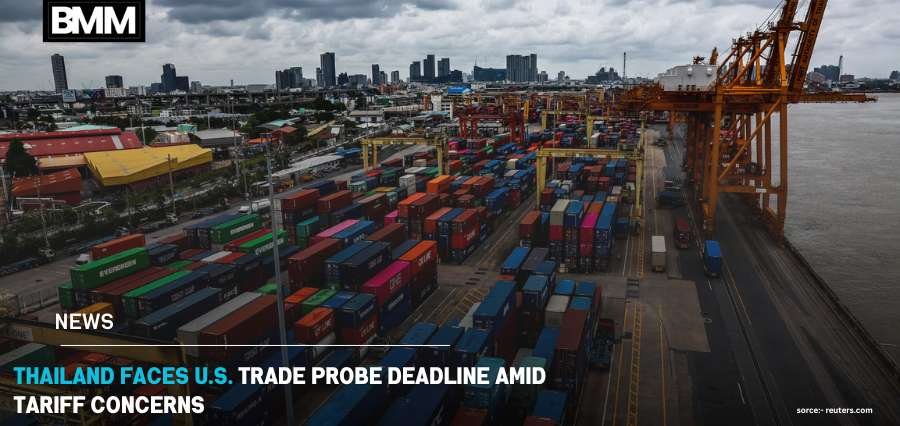
Thailand is under increasing pressure as it prepares to respond to a major U.S. trade investigation that could have significant economic implications. The development surrounding the Thailand U.S. trade investigation highlights rising global trade tensions and the need for strategic diplomatic engagement. With a deadline set for April 15, Thailand must submit its written response or risk facing further tariffs that could impact key export sectors.
Background of Thailand U.S. Trade Investigation
The Thailand U.S. trade investigation falls under Section 301 of the U.S. Trade Act of 1974, a mechanism used by Washington to address unfair trade practices. Thailand is among 16 countries currently under scrutiny, reflecting broader concerns by the United States about global trade imbalances and industrial overcapacity.
According to Thailand’s commerce ministry, the investigation covers multiple sectors where the U.S. believes there may be excess production. These include industries such as automobiles, machinery parts, fish products, animal feed, and garments. The wide scope of the Thailand U.S. trade investigation indicates that its outcome could affect a large portion of the country’s export economy.
Deadline Pressure and Risk of Tariffs
Thailand has been given until April 15 to submit detailed written comments defending its trade practices. Officials have warned that failure to adequately respond could result in the imposition of additional tariffs by the United States.
The urgency of the Thailand U.S. trade investigation is further heightened by the potential financial impact. Thai exports have already been subject to a 19 percent tariff in the past, which has now been replaced by a broader global tariff policy from Washington. Any new measures could further strain Thailand’s trade competitiveness in the U.S. market.
Chotima Iemsawasdikul, director general of the Department of Trade Negotiations, emphasized the importance of presenting a strong case. The government is working to ensure that its response addresses all concerns raised by U.S. authorities.
Key Issues Under Investigation
A major focus of the Thailand U.S. trade investigation is the issue of excess production capacity. The United States has raised concerns that certain industries may be producing more goods than global demand requires, potentially distorting international markets.
In addition to this, there is a separate inquiry into imports of goods allegedly made with forced labor. While no specific source country has been identified in this case, it adds another layer of complexity to the investigation. Addressing these concerns will require Thailand to demonstrate transparency and compliance with international labor standards.
The dual nature of the Thailand U.S. trade investigation means that both economic and ethical factors are being examined, making the outcome even more critical.
Ongoing Discussions with the United States
Thailand has been involved in negotiations with the United States to find solutions to matters of trade even after the challenges. Authorities have stated that negotiations are currently underway after prior combined declarations on tariff as well as non-tariff issues.
It is perceived that these negotiations will be a chance to relax and come up with mutually beneficial solutions. The trade investigation between Thailand and the U.S. may result in a better trade structure if both parties come up with an agreement that will take care of the critical concerns.
Open communication lines will be critical to Thailand in dealing with this complicated situation.
Thailand’s Broader Trade Strategy
As they sort out the Thailand U.S. trade investigation, the country is also in the hunt of other trade opportunities. A progressive agreement with the European Union on a free trade agreement has been one of the achievements.
The Thailand EU trade negotiation is said to be half-way and the government hopes to conclude the deal within the year. The diversification of trade relationships and the lack of dependence on a particular market is described by this strategy as Thais attempts to diversify their trade relations.
Through this intensification of the relationship with the EU, Thailand is hoping to balance the losses that might be experienced in case Thailand U.S. trade investigation and associated tariffs.
Conclusion
The Thailand U.S. trade inquiry is a very critical occurrence in the trade policy and the economy of the country. As time is running out to a tight deadline, Thailand has to put forward a well coordinated response to prevent additional tariffs and stay in the international market.
Simultaneously, the continued discussions with the United States as well as the European Union emphasize the active strategy of Thailand in the trade relations management. The results of this research will not only affect certain industries but will also influence the general economic policy of the country in a more complicated global trading system.
Also Read :- Virgin Australia Faces Rising Costs Amid Middle East Conflict, Adjusts Fares